I have some regrets.
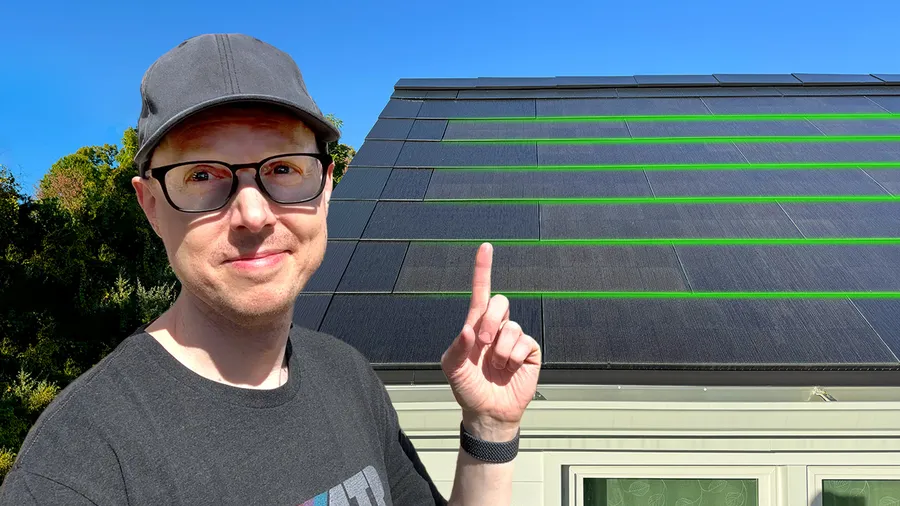
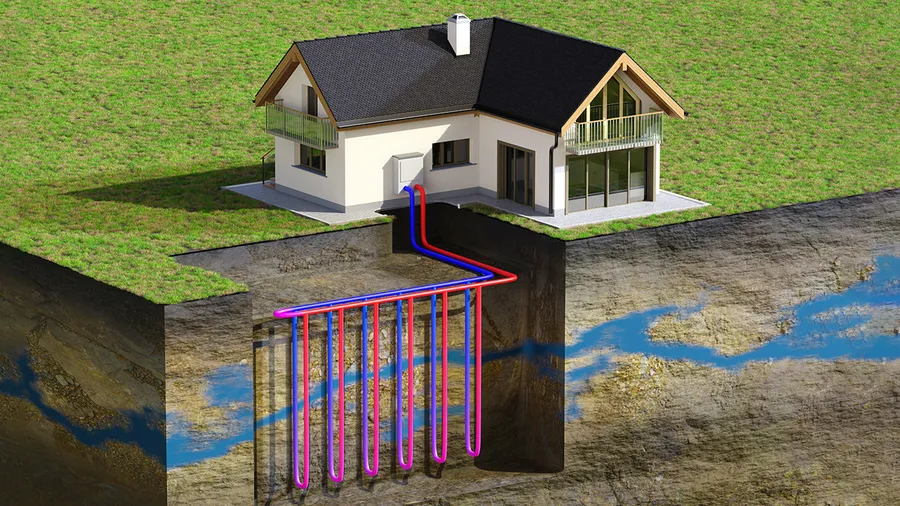
A few years ago, I set out to build my dream net zero energy home. I've been living here for a little over two years now, and so far, I’ve been more than satisfied. I have enough solar and battery storage to balance out all of my annual energy use. A highly efficient geothermal heating and cooling system supplies me with hot water for almost no money. And this is the most comfortable and energy efficient home I've ever lived in. Overall, I absolutely love this house.
But even the best laid plans have issues, and mine were no different.
If you want to avoid expensive mistakes, learn what actually works in a net zero home, or just see what tech lived up to the hype, there might be some lessons you can learn from the choices I made … and the ones that I didn't make.
So what specifically would I do differently? We're talking hot water storage, rainwater collection, ventilation upgrades, smart electrical panels, and future-proofing decisions I got wrong. I've put chapter markers in the description to help you jump around.
The Hot Water Situation: Sunamp Heat Batteries
Let's start with hot water. My current setup uses a WaterFurnace geothermal system with a desuperheater that captures waste heat. That preheated water, usually around 110 to 130F (43 to 54 C) feeds into a Rheem heat pump water heater that finishes the job.1
It works, but it takes up a lot of space. But there’s more to it than that. I'm only heating water when we actually use it. There's no way to charge up my hot water during the day when my solar panels are pumping out excess power. Basically, I can’t time shift my energy use to when it’s cheapest or most practical. It’s tied to … well … keeping that hot water hot.
Enter Sunamp's Thermino heat battery. This thing uses phase change materials, basically salt compounds that store four times more heat energy than water in the same volume.2 When you need hot water, cold water flows through and the phase change material releases its stored heat instantly.
The genius part? You can charge it whenever you want — during the day when solar is cranking, at night when electricity rates are cheap. The energy storage can be decoupled from when you actually use the hot water.3
A study from Edinburgh Napier University found that homes using Sunamp as a preheat system saw 36% of their hot water heated entirely by stored solar power. Their backup heating dropped from over 4 kWh per day down to less than half a kWh.4
In my case, this would work even better because I already have preheated water from my desuperheater. The Sunamp would be heating 110 F (43 C) water up to 136 F (58 C), not cold 50 F (10 C) city water.
Plus, the space savings are huge. A Sunamp Thermino 300 is about 41 inches tall by 14 inches wide and 22 inches deep (104 cm x 36 cm x 56 cm). My current Rheem tank is 62 inches tall and 24 inches around (157 cm x 61 cm). That's roughly one-third less floor space.5
So why didn't I do this? Honestly, Sunamp had limited availability in the U.S. when I was in the process of building in 2022 and 2023. I did reach out to them, but we were in a time crunch and making last minute changes would have cost too much money.6
The real regret isn't the money, though. It's that I wish I'd known this technology was available and researched it before finalizing my hot water plans. With 20 kW of solar on my roof, having thermal storage that charges during midday surplus would maximize my investment. Right now, my excess production goes to the grid.
Rainwater: The Infrastructure I Skipped
Another thing I kind of wish I had installed: a full gutter system to collect all my roof's rainwater.
Here's the math. With about 45 inches (114 cm) of rainfall per year in Massachusetts and a 2,000 square foot (186 m²) roof, I could potentially harvest over 55,000 gallons (or 208,000 liters) of rainwater annually.7 Even factoring in an 80% capture efficiency, that's still 44,000 gallons (167,000 liters). It would be enough to fill a swimming pool and handle most of my outdoor watering needs.
For anyone curious about greywater from showers and sinks, it’s trickier in my state. Massachusetts regulations are more restrictive and involve more bureaucracy. You need local Board of Health approval to get started. On top of this, in many jurisdictions you can't collect greywater if you're connected to a public sewer.8
But rainwater? That's generally legal and encouraged for non-potable outdoor use. No permits required for basic rain barrels.9
The cost reality for a medium-sized rainwater system with a 1,000 to 2,500 gallon tank (3,800 to 9,500 liters) runs about $2,500 to $5,500.10 A more comprehensive system with an underground cistern could hit $8,000 to $30,000. And here's the honest math: a medium system might take 10 years to pay back based purely on water bill savings.11
So is it really worth it? For me, the real regret is simpler. I wish I'd at least installed the plumbing rough-ins during construction. That would be things like separate drain lines for future greywater, a pre-positioned tank location with a conduit, and an exterior hose bibs fed by a future cistern.
Putting those into place would have cost maybe $1,000 to $2,000 during my build. It would make any future retrofit cheaper and much easier.
The lesson: even if you don’t install the full system, design for future expansion. This isn’t just about harvesting rainwater, but for any potential system you think you might want down the road.
The ERV Problem: Dedicated Ductwork
This one frustrates me the most.
My current ERV connects to my HVAC return ductwork. It shares ducts with my heating and cooling system.12 The problem? To get continuous fresh air, I have to run my HVAC air handler fan at a low speed…constantly. In other words, it’s running even when I don't need heating or cooling.13 If I don’t do that, the ERVs fan isn’t powerful enough to carry the fresh air to certain areas of the house.
Granted, that’s only about 35 watts to run the air handler fan at low speed, but it adds up and puts extra wear and tear on my HVAC system.
A dedicated ERV system like the Zehnder uses completely separate small-diameter ducts. We're talking 3.5-inch flexible tubes that fit in standard walls.14 Fresh air gets delivered directly to bedrooms. Stale air gets exhausted from bathrooms and kitchens. The ERV runs independently at optimized low speed.15 Your HVAC system only runs when you need it.
In some cases, the energy difference could be substantial. My current setup probably draws 45 to 50 watts continuously to circulate air through the full HVAC ductwork. That’s accounting for the ERV fan plus the air handler running on low speed 24/7. A dedicated Zehnder system might use 20 to 30 watts at a low level most of the time.16 That's a savings of maybe $5 a month or $60 a year at Massachusetts electricity rates. Not huge, but again … less wear on the HVAC system by separating it out.
But it's not just about energy use…it’s a matter of air quality, and by extension, health. With dedicated ductwork, each bedroom gets its own tuned fresh air supply, even with doors closed. My current system dilutes fresh air throughout the whole house.17
The cost for a Zehnder system? About $12,000 to $18,000 professionally installed. Maybe $6,000 to $9,000 if you DIY the ductwork.18
Why didn't I do this? Honestly, budget priorities. It just came down to money. The system I have works, but I do wish I had gone with a more premium ERV setup. Retrofitting now would cost way more than I’d ever want to spend.
This is a perfect example of design decisions that are cheap during construction, but expensive to retrofit. That $5,000 to $10,000 extra during my build would have given me a negligible energy gain, but better tuned air quality, quieter operation, and less wear and tear on my HVAC system.
Smart Panels: Span vs. Noble Carbon
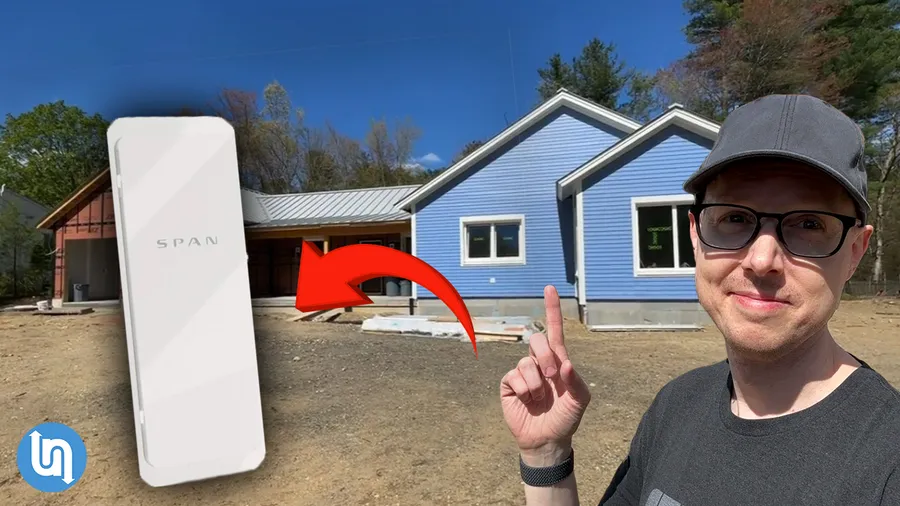
I have two Span panels in my house. No regrets there. They're exactly what I needed for my solar and geothermal setup, with all the fixins. Circuit-level energy monitoring. Remote control. Solar and battery integration.19 And all of it is tied into Home Assistant. I love it.
But doing this costs about $13,000 to $18,000 for both panels professionally installed.20
For someone with an existing home and a working electrical panel who just wants energy monitoring and more sophisticated energy control? That's a tough sell.
Enter Noble Carbon. This is a Massachusetts company, actually based in Pittsfield, making smart circuit breakers that drop directly into your existing panel.21 It’s the same form factor as your current breakers. You can swap them in one at a time. Each one monitors energy usage for that specific circuit in real time and gives you some great smart control.22
The approach is completely different from what I have. Span requires replacing your entire panel. It’s all or nothing. Noble Carbon lets you start with three or four critical circuits for around $500, allowing you to add more over time as you need.23
Think about it this way. Your HVAC, water heater, EV charger, and dryer probably account for 70% of your electricity use. Monitor those four circuits and you've got most of the picture for a fraction of the cost. And if you have 100-amp service and want to install an EV charger without the need for an expensive 200-amp service upgrade, this type of product is your answer. You can prioritize the circuits so you’ll never go past your amp limit.
Span is phenomenal if you're building new or already need a panel replacement. But for retrofits, Noble Carbon represents an exciting alternative that grows with you. Different tools for different situations.
The Thermal Envelope Decision
My house was built by Unity Homes with thick, insulated wall panels. R-35 walls with minimal thermal bridging.24 They offer the same for roof panels, but my wife and I opted out to save money. It was the same for the basement, which is slab-on-grade.
That saved me maybe $35,000 to $80,000 combined.25
Here's what it cost me.
Without a basement or conditioned attic space, all my mechanical equipment, electrical panels, HVAC ductwork, and everything else competes for first floor. Basically, everything inside the thermal envelope. Duct runs had to go through interior walls or soffits.26
A full basement would have given me a massive, dedicated mechanical room. It would be 8 feet tall with full footprint access, all my equipment centralized, noise isolation from living spaces, and temperature stability from ground buffering.27
HVAC distribution would have been simplified, too: ductwork runs under first floor joists, straight shots to every room, fully accessible for future modifications.
During my build, that $40,000 to $60,000 in savings was significant. It made the project affordable and allowed us to put money towards other priorities. But after living here for two years, I’m seeing how that basement or attic space would make it easier to make some of the tweaks to the house that I’d like to do.
If I were building again with my current knowledge, I'd choose either insulated roof panels or a full basement. Having neither means all my infrastructure competes for space within my conditioned living area. It works … it just makes it more challenging to adapt the house over time.
Solar Expansion: What Franklin Batteries Would Have Unlocked
This is what I really wish I'd done differently. I went all-in on Enphase microinverters and batteries for my 17.2 kW roof array. They're great. Rock solid. But they locked me into a 100% grid-tied system with limited expansion options.
The real regret? Not choosing a battery system designed for hybrid flexibility from the start.
Franklin's whole home battery system, specifically the aPower S, would have changed everything.
The Franklin aGate sits between your main panel and utility meter. It sees all power flows, like roof solar, ground solar, batteries, the grid, and house loads. It manages everything intelligently.2829
The aPower S has built-in hybrid inverters. That means you can connect a ground-mounted solar array directly to the battery, no separate inverter needed. It’s DC-coupled for maximum efficiency.30
Here's the key. Franklin's system is AC-coupled and works with any inverter, including Enphase. So both of my solar arrays would charge the batteries. My roof array feeds the Franklin through AC coupling. The ground array feeds it through DC coupling. Both charge the same battery bank. Both can power the house.
The difference is what happens to the excess.
My roof array stays grid-tied and participates in net metering. When it produces more than the house and batteries need, excess flows to the grid. That's the system the utility approved.
But the ground array? It's DC-coupled directly to the aPower S. It never touches the grid. When the batteries are full and house load is satisfied, the system simply curtails the ground array. It stops producing.
This means I could add 10 kW of ground-mounted panels in my backyard. Or 20. Or 50. The utility wouldn't care because that array isn't interconnected. That would eliminate so many headaches all at once: No approval process. No engineering studies. No fees. No caps on system size.
So both arrays work together to charge batteries and power the house. But only the roof array can export. And only the ground array can expand without permission.
The Franklin aPower S launched in 2024. It didn't exist when I built in 2022 and 2023. So this isn't really a regret about a decision I made. It's about timing and technology availability.
But here's what I could have controlled. I should have pre-run conduit from my house to the back of my property during construction via a 2-inch PVC pipe buried in the ground. Maybe 100 feet. That would have cost $500 to $600 when the trenches were already open for other utilities.31
The lesson is simple. Even if the technology doesn't exist yet, stub the infrastructure. Run the conduit. Leave the pathways open. The hardware will catch up. And when it does, you'll be ready.
The Network Rack Mistake
This one's almost funny.
My network rack lives in a hallway closet. My heat pump water heater lives in the mechanical room. Open the network closet, and you feel the heat radiating out. Walk into the mechanical room, and it's noticeably chilly from the water heater's exhaust air.32
Two separate problems that could have been one solution.
Heat pump water heaters work by extracting heat from surrounding air. They exhaust cooled air back into the room, typically 10 to 15 degrees cooler than intake.33 Meanwhile, my network equipment generates about 250 - 300 watts of continuous waste heat.34
If I'd put them in the same room, the network waste heat would feed the water heater. The water heater's cooling effect would keep the network equipment from overheating. Symbiotic relationship.35
This isn't theoretical. Data centers in Helsinki provide heat to district heating networks via heat pumps. NREL's high-performance computing center recovers waste heat to warm offices.36 Same concept, residential scale.
I'm literally spending hundreds of dollars a year heating my hallway with network equipment while my heat pump water heater struggles to find enough heat in the cold mechanical room.
The retrofit cost to move everything now? Probably $2,000 to $4,000 for re-cabling through finished walls and ripping holes into my thermal envelope.37 The cost to run conduit between those locations during construction? Maybe $200 to $400.
Think about heat flows holistically. Co-locate complementary loads.
Future-Proofing: Conduit Everywhere
The biggest lesson across all of these regrets comes down to one thing: pathways.
The only way to truly future-proof a home is to pull conduit to certain parts of the home. That way, if new technology comes out in three to five years, you're safe from FOMO.38 I wish I'd run 2-inch conduit from the mechanical room to key locations around the house, as well as exterior conduit to eaves, front door, driveway, backyard.39
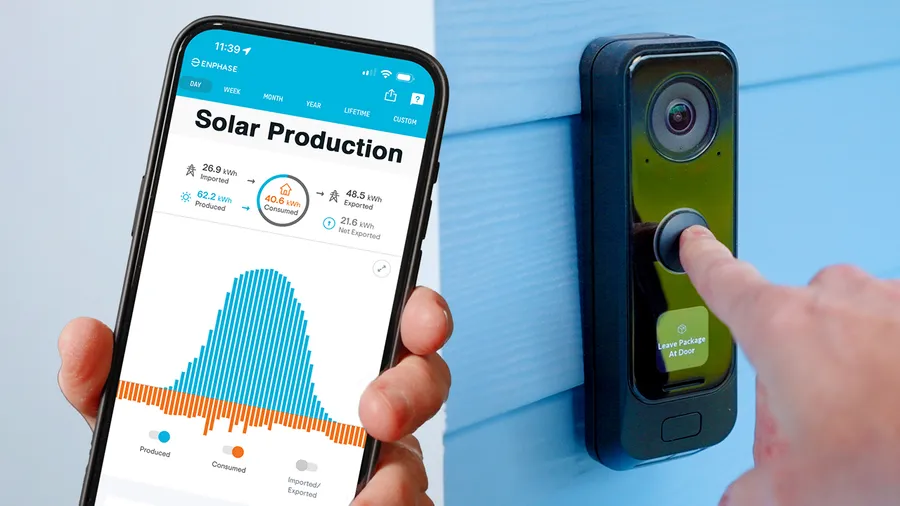
For my video doorbell, I'm dealing with transformer wiring and WiFi. With a single Cat6A cable from my network closet, I could have Power over Ethernet ****power plus gigabit data. I’d be able to relish in reliable power, faster video streaming, and easier troubleshooting.40
PoE now supports up to 100 watts. You can run IP cameras, WiFi access points, smart displays, even LED lighting, all from central switches with UPS backup.41
The cost for a comprehensive conduit network during construction? Maybe $1,500 to $3,000. Maybe?42 The retrofit cost for the same? Could be two to three times that, plus all that ripping into finished walls … no thank you.
Future-proofing doesn’t mean you have to pick the right technology ahead of time, every time. It's more about creating pathways for technologies that don't exist yet. Conduit is the cheapest insurance policy you'll ever buy.
Looking back at my regrets, you can start to see a pattern.
Some technologies, like the Sunamp heat battery or Franklin's split solar system, simply didn't exist or weren't available when I built … or I just wasn’t aware of them. That's not really a regret. That's just bad timing.
But the infrastructure decisions? The conduit I didn't run? The basement or insulated roof I skipped? The network placement I didn't think through? Those were all knowable at the time. I just wasn't thinking holistically about how some of the systems would interact.
If you're building a net zero home, or even just renovating, think about heat flows. Think about pathways. Think about where equipment will live not just today, but 10 years from now. Your future self will thank you
- Energy Star – Heat Pump Water Heater Design Considerations ↩︎
- Sunamp – How Phase Change Materials Work ↩︎
- Sunamp – PCM Heat Batteries Research ↩︎
- YouTube – Sunamp Thermino Pre-heating Solution Study ↩︎
- The Heat Pump Warehouse – Thermino 300 ePlus Specs ↩︎
- Sunamp – UniQ Installation Manual ↩︎
- The RainCatcher – Calculating Rooftop Rainfall ↩︎
- Mass.gov – Composting Toilets and Greywater Systems ↩︎
- Mass.gov – Rain Barrels and Water Conservation ↩︎
- HomeAdvisor – Rainwater Collection System Cost ↩︎
- NTOTank – Rainwater Harvesting Setup Cost ↩︎
- GreenBuildingAdvisor – ERV Fully Ducted vs. Sharing Return ↩︎
- Reddit – ERV Retrofit Dedicated vs HVAC ↩︎
- Passive House Blog – Zehnder ERV Installation ↩︎
- Small Planet Supply – Zehnder HRV & ERV Systems ↩︎
- BuildWithRise – ERV vs HRV Systems ↩︎
- GreenBuildingAdvisor – ERV Ducting and Bedroom Ventilation ↩︎
- Reddit – Zehnder Price Options ↩︎
- Solstice Solar – Span Smart Panel vs Traditional ↩︎
- GreenWave – Span Panel Cost ↩︎
- Noble Carbon – LinkedIn ↩︎
- Noble Carbon – Home ↩︎
- Noble Carbon – Get Noble ↩︎
- GreenBuildingAdvisor – What's Different About Unity Homes ↩︎
- Unity Homes – Package Options PDF ↩︎
- WBDG – Structural Insulated Panels ↩︎
- Building America – Air Sealed Insulated Basements ↩︎
- FranklinWH – Components Overview ↩︎
- Solar.com – FranklinWH Battery Review ↩︎
- YouTube – FranklinWH Complete Guide ↩︎
- Reddit – Conduits for Ground Mounted Panels ↩︎
- MassCEC – How Heat Pump Water Heaters Work ↩︎
- Energy Star – HPWH Design Considerations ↩︎
- Reddit – Server Rack and HPWH Symbiosis ↩︎
- GreenBuildingAdvisor – Server Heat Dissipation ↩︎
- NREL – Data Center Waste Heat Reuse ↩︎
- Reddit – Custom Home Smart Tech Future-Proofing ↩︎
- NewHomeSource – Future-Proof Your New Home ↩︎
- Pre-Wiring for Custom Homes ↩︎
- PoE Texas – Converting Devices to PoE ↩︎
- Advantech – Power over Ethernet Benefits ↩︎
- Socket Doctors – Smart Home Wiring ↩︎