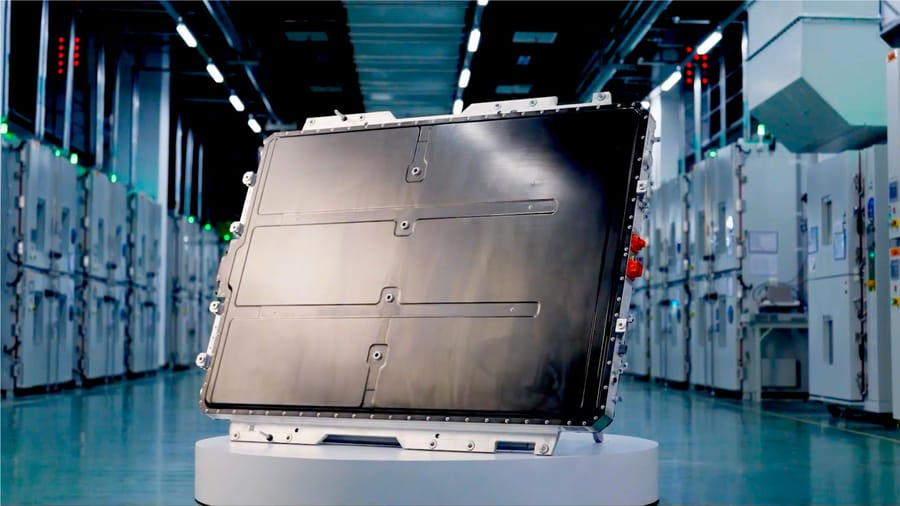
Ever since Donut Lab announced their miracle solid-state battery, the internet has been absolutely certain about what it is. A capacitor. Vaporware. A scam. Except when you actually dig into those explanations, a lot of them start falling apart.
Here's what Donut Lab is actually claiming: more energy per pound than today's best lithium cells. No lithium. No cobalt. No hard-to-get metals. And a battery that charges in five minutes, but lasts a lifetime. Some experts say those specs are physically impossible. Others think they've already cracked the case and figured out who really built this thing and what's actually inside.
We don't know yet if Donut Lab's claims will hold up. They’ve been releasing third-party tests slowly over the past few weeks. But let's take a closer look at what this battery could be… what it probably isn't... and what Donut Lab could possibly gain by exaggerating its claims. It’s not as clearcut as you might think.
By now, we’ve heard Donut Lab’s all-solid-state battery claims about as many times as this thing is supposed to cycle.1 That part isn’t surprising. We’re used to hype arriving years before a battery ships in an electric vehicle or new device, if it ever does.
But Donut Lab didn’t follow the usual playbook. It announced extreme performance specs just months before it plans to ship, then began releasing third-party verification slowly.
Even now, we still don’t know the basic chemistry behind these batteries … or how they’re being made. So my team and I started digging into the theories people have been using to explain the battery away. It turns out: many of them don’t hold up, and the clues point to a combination of technologies that’s far more plausible.
For those of you catching up on the biggest headline to rock the battery world in years, Finnish company Donut Lab claims to have created a 400 Wh/kg battery.1 For comparison, the most powerful lithium batteries in today’s EVs are just now reaching 300 Wh/kg.2 Donut Lab is promising 30-50% more energy at the same weight, which could translate into EVs with greater range than ever.
Donut Lab says its battery charges from flat to full in just five minutes, about as quick as filling up at the pump.13 And it manages to do this without any lithium, cobalt, or rare metals in the mix.1 A battery made with globally abundant materials would completely upend battery supply chains and change where and how batteries are made.
Those big claims have left a lot of us looking for the hole in Donut Lab’s story, because we’ve heard big battery promises before. EEStor claimed in 2007 to have a solid-state capacitor with a battery-like 385 Wh/kg energy density, a 6 min charge time, and 1 million cycle-life.4 But press-releases never gave way to a product-release, some say, due to a fundamental misunderstanding about the physics behind capacitors.5 And at CES 2018, Fisker promised solid-state batteries by 2020 but instead went bankrupt in 2024.[TV] This is what can happen when you announce tech breakthroughs before they leave the lab.
But Marko Lehtimäki, the CEO of Donut Lab and Chairman of Verge Motorcycles,6 says the batteries are already in Verge’s bikes and will be delivered to the first customers by the end of March 2026.3
Marko is the man behind Appgyver, a no-code, drag-and-drop app-builder sold to software giant SAP in 2021.67 His brother, Tuomo Lehtimäki, has been the CEO of Verge Motorcycles since 2019. Verge is the company that spun out Donut Lab in late 2024 as a way to market their hubless wheels, batteries, and other technologies separate from the motorcycle they were developed for.8910
Yes, a wheel with no axle and no drivetrain. Verge Motorcycles has taken the longstanding idea of a hubless in-wheel motor and turned it into an actual commercial product. The question is whether they’ve done the same for solid-state batteries.
When Donut Lab initially announced its battery, there was no independent data, no clear chemistry, and no confirmed manufacturing site. A lot of glaze, and not a lot of filling. Third-party verification has been rolling in over the past few weeks (and I’ll get to some of that in a bit), but leading with bold claims before detailed proof left plenty of room for doubt.
So we did what any reasonable person would do: we went looking for answers. There are three main theories floating around about what's actually inside this battery. We're going to work through each one: what the evidence says, where it falls apart, and what it might actually point to.
Too Good to Be True?
With no data, or even a patent application, in hand, some people initially denied that a battery that cycles 100,000 times yet holds a whopping 400 Wh/kg could even exist. CEO of Svolt Energy, Yang Hongxin, said,11
All the parameters are contradictory.
Any technician with basic knowledge would recognize it as a scam.
Others suspected that it isn’t a battery at all, or that it wasn’t developed by Donut Lab itself. An article in Elektrek pointed to Donut Lab’s investment in fellow Finnish startup Nordic Nano in July 2025.12 It said the titanium dioxide nanostructures studied by Nordic Nano’s chief scientist, Bela Bhuskute, during her PhD
fits the “miracle” specs perfectly6
and could last 100,000 cycles by being sponge-like enough to expand and contract without crumbling. The article suggested this material might enable 5-minute charging through fast, surface-level chemical reactions more typical of capacitors than batteries.6
The connection between Nordic Nano and Donut Lab surfaced a week earlier, when my friend Ryan, from the Ziroth YouTube channel, was tipped off by fellow YouTuber Tom Bötticher to a Nordic Nano pitchdeck.13 It promoted the company’s non-toxic, moldable batteries… but included a diagram of what it called an “electrostatic bipolar capacitor,” claiming an energy density of up to 400Wh/kg and more than 50,000 charge cycles.14
Sounds familiar.
I don’t think this is a battery at all. I think this is a capacitor.
It seems relatively conclusive that Donut Lab has partnered with Nordic Nano using some of their carbon nanotechnology or printing technologies to create these electrostatic bipolar capacitors which they are calling solid-state batteries.
So why did Nordic Nano pitch a battery, but show a diagram of a capacitor? What’s the difference between the two, anyway? And could that help explain why Donut Lab claims 100,000 cycles when even LFP batteries top out around 3,000-5,000?15
Batteries, Supercapacitors, Pseudocapacitors … What’s the Difference?
To help make sense of this, I spoke with Mircea Dincă, a professor at Princeton University who works with both supercapacitors and batteries. To be clear, Mircea isn’t making any claims about Donut specifically. We talked more broadly about next-gen batteries and what makes them tick.
There is, to my intuition and my knowledge, a fundamental limit to how many cycles a true battery can have.
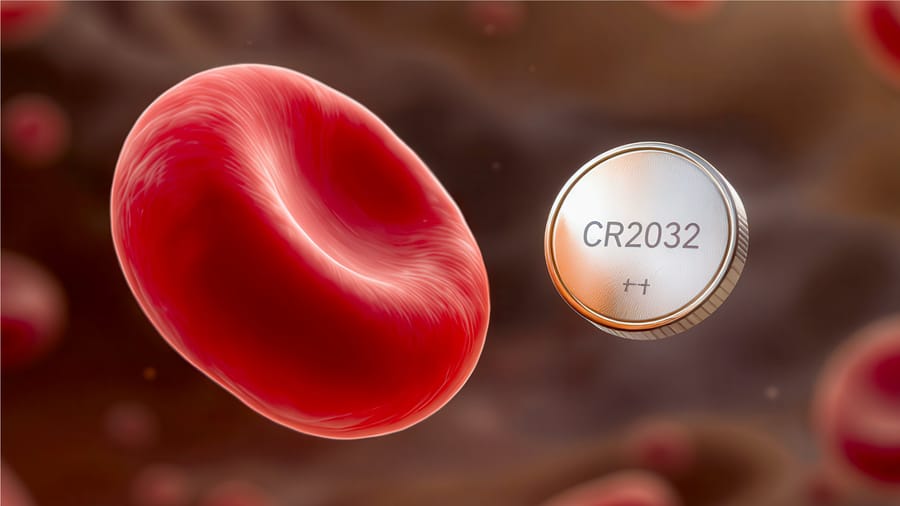
Both batteries and supercapacitors have a similar setup: two electrodes separated by a porous, electrolyte-soaked layer.16 In Mircea’s view, the key difference lies in how energy is stored, which ultimately determines how long a device can last.
Batteries rely on chemical reactions deep inside their electrodes, while supercapacitors store charge electrostatically by lining up ions on electrode surfaces.17 But chemistry isn’t perfectly reversible. Every time a battery cycles, side reactions build up, interfaces change, and materials slowly degrade.18
Redox chemistry. It requires a chemical reaction to take place. And in this context, even though I'm a chemist, chemistry is bad. It makes things die.
Now, why are super caps much better at cycle life? Because true super caps, meaning things that work at a hundred thousand cycles or more, do not require chemistry. They are purely physical processes. They are adsorption, desorption of ions to a surface.
Without chemical stress, supercapacitors last far longer than batteries.19 Surface energy storage allows them to charge in seconds or minutes and work across wider temperature ranges than typical lithium-ion cells.19 On the surface, that lines up well with Donut Lab’s claims.191
But there’s a catch. Surface-based electrostatic storage can’t match the energy density batteries get from chemical reactions spread throughout the full volume of their electrodes. That’s why some wonder whether Donut Lab’s battery might rely on fast, surface-based chemical reactions. In other words, a hybrid approach called pseudocapacitance.16
Mircea is skeptical that a pseudocap could ever match a battery's energy density.
Pseudo caps kind of come in between, but on a scale between batteries and capacitors, I would say they're closer to capacitors.
So higher cycle life. But typically lower energy density.
Commercial devices that blur the line between batteries and capacitors do exist. Skeleton Technologies’ SuperBattery charges in about 90 seconds and lasts 50,000 cycles. But it only delivers 65 Wh/kg.20 That’s about six times lower than Donut Lab’s claim of 400 Wh/kg.
Rather than debating whether a 100,000-cycle claim points to a battery or a capacitor, Mircea focuses on how numbers like that are measured in the first place.
How you cycle that battery, to what depth of discharge, what are the conditions of cycling? If you do super fast cycles, that's going to be very different than doing real-life testing, where you do intermittent fast charging, slow charging and discharging, different temperatures.
Until independent tests roll in (and some have been by the time you’re seeing this) it’s hard to know how that 100,000-cycle claim holds up outside a press release.
Marko Responds
Marko pushed back on the capacitor theory, telling Finnish business newspaper Kauppalehti that:21
This is a fully solid electrolyte battery, and there are no gimmicks or euphemisms used here.
He says research began in secret in 2018.22 That’s the same year Verge Motorcycles was founded. Marko also denies that Nordic Nano developed the battery.
For a company supposedly manufacturing the world’s first all solid state battery, Donut Lab’s timeline makes a lot more sense. Nordic Nano was only established in 2024,14 and Finnish public broadcaster Yle reports that pre-production at its manufacturing site in eastern Finland has slipped to summer 2026, with full-scale production beginning in the fall.23
If Donut Lab truly began work in 2018, that would allow 5 or 6 years of R&D before this announcement.
Marko has framed the slow release of third-party verifications as intentional, saying the company wanted the loudest critics to declare the technology impossible before revealing more proof.24 But he says production will scale fast; a GWh of battery capacity is expected this year and potentially 10s of GWhs next year.25
Still, there is evidence that Donut Lab and Nordic Nano have “been working together for some time.”12 Donut Lab also frames its investment in Nordic Nano as a way to accelerate the next steps of its own proprietary battery development.2612
That suggests there may be some technical overlap between the two companies, even if any shared work is more likely to show up in a future generation of Donut Lab’s battery. There are also clues in Nordic Nano’s pitch deck about how its own battery works … and that might point towards the filling inside Donut Lab’s own battery. So yes, this is where I start speculating.
How This Could Work
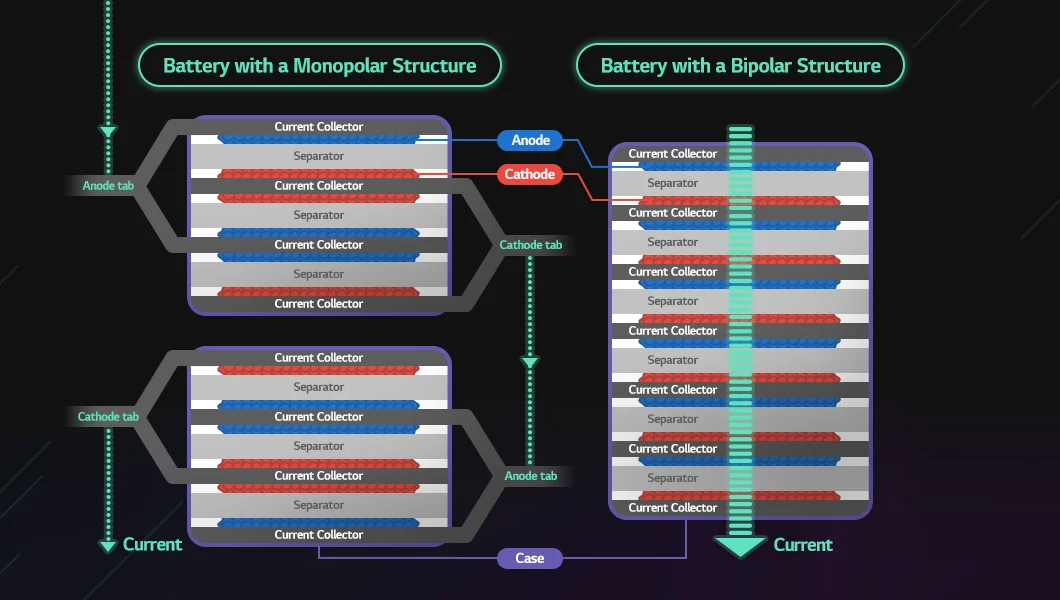
Normally, a battery’s voltage is set by the chemistry of its two electrodes. But one of Donut Lab’s more puzzling claims is that it can choose its battery’s voltage. This would make it a drop-in replacement for 4.2V lithium-ion cells, or a different voltage if needed.1327 This made my team and I wonder whether Donut Lab’s device uses a “bipolar” design like the one in Nordic Nano’s pitch deck.14
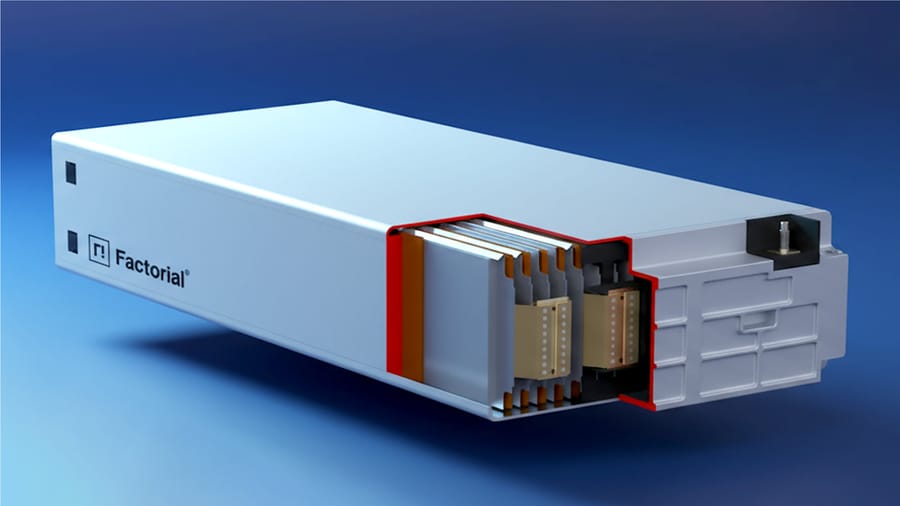
A bipolar battery is made by stacking cells on top of each other like a club sandwich, sharing current collectors the way the sandwiches share bread. Each collector has an anode on one side and a cathode on the other, linking neighboring cells in series inside the stack. Current flows straight through the battery, and you only need terminals at the top and bottom.28
Because the cells are linked in series, the battery’s total voltage is just all those layers added together. So if Donut Lab is using this approach, it could reach 4.2V by stacking, say, two 2.1V cells or three 1.4V cells.
Solid-state designs make this kind of stacking much easier because there is no liquid electrolyte to leak between the layers and cause short circuits. This structure also drops the size of the battery by sharing material between cells. Think of the club sandwich: its two sandwiches, with just three pieces of bread.
And because the current runs right through the battery instead of traveling between separate cells, there’s less resistance and fewer hot spots during charging and discharging.28 That could help explain why Donut Lab says its batteries don’t need active cooling.22
Bipolar designs are still rare in commercial batteries, but they do exist. Toyota already uses bipolar nickel‑metal hydride (NiMH) batteries in some hybrids and plans to introduce bipolar lithium-ion batteries soon.29
Now let’s talk materials. Donut Lab claims to hit these specs without lithium, cobalt, or other hard-to-source materials. It also says it can produce its batteries for less money than today’s lithium-ion cells.1 That would put it outside every proven, commercial chemistry we know.
In her own analysis, Laycee Schmidtke, better known as Miss GoElectric, pointed to an inexpensive, metal-free cathode material called TAQ. In lab tests, it forms a sodium-ion cathode that outperforms LFP in both energy and power density at the cathode level. It can also be charged and discharged in just 90 seconds.30
It’s a great example of how high-energy, low-cost, lithium-free cathodes are already possible.
I spoke with its inventor, Mircea Dincă, and also learned independently that it’s already in commercial development with Lamborghini.31 When I saw that his latest cathode formulation included about 2% carbon nanotubes for testing, I had to ask why.
The carbon nanotubes make a better connection between the particles. And so they allow those electrons to jump from one particle to another without requiring that much energy. And therefore, without actually losing all that much heat… that becomes a huge headache having to dissipate.
That kind of conductive, heat-managing carbon is showing up more and more in advanced battery designs. Nordic Nano says its devices use nanocarbon materials,32 combining
the tensile strength of carbon nanotubes with the flexibility of graphene.
Nordic Nano even advertises a14
non-heating property.
We don’t know whether similar carbon materials appear in Donut Lab’s battery. But if they do, they could help explain fast charging, wide temperature tolerance, and long cycle life.
There’s another place where Nordic Nano and Donut Lab’s stories seem to intersect. Ryan of Ziroth says that at CES, Donut Lab told him its batteries can be made in almost any shape … even a snowflake.13 He says that rules out a traditional jelly-roll design and instead points to a battery built by stacking layers.
Ryan connects that to Nordic Nano’s claim that it can screen-print its own battery in varying shapes using a kind of nanofluid.14 Screen printing is great for things like snowflakes, where the details really matter. More importantly, screen printing is a manufacturing method that’s easy to scale quickly, especially if there’s already a company out there building specialized battery-printing equipment.
Which brings us to Holyvolt.
If someone is screen-printing solid-state batteries at scale, they need specialized equipment to do it. Holyvolt builds exactly that. This Swedish company developed a screen-printing battery manufacturing platform for both production and high-throughput materials discovery.3334 That’s exactly the kind of machinery a company working on a lithium and critical-mineral-free battery might need.
Impact Loop describes Holyvolt as a pretty secretive startup. But its CEO, Mathias Ingvarsson, told the news outlet that most of the company's 2024 revenue (about €5 million) came from selling machinery.35
We don’t know if Holyvolt has any connection to Nordic Nano or Donut Lab. However, Holyvolt recently outlined a screen-printed solid-state battery with no critical minerals in a patent filing.36 That's hard to ignore.
We’ve learned more about the performance specs of Donut Lab’s battery each week as it releases tests performed by VTT Technical Research Centre in Finland.37 Keep in mind: VTT is a reputable testing company, but Donut Lab is footing the bill and deciding which tests are run.
These weekly drops are chaos. Analysts get new but incomplete data and try to puzzle out what each release says about the battery’s performance, its chemistry, and even how it’s built. After the first drop, my friend Ricky Roy from the YouTube channel Two Bit Da Vinci matched Donut Lab’s fast-charging curve to that of a lithium-NMC battery. A week later, he walked that back when high-temperature tests made those NMC claims impossible and hinted that the battery doesn’t use a liquid electrolyte.3839 It’s going to get messier before all the data are in — and I bet that’s exactly what Donut Lab wants.
Battery specs aside, we won't really know what's inside until these bikes are on the road and someone tears a battery down. Only then will we know how it's built.40 If Verge Motorcycles ships its bikes on its current timeline, we won’t have to wait long. InsideEVs reports that certification is still ongoing in both the EU and the US for the company’s latest bikes.41
Marko seems confident. He told Finnish business newspaper Kauppalehti:21
What would be the point of making false claims about your own product, which is coming to market in the near future?
I've been asking myself the same question. Companies make bold promises while raising capital, but Donut Lab hasn't announced any major funding rounds since its €25M seed in July 2025.42 And in January, Marko told Electrek that the company isn't taking additional investor money until it has "done all of [its] disclosures."6 That said, Finnish public broadcaster Yle claims to have obtained confidential investor newsletters seeking additional investment during the first months of 2026.43
If the battery’s performance specs don’t hold up, the fallout wouldn’t stop with investors. Any manufacturer building around these battery specs would be left in the lurch if the battery doesn’t exist. No CEO wants to explain to shareholders why they bet on an unproven technology.
Every angle I can think of suggests there’s little to gain from overhyping, and a lot to lose if this doesn’t pan out. According to Occam's razor, the simplest explanation may be the right one: Donut Lab may have actually built a highly compelling battery that people will want to buy.
Whatever you think of the claims, you have to admire the strategy: lead with bold specs, invite the skeptics to pile on, then slowly reveal the proof. That allows them to discredit the skeptics that jumped to conclusions early. It's the most effective hype cycle I've seen in years. For now, all eyes are on idonutbelieve.com … and yes, whether or not the battery is real, the branding absolutely is. They at least have a good sense of humor.
- Donut Lab – World's First All-Solid-State Battery in Production Vehicles ↩︎
- Tycorun – NMC vs NCA: A Complete Guide to Help You Choose the Right Battery ↩︎
- Donut Lab – Donut Lab Introduces the Future of Electrification at CES Presenting World’s First All-solid-state Battery Ready to Power Up Production Vehicles Now ↩︎
- Wikipedia – EEStor ↩︎
- Doug Cross – What ever happened to EEStor? ↩︎
- Elektrek – This battery is about to change the world in 3 months, or make this guy a fool ↩︎
- Kauppalehti – The man behind the Donut Lab that shook up the battery industry is the man who got rich with Little G ↩︎
- Bitget – Fully charged in 5 minutes, 100,000 cycles, mass production imminent—the first all-solid-state battery is really here... or is it? ↩︎
- Futurride – Verge Motorcycles creates Donut Lab to share EV development expertise ↩︎
- IEEE Spectrum – CES 2026: The First Solid-State Vehicle May Be a Motorcycle ↩︎
- CNevPost – 'Scam' — Chinese battery maker Svolt's comment on Finnish Donut Lab's solid-state battery ↩︎
- Nordic Nano – Donut Lab invests in Nordic Nano to accelerate global growth and technological collaboration ↩︎
- Ziroth – Investigating The World's First Solid State Battery ↩︎
- ESA BIC Finland and startups –Space Business Forum ↩︎
- EcoTree Lithium – LiFePO4 Battery Cycle Life & Durability ↩︎
- Wikipedia – Pseudocapacitance ↩︎
- How to Geek – Supercapacitors vs. Batteries: What's the Difference? ↩︎
- Physical Chemistry Chemical Physics – Lithium ion battery degradation: what you need to know ↩︎
- Eaton – The major differences between supercapacitors and batteries ↩︎
- Skeleton – Mission-Critical Power for AI Data Centers and Grid Stability ↩︎
- Kauppalehti – Donut Lab boss to KL: "We have developed about a hundred small innovations for the donut engine” ↩︎
- The Verge – Is this the world’s first solid-state battery? ↩︎
- Yle – Mysterious battery factory begins production – premises are being monitored, a fence is being built around it ↩︎
- Donut Lab – Introducing: "I Donut Believe" ↩︎
- The Electric Duo – EV Battery Breakthrough! Donut Lab Solid-State Battery & CEO interview! ↩︎
- Donut Lab – Donut Lab Accelerates Proprietary Battery Development with Significant Investment in Sustainable Tech Leader Nordic Nano ↩︎
- Donut Lab – World’s first all-solid-state battery in production vehicles ↩︎
- Battery Inside – Battery Pioneer Bipolar Technology, Reducing Components and Maximizing Space Utilization with Serial Structures ↩︎
- Toyota – Toyota sets out advanced battery technology roadmap ↩︎
- Journal of the American Chemical Society – High-Energy, High-Power Sodium-Ion Batteries from a Layered Organic Cathode ↩︎
- Carbon Trends – Recent application of carbon nanotubes in energy storage and conversion devices ↩︎
- Nordic Nano – Technology ↩︎
- Holyvolt – Power To The Planet ↩︎
- Holyvolt – LinkedIn Overview ↩︎
- Impact Loop – Exclusive: Holyvolt raises at €182m valuation for batteries that can be printed on almost anything ↩︎
- Google Patents – Flexible solid energy storage module ↩︎
- Donut Labs – I Donut Believe ↩︎
- Two Bit DaVinci – Donut Lab's Solid State Battery Test are Shocking… ↩︎
- Two Bit DaVinci – Donut Lab's 2nd Test is Shocking ↩︎
- The Future Battery Technology – Why DONUT Lab’s Solid-State Battery Claim Faces Industry Confusion Despite Production Timeline ↩︎
- InsideEVs – Is The World's First Solid-State Battery EV Already Delayed? (Updated) ↩︎
- Clean Technica – E-Mobility Tech Company Donut Lab Completes €25M Funding Round ↩︎
- Yle – “This is crazy!” Confidential messages reveal battery company Donut Lab’s wild promises to investors ↩︎