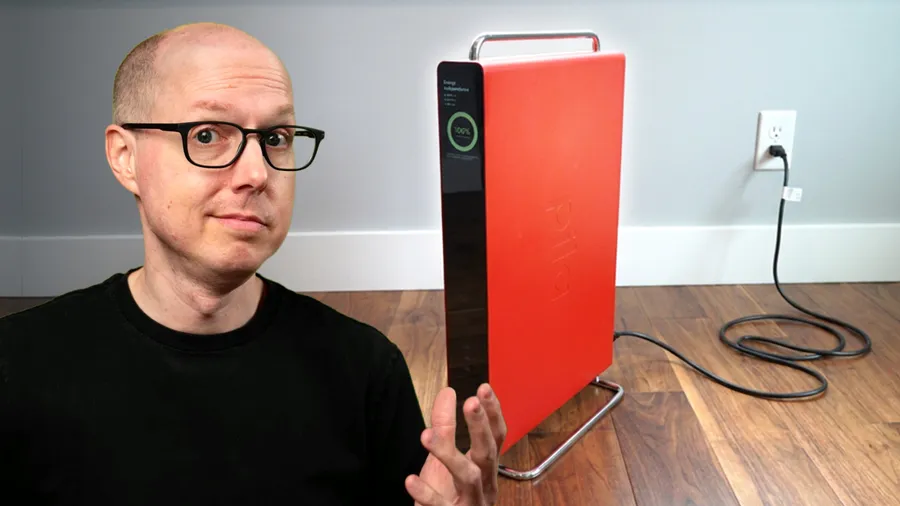
What if the most efficient way to heat and cool your home…might not actually be the best choice for you? Geothermal heat pumps are the gold standard for efficiency. They're also the most expensive upfront investment you can make in your home's HVAC system. So, are they really worth it? Or should you go with an air source heat pump instead?
I've been living with my geothermal system for two years now, and I've covered it extensively on this channel, but I wanted to dig deeper. So, I reached out to my friend Paul Braren, who installed an air source heat pump system in his Connecticut home around the same time I was building mine. We're both in New England, we both have detailed energy monitoring, and we both ditched fossil fuels completely. It’s the perfect setup for a real-world comparison.
Here's the thing, though. After crunching the numbers, this isn't going to be the straightforward "geothermal wins" or "air source is better" story you might expect. The actual data surprised both of us.
Two Paths, One Goal
Before we get into pitting one system against the other, let’s cover a few of the basics. Heat pumps move heat instead of generating it through combustion or resistance heating. In summer, they move heat from inside your home to the outside. In winter, they pull heat from outside, amplify it, and pump it into the home. That's why you can get three to five units of heating or cooling for every unit of electricity you use. It’s a very efficient system.
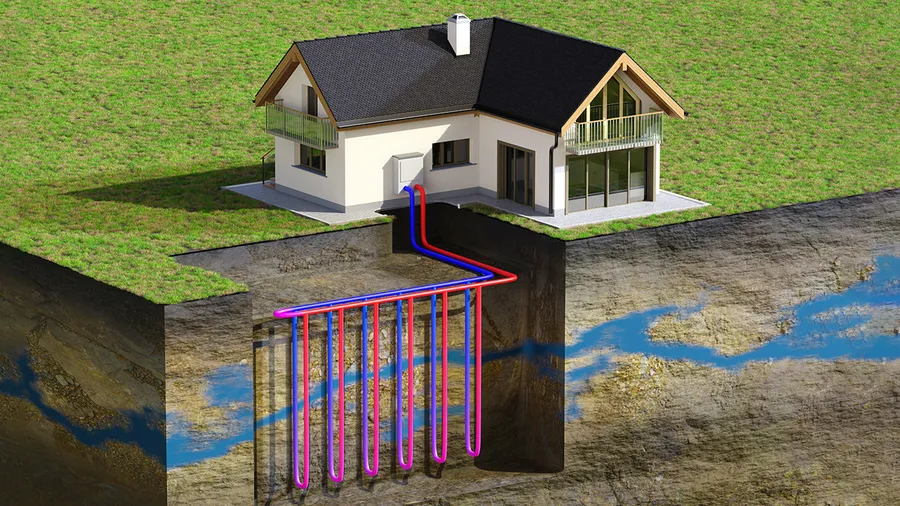
The difference between geothermal and air source is simple. Geothermal exchanges heat with the ground through underground pipes and a circulating fluid. Air source systems exchange heat with outside air using an outdoor condensing unit. Both beat burning fossil fuels by a long shot.
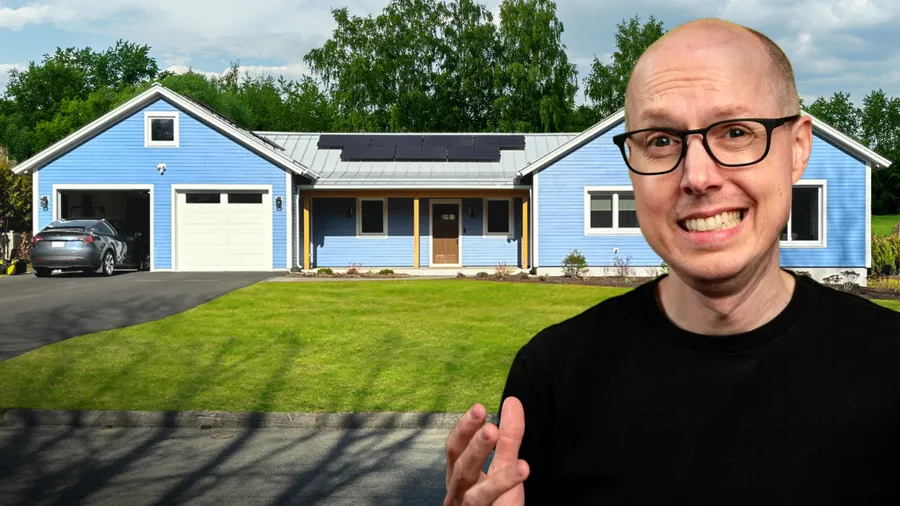
I live in Massachusetts. Paul lives in Connecticut. New England winters are cold, electricity is expensive, and we both work from home. That means our systems run constantly. However, we made very different choices with what systems we installed. I went geothermal when I built my net zero home. Paul went air source when he gutted and renovated his 1990s house.
Let me walk you through what that meant for each of us.
My Geothermal Journey
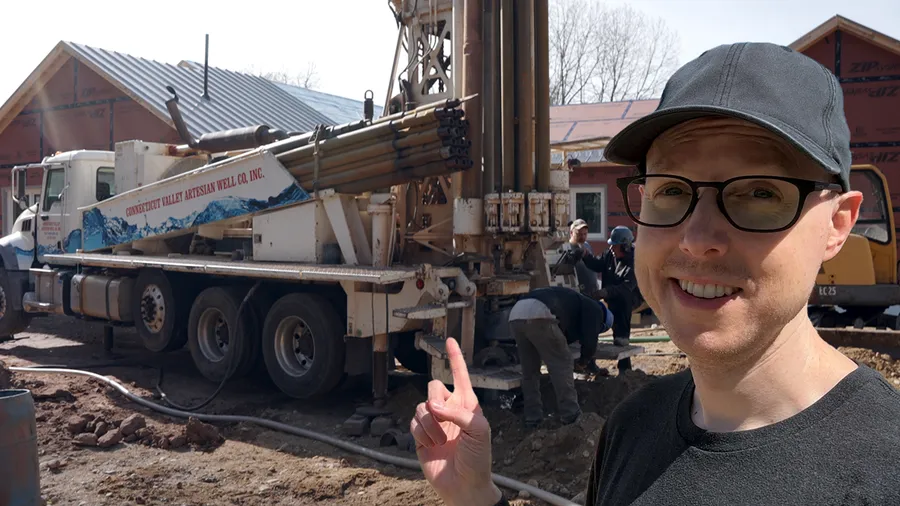
My geothermal installation was part of a new build, which gave me some advantages. I drilled a single vertical well 400 feet deep in my backyard. A closed loop tube runs down into the well and back up into the house, circulating fluid that exchanges heat with the earth. Once you get down to about 6 to 10 feet below the surface in my area, the earth becomes a consistent 50° F (10° C).
If you have room, you can go with a horizontal loop where they dig across a large area of your property about 6 to 10 feet down. That's cheaper than drilling vertical, but the process does require more space.
The system itself is a WaterFurnace Series 7, which has variable speed control. That means it can ramp up or down to maintain precise temperature without constantly cycling on and off. One of my favorite features is the desuperheater. It captures waste heat from the compressor and uses it to preheat water in a holding tank. That preheated water feeds into my heat pump water heater. As a result, I get hot water from heat that would otherwise be wasted.
I installed the WaterFurance system, a 400 foot well, an ERV, and a whole house dehumidifer.
Paul's Air Source Experience
Paul's situation was completely different. He bought an existing house built in the 1990s that was, in essence, designed to be leaky. Back then, homes were built that way to provide return air for gas-burning equipment. His house was doing eight air exchanges per hour. He may as well have been leaving the windows cracked open all the time.
So Paul didn't just install a heat pump; he completely transformed the house. After enough air sealing, the house went from eight air exchanges per hour…to 0.8. This also meant removing the natural gas line, meter, furnace and all other such hardware. Paul also removed all the baseboard heating, water loops, and attic ductwork. He designed a completely new system from scratch.
The old system had single registers at each door with short duct runs. If you closed a door, it relied on return air going under the door. In his previous home, which was nearby and built by the same builder, Paul's office used to climb to 85° F (29° C) when he was working with the door closed. For this home, to combat this, he designed proper ductwork for each room with dedicated return air.
He installed two Bosch air source heat pump systems, two outdoor condensers, two air handlers, an ERV, and a whole house dehumidifier.
The Contractor Reality
Before we get to the performance data and costs, I need to talk about something both Paul and I experienced. Finding qualified contractors who understand modern heat pump systems is not easy.
One of the first contractors I contacted created a wildly complicated and over-engineered design that would have been costly. Paul had one contractor literally walk out of his house partway through the consultation. The guy looked at Paul's requirements for efficient sizing and properly designed ductwork for each room and said he couldn't handle it. He then literally just walked away.
The installer he did go with had oversized the system, even after Paul explained he was air sealing the house with AeroBarrier, improving insulation, and replacing all 32 year old windows with new triple pane windows. Paul's saving grace was that his Bosch units had a dip switch that let them operate as two-ton units instead of three-ton units. That dip switch probably saved thousands in operating costs by preventing the systems from short-cycling.
The point is, this stuff matters. A bad installation can ruin even the best equipment. And there aren't enough contractors who really understand these newer high-efficiency systems yet.
Living With The Systems
After two years with my geothermal system, there were a few things that caught me by surprise.
The biggest one? I never touch the thermostat. Ever.
In every house I've lived in before, I had thermostats on timers or smart thermostats that adjusted things on the fly. Drop the temperature when you're at work, raise it before you get home. But geothermal systems don't want that.
The ground loop provides a powerful buffer with high thermal inertia. It absorbs and releases heat gradually thanks to the earth's stable underground temperatures. This makes the system slower to ramp up or down in response to big temperature changes. That sounds like a downside, but it's actually a benefit. The result is highly efficient constant temperature that also reduces wear on the equipment. The system isn't cycling on and off or trying to play catch-up.
Paul's experience is different. His air source system operates more like a traditional HVAC setup, but with 2 air handler speeds and a variable speed heat pump that likes to run most of the time. It’s gently blowing air that isn't super hot or cold. While it can respond somewhat faster to demand changes, that has pros and cons. It's more responsive when he needs it, but that also increases his costs.
“The similarity in the experience was actually a surprise to me. When you talked about not setting back or changing your thermometers much, that's true here too. Now I do have zoning, so one room might be three degrees warmer on purpose than in an adjoining room, but I leave it. If I set it back, it gets too fancy and it's got to catch up in the morning. And whether it's geothermal, ground source, or air source heat pump, you don't really want to mess with your temperature much if you're only leaving the house for four or eight hours. That is nothing like a regular house … or how my houses used to be.” -Paul Braren
The Dehumidifier Situation
Here's something both Paul and I deal with that most people don't: humidity control in spring and fall is tricky.
Your air conditioner dehumidifies the air as a side effect of cooling. Cold coils make moisture condense out of the air. In May or October, though, when it's 70° F (21° C) outside and comfortable inside, the AC isn't running. But it can still be humid and uncomfortable.
That's why we both have whole-house dehumidifiers. Mine runs mainly in May, June, September, and October. I have it plugged into a smart outlet so I can turn it off completely in winter and summer when it's not needed.
Paul has an AprilAire unit with a similar setup. His runs during those same shoulder months of the fall and spring. It's one of those things that adds to the total system cost but makes the house much more comfortable year-round.
The ERV Integration Issue
Both Paul and I have energy recovery ventilators (ERVs), and both of us regret how they're integrated with our HVAC systems.
An ERV brings fresh air into your house while recovering heat or cooling from the exhaust air. It passes stale inside air through tiny vents on the way out. Parallel to those vents, fresh outside air passes through as it comes in. Heat moves from the hotter vents to the cooler vents. In summer, you're precooling hot outside air. In winter, you're preheating cold outside air.
In both our cases, the ERV is tied to the air handler. It only runs when the HVAC system is already running for heating or cooling. The problem is, in spring and fall, the HVAC might not run for hours. Nothing's needed for heating or cooling, but people are still breathing, cooking, and living in the house.
Paul's situation is even more complicated. His Bosch system is a high-efficiency unit that gets its SEER 20 rating partly by being great at removing heat, but it sometimes leaves the coils a bit wet. If he runs the air handler after a cooling cycle ends, he may be blowing humid air into the house. Because his ERV is tied to the air handler, he’s left without a choice.
If we were doing it again, we'd both install independent ERVs with their own ductwork and controls. They'd run based on CO₂ levels, bathroom humidity, or a timer, completely separate from the HVAC system.
The Data Showdown
Alright, let's talk numbers. This is what you're really here for.
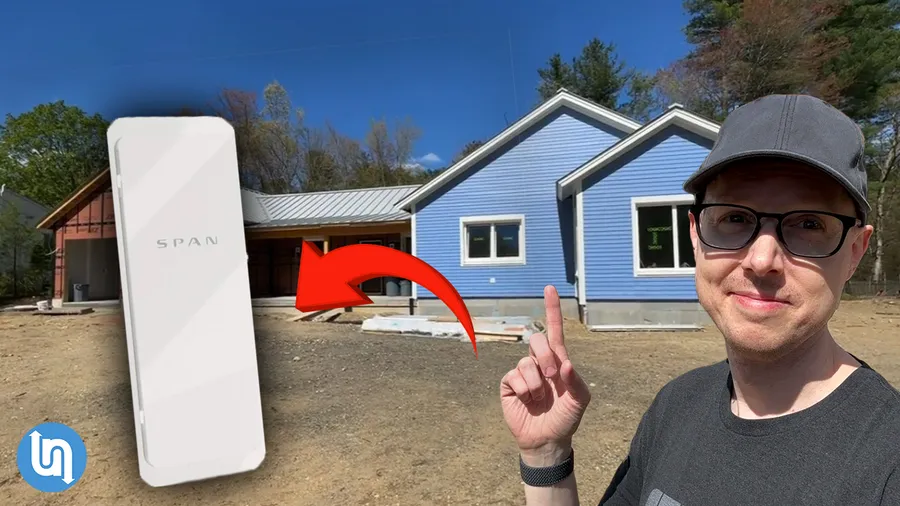
Both Paul and I have detailed energy monitoring systems because we both use SPAN Panels, which are smart electric panels. We can both see exactly how much electricity our HVAC systems use, broken down by individual circuits. No guessing, no estimates. Real data.
For a fair comparison, we're looking at just the core HVAC components. That's the air handlers and the outdoor units. For Paul, that means his two air handlers and two outdoor condensers. For me, it's my geothermal unit. We're leaving out the ERVs, dehumidifiers, and other accessories. Here, we’re measuring just the stuff that actually heats and cools the house.
| Paul's Annual Heating & Cooling kWh | Matt's Annual Heating & Cooliing kWh | |
|---|---|---|
| Bedrooms Air Handler | 659 | - |
| Bedrooms Heat Pump | 4,424 | - |
| Living Areas Heat Pump | 5,454 | - |
| Living Areas Air Handler | 2,034 | - |
| Geothermal | - | 2,393 |
| Total | 12,571 | 2,393 |
The grand total for just heating and cooling Paul’s home for one year is 12,571 kWh of energy. Mine for the same time frame is 2,393 kWh. If we normalize the cost per kWh to something like $0.30 kWh, which is roughly where it sits for me, then we’re looking at something kind of shocking. That would cost roughly $3,771.30 a year for Paul versus $717.90 for me. My running cost is 19% of Paul’s yearly total … or a savings of $3,053.40. Remember, that’s per year.
| Paul | Matt | |
|---|---|---|
| Yearly Cost | $3,771.30 | $717.90 |
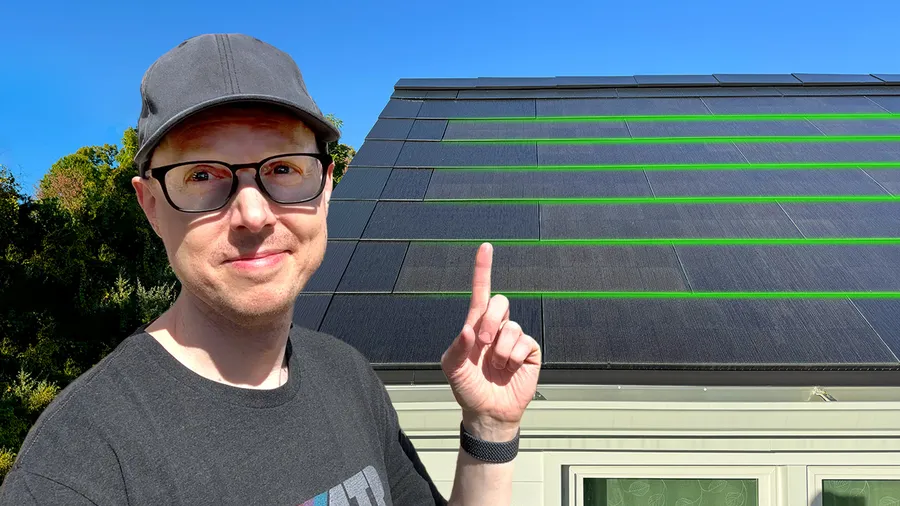
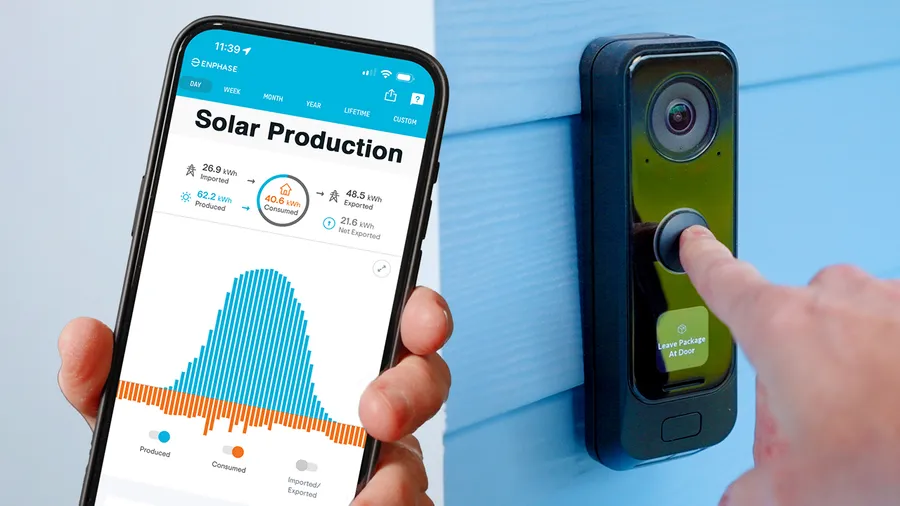
However, a HUGE caveat is that we both have solar with battery storage, so much of our actual cost is free sunshine. We also both participate in virtual power plant (VPP) systems with our home batteries, so we get paid several thousand dollars a year by the utility (I’ve got videos on all of that if you’re interested). Also, my house is a little more airtight and insulated than his house, so I retain my heated and cooled air better … but more on that in a minute.
Here's where it gets even more interesting. Paul made significant improvements to his system during his first year. He shortened the ductwork runs in the attic, reducing the distance that heated or cooled air has to travel. That single change improved his system efficiency by about 15%.
Think about that for a second … optimizing the ductwork design made a double-digit difference in energy use. Simply by moving air more efficiently over shorter distances and reducing energy losses.
And Paul's not done … he’s still upgrading. His basement still needs insulation. The attic hasn't been properly insulated yet after the ductwork changes. There are more efficiency gains coming.
Meanwhile, my system performance has been pretty stable since installation because everything was optimized from the start.
Seasonal Performance
Efficiency-wise, heat pumps are at their best in mild weather. They lose more and more of that efficiency the colder the weather gets.
In the summer, both systems perform well. Air conditioning is basically the same operation for both geothermal and air source. My geothermal system has an advantage because the ground is cooler than the outside air, even on a 95° F (35° C) day. But the difference isn't dramatic.
Winter is when things get interesting. When it's 20° F (-7° C) degrees outside, my geothermal system is exchanging heat with 50° F (10° C) ground. That's a much easier lift than Paul's air source system trying to extract heat from that cold air. His system has to work harder and occasionally needs to run defrost cycles.
Defrost cycles are when the outdoor unit temporarily reverses to melt ice buildup on the coils. During defrost, the system isn't heating your house. Most modern systems use backup resistance heat during defrost to keep things comfortable. The problem is that's effectively running an electric space heater, which isn't efficient.
Paul noticed this in his first winter, especially on those humid but cold days when ice would form on the outdoor units. He connected the defrost signal wires that the HVAC contractor failed to bother with. Now the heat pump can tell the air handler to turn on the heat strips during this defrost cycle. Paul's wife no longer needs to wonder why the AC is on in the middle of winter, sometimes several times a day during single digit cold snaps.
I don't have to deal with defrost cycles at all. The ground temperature is stable, so there’s no ice buildup, reversing cycles, or backup heat needed.
The Cost Question
Let's talk about what you really want to know. Is geothermal worth the extra money?
My total system cost:
- Geothermal System and Desuperheater: ~$59,400
- ERV and ductwork: ~$21,000
- Well drilling: ~$18,000
- Total (before incentives): ~$98,400
- Total (after incentives): ~$75,000
Paul's total system cost:
- HVAC system (2 Heat Pumps, 2 Air Handlers): ~$46,000
- Insulated Ductwork: ~$14,000
- 2 ERVs: ~$7,000
- Electrician: ~$2,000
- Total (before incentives): ~$84,000
- Total (after incentives): ~$69,000
Yes, I spent almost $100,000 before incentives, but after the 30% Federal tax rebate on the core parts of the system it came in at ~$75,000. That includes all the ductwork and labor for a new house, so keep that in mind.
As for Paul, his number of ~$69,000 includes completely removing and redoing all ductwork, as well as the ERV. My system includes installing the ERV and all the new house ductwork too.
If you were to focus in on just the costs of the main system without all the new ductwork (like you’re doing more of a system swap), you’d subtract about $21,000 from mine, and probably $21,000 or so from Paul’s. However, that’s a very rough guess because of the labor cost estimate. That would mean the systems would be around $48,000 for Paul’s and $54,000 for mine.
My system was projected to cost about half as much to operate each year compared to an equivalent air source system I looked at for my specific house. The operational savings would have been roughly $1,000 in annual savings. At that rate, the payback period for my specific setup would be 14 to 15 years.
Here's where things gets complicated. If I compared my operational costs to Paul’s, which was around the equivalent of $3,053.40 a year, my system would pay off it’s premium compared to his system in about 2 years ($75,000 - $69,000 / $3,053.40 = 2 years).
So, why the huge difference between the comparable air source quote I got for my house versus Paul’s air source system? Why is one a $1,000 a year savings versus $3,000 a year compared to Paul’s? A lot of that I think can be chalked up to the differences between the higher R-value of my home’s insulation. We’re talking about much thicker walls with minimal thermal bridging, and air tightness compared to Paul’s house. Bottom line: I think my house’s construction and design is doing a lot of the heavy lifting there.
However, Paul's system is still improving. That 15% efficiency gain from better ductwork already happened. More improvements are coming when he finishes insulating. His operating costs could drop further, which could reduce more of that gap.
There's also longevity to consider. Geothermal ground loops can last 50 years or more. The indoor equipment might need replacing after 20 to 25 years. Air source outdoor units typically last 15 to 20 years before replacement.
The New England Challenge
Paul and I both face something called the spark gap problem. That's the difference between the cost of electricity and the cost of natural gas in your area. New England has some of the most expensive electricity in the continental United States. That makes heat pumps less economically attractive here than in cheaper electricity markets.
If you live somewhere with cheap electricity, heat pumps are a no-brainer. But in Massachusetts and Connecticut, you need to be smart about it. Proper insulation, good ductwork design, and efficient equipment all matter more here. This is also why Paul's 15% efficiency improvement from ductwork is such a big deal. That directly translates to lower electricity bills in a high-cost market.
In our area, there’s also heat pump electricity rate incentives run by the utilities that you can sign up for to get cheaper rates.
When Each System Makes Sense
So which should you choose? It depends on your situation, your timeline, and your priorities.
Geothermal makes sense if you're building new or doing a major renovation. When you're already tearing everything up, the incremental cost is manageable. For instance, it could be rolled up into the mortgage. U.S. data shows payback periods ranging from three years to a decade.12 You also need space for a vertical well or horizontal ground loop. Companies like Dandelion Energy have compact drilling rigs that fit tighter lots. If you have room for a horizontal loop, you'll save significantly compared to the $18,000 I paid for drilling.
For me, geothermal was the right choice. I was building new with a long-term mindset. My system is performing better than projected, and I'm on track to easily recoup the costs over the decades I plan to live here.
Air source makes sense for almost everyone else. Modern cold climate units work down to negative 15 F or colder. If you already have decent ductwork, installation costs drop dramatically. Air source also offers flexibility. Paul has two systems for redundancy. If one fails during a winter vacation, the house won't freeze. That peace of mind matters when you've eliminated all fossil fuel backup.
For Paul, retrofitting with good air source equipment was the right call. The upfront cost was comparable once you factor in all the renovation work. And he's getting excellent comfort with efficiency that's way better than any fossil fuel burning furnace. On top of that, we’re both mostly powering our systems with free sunshine, and over time the grid power that our home’s are using in winter is becoming more and more renewable. One of the key takeaways was that there is a lot you can do to make your home more energy efficient, with proper insulation, windows, and so on, as Paul found out.
"Now that I have it all figured out and working, man, it feels good. I understand it all. I totally get it. Everything's tuned right. It's quite comfortable. And now my electric bills next winter, they are going to be less than the last two.” -Paul Braren
The real winner isn't one technology or the other: It's the heat pump concept itself. Moving heat instead of burning something is fundamentally more efficient. Whether you move that heat from the ground or from the air is a minor detail compared to the leap from combustion to heat pumps.
So, if you're ditching your gas furnace or oil boiler, don't get too hung up on geothermal versus air source. Focus on equipment that's suited to your climate and properly sized for your home, good insulation, quality installation, and finding a contractor who actually knows what they're doing. Get those fundamentals right, and either technology will serve you well.
At the end of the day, heat pumps rock, no matter which kind you choose.
Be sure to check out Paul's post: After 4 New England Winters Living With Just Heat Pumps: Insights That'll Help You and Your Contractor Plan for Comfort
- Geothermal heat pumps are crazy efficient. Should you get one? ↩︎
- Pros and cons of geothermal heat pumps ↩︎