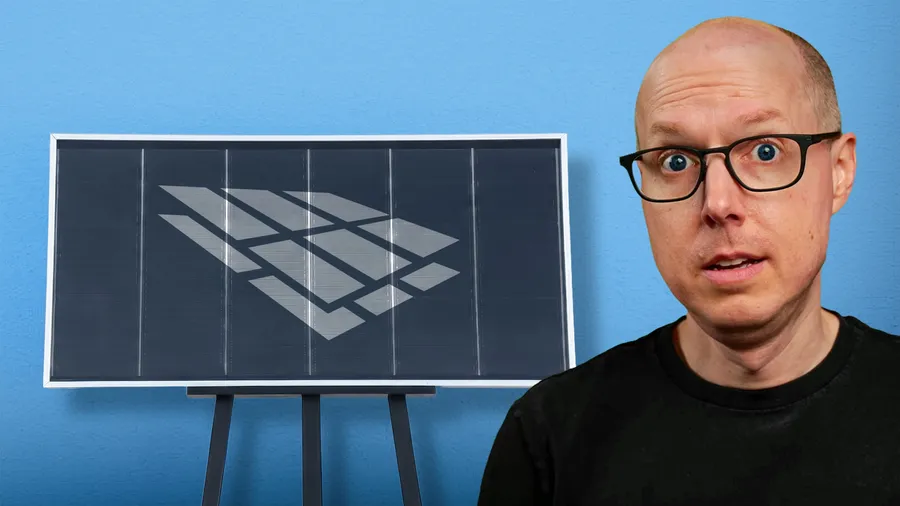
Perovskite solar cells could hit 35% efficiency and cost half as much as silicon, but they're still years away from your roof. Meanwhile, silicon panels just lost their 30% federal tax credit in the US, making them suddenly more expensive. So here's the $20,000 question: what’s the better path and value? Should you wait for the next solar breakthrough technology to finally arrive, or install silicon solar panels now? Which one gives you a better bang for your buck?
I get asked about solar a lot. People send me their quotes, their roof diagrams, their utility bills. But the question that comes up more than any other? "Should I wait?" Wait for the next breakthrough. Wait for prices to drop. Wait for the technology to get better. I've installed solar on two different homes now, so I've been through this decision myself. And here's the thing … that question never really goes away. There's always something newer on the horizon. So let's figure out if waiting actually makes sense.
To figure that out we need to understand the technologies we're considering. Today's silicon cells versus next-gen options like perovskite.
How Do They Work?
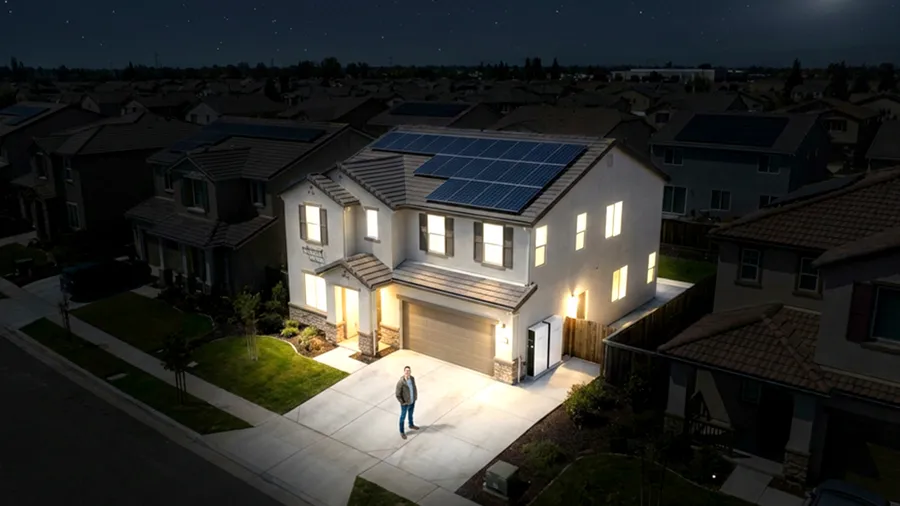
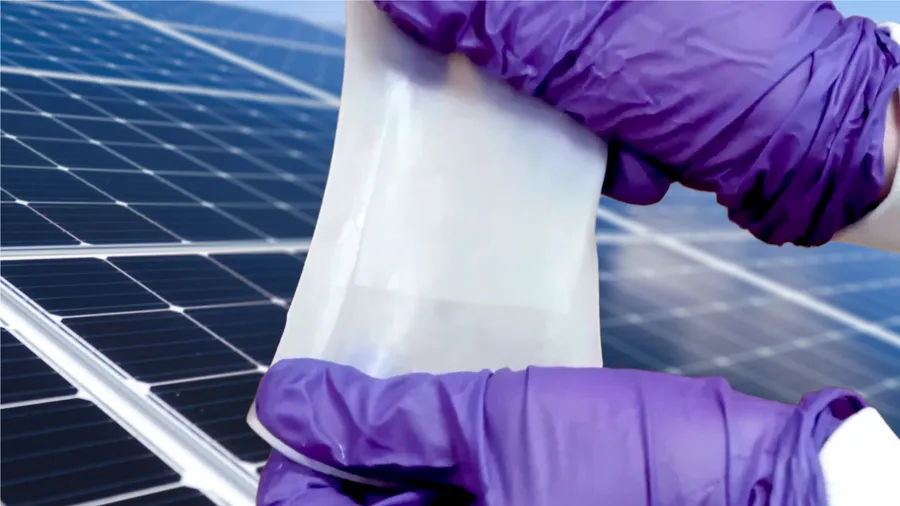
When I say the word “solar panel” you’re almost certainly picturing silicon PV, and that’s for a good reason. They’re pretty much every nowadays. I’ve got 43 of them on the roof of my home, plus 4 more on a shed in the backyard. Silicon is very common on earth. It’s actually one of the most abundant elements,1 2 and is a pretty cost efficient and effective as a photovoltaic (PV) material.3 Perovskite PVs work in a very similar fashion to silicon PVs. From an installation, purchasing, and appearance point of view, there’s no difference.4 The big difference is their tunable bandgap. Think of it like this: every solar material has a sweet spot for converting light into electricity. Silicon is stuck at one setting, but perovskites can be tuned to match different conditions, which is why they can be so much more efficient.5 6 I’ve got videos that go into more detail if you’re interested.
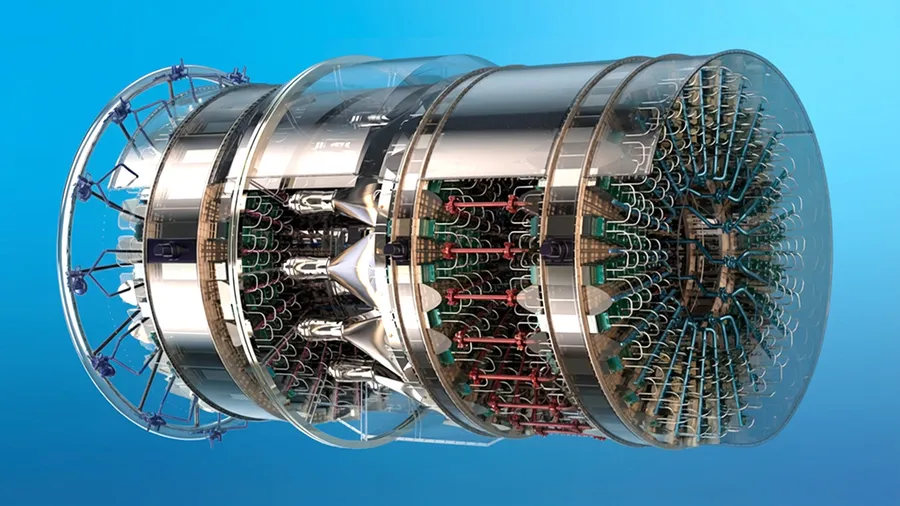
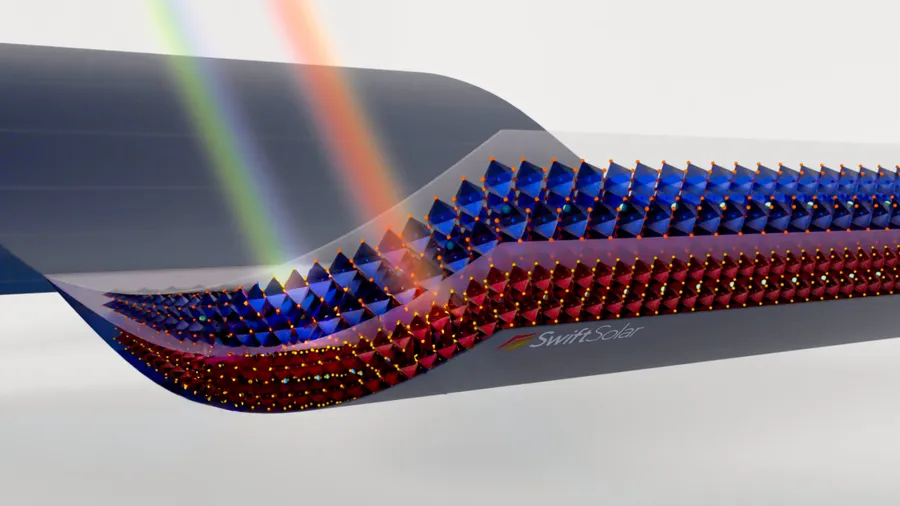
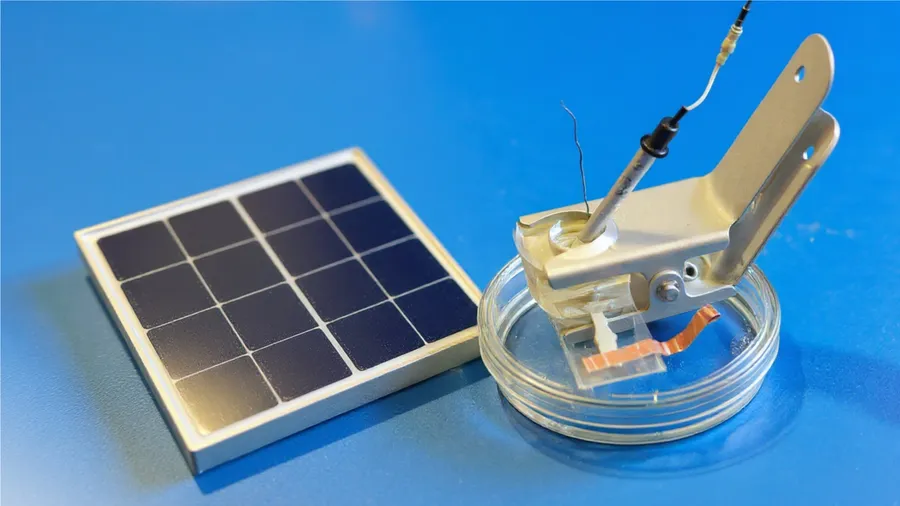
The tunability of perovskites also unlocks the power of tandem solar cells. We can tune the perovskites to eat a different wavelength of light from the silicon. A light in the range of 380 to 700 nm slams into the perovskite, and works through that system as normal.7 But near-infrared light at wavelengths of 800 to 2,500 pierce through the perovskites.7 Normally that would be lost, but a layer silicon behind the perovskite can absorb it. By working in … well… tandem, the solar cells duo let us “double dip” and extract more energy from the same beam of light. They can hit conversion efficiencies of near 35%, which is much better than silicon or perovskite on their own.8
One final thing before we get into the nitty-gritty of the math. All the advantages of perovskites come with some drawbacks. Perovskites are temperamental little crystals that degrade when exposed to moisture, heat, and prolonged UV radiation.9 That's a big problem for any device meant to soak up the sun, especially if it wants to compete with the 25+ year longevity of the humble silicon cell. Overcoming this challenge has been at the forefront of perovskite research. A few companies, like Oxford PV, have claimed they've conquered this with tandem PVs that are durable enough to compete with silicon and are already commercially deployed. The current crop of tandem cells have more modest efficiencies around 25%, but are expected to hit 30% within a few years.10 That’s what is really sparking this whole debate of get solar now or wait.
Other Solar 3.0 Contenders
While solar 3.0 has mostly come to mean perovskites, there are a few other emerging solar technologies that might be worth keep an eye on.
Let's start with CIGS. These semiconductor cells use Copper, Indium, Gallium and Selenide.11 The materials give them a really high absorption coefficient. We get the same power from a much thinner cell. They hit conversion efficiencies of 23.6%.12 They perform well in low-light and high-temperature conditions. And they're already on the market.
But CIGS are struggling. Silicon has outcompeted and undercut CIGS on price. By 2013 the gap grew wide enough that many CIGS specialists went under. The thin-film market has been mostly stagnant since.11 Still, CIGS isn't out of the race yet. Some researchers are making CIGS-perovskite tandem cells with efficiencies near 30%.13
Next up are quantum dots. These crystalline semiconducting particles can be just a couple nanometers across.14 Their tiny size enables quantum confinement. Only certain wavelengths of light can interact with them. We can tune this by changing the quantum dot's size. Like perovskites, they can pair with silicon in tandem cells.15
The big trick is multiple exciton generation. Normally when a photon hits a semiconductor it knocks loose one electron-hole pair. We capture that as electricity before it settles back down. But quantum weirdness lets quantum dots generate more than one exciton per photon.14 The U.S. National Renewable Energy Laboratory says quantum dot solar cells could potentially reach efficiencies as high as 66%.16
When can you grab some? They're still mostly locked to the lab bench. Arizona-based First Solar took a big step for this tiny technology when they signed a deal with quantum-dot manufacturer UbiQD last summer.17 There's been no news since. Time will tell if this leads to commercially relevant quantum dot PVs.
Finally, multijunction III–V cells. Sometimes called compound cells because they stack different compound elements. These advanced solar cells hit efficiencies as high as 45%.18
They use different semiconductor layers to absorb different wavelengths. Indium gallium phosphide (InGaP) absorbs blue and UV light. Gallium arsenide (GaAs) captures visible light. Germanium (Ge) grabs infrared.1819
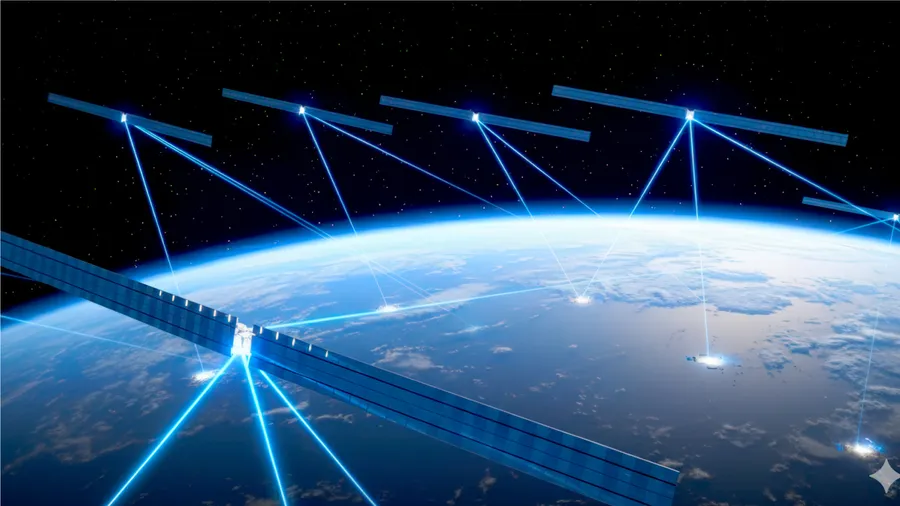
Since these are essentially three specialized cells in one housing, they're prohibitively expensive and time-consuming to assemble. For now compound cells are limited to high-end use cases like space exploration. They've been the PV of choice for some Mars missions.19 But as the technology improves and costs drop, this tech could make its way to the consumer market, just as silicon did.
The Math - Silicon
So should you wait for solar 3.0 or go with ol' reliable silicon? Quick caveat: I'm working in USD with averaged pricing … so there’s going to be some generalizations. There are tons of variables here. Your situation will likely be different.
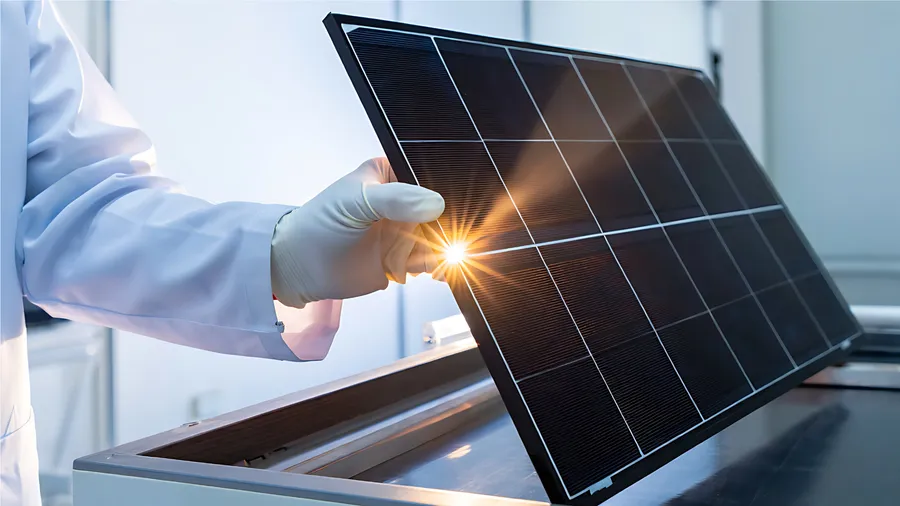
Okay, what’s our base line? Let’s go with a 6kW system. It's on the smaller end and should fit most roofs. It's large enough to see a real change in your bills. The average cost of installing a 6kW system in the United States is $15,900.20 That includes labor, panels, permits, and local rebates.
A system this size will save about $1,500 annually on your energy bill.21 Obviously, this depends on how much electricity you use, and how much energy your PVs produce. Again, we have to deal in averages here. How long will it last? The well-documented answer is 20 to 30 years. To keep things simple, let’s just say 25 years.22
Here's the math. $1,500 for 25 years is $37,500 in lifetime savings. Subtract your install costs of $15,900 from that and you get a “real” savings of $21,600 on average. Not too shabby! For payback, divide $15,900 by $1,500 annual savings. That's 10.6 years, roughly half the system's lifetime (it’s actually better than that, but we’ll let that go). I think just about anyone would be happy with the numbers we got here … but they could be better.
Location matters. A 6kW system in Phoenix Arizona, known monument to man's arrogance, will generate around 35% more electricity than that same system near me in Boston.20 And while the federal tax credit ended January 1st, your city, state, or neighborhood may offer rebates. In markets like Australia with better incentives and more sun, that same 6kW system costs around $4,300 and saves even more.
The Math - Perovskite Tandem
So what about the next-gen technologies? What kind of costs saving are you looking at for perovskite tandem cells? Let’s do our best to figure it out! I want to be very clear here, we’re working with the best information available at the moment. While some companies are targeting earlier release dates like 2028, the current consensus prediction is that commercial residential perovskites won’t become a mainstream option until 2030. A lot can change in even a couple years, and we could be way off, To make things fair for the materials and easier on us, let’s assume to that the installation cost for perovskite tandem cells is the same as silicon. Also, to keep everything square, we’ll assume we’re going for a 6kW system again.
So how much does 6kW of perovskite tandem cells cost? Techno-economic analysis from the National Renewable Energy Lab (NREL) suggests that American-made 25% efficient tandem panels could be as cheap as $0.29 to $0.42 per watt. This does assume we can manufacture them in gigawatt scale factories, which I think is unlikely to happen but 2028, or maybe even 2030. We’ll just roll with it for now and and say $0.35 per watt.26
But that’s just the manufacturing cost, which is only about 12% of the total installation cost.27 To figure out how much it costs the consumer, we also have to work out out much it will cost to install per watt. That includes stuff like labor, shipping, and the racks and rails that will attach it your roof and so on. Let’s try to flatten some variables and assume the cost here is identical to silicon.
In 2026 silicon modules look to be around $0.21 per watt.28 Plugging that into to our calculations for a 6kW silicon system, 12% of $15,900 is equal to $1,908. Meaning everything outside of manufacturing costs us $13,992. So at $0.35 per watt, the manufacturing cost of 6kW of panels would be $2,100. Add the $13,992 back in, and theoretically that means a 6kW perovskite system would run you $16,092. That’s not all that different. The bigger your system, the more that manufacturing cost difference adds up.
But that's the upfront cost. How much will a perovskite system save you over time? Oxford PV offers the most solid numbers. Their modules hit a reported 26.9% efficiency.29 That's ahead of silicon's 20 to 24% range. Oxford is targeting 30% by 2030, but let's use today's conservative numbers.30 For our comparison, we'll assume 22% efficient silicon panels and keep everything else identical. At 26.9% efficiency compared to 22% for silicon, a perovskite tandem system is about 22.3% more efficient.
With that 22.3% efficiency boost, perovskite saves you an extra $335 annually. That's $1,835 per year total. But perovskites don't last as long as silicon. Some currently max out around 15 years, though many companies are targeting 20 years by 2028.31 At 20 years you're looking at lifetime savings of $36,690. Subtract the $16,092 install cost and you get real savings of $20,600. That's worse than silicon's $21,600. If perovskites stay stuck at 15 years it gets worse. However, if they match silicon's 25-year lifespan, that extra $335 per year adds up to over $8,000 more than silicon. Payback period is 8.8 years regardless. About two years faster than silicon.
Caveats and Additional Considerations
Is that the final word? Victory to silicon? No. As we’ve mentioned before, I tried to make the math as general and simple as possible, so that we could get a handle on the situation. However, there’s a lot of variables and caveats to consider.
Location matters… a lot. Sunnier places will outperform temperate regions like New England. Panel direction matters too. In the northern hemisphere they generally face south, but if that side of your roof is shaded or limited, your output suffers.32
On the financial side there's also incentives. While the federal tax credit just ended, your state or city might offer rebates. Again. I point to Australia, where friendlier incentives, policies and a different level tech maturity let’s residents of even Australia’s most expensive states install roof-top solar for cheaper than the cheapest American states.33 And the flipside of incentives are tariffs. Current tariffs on China and Southeast Asia affect most silicon panels on the US market, but not elsewhere. Whether those tariffs help or hurt perovskites depends on where they're manufactured … and who’s buying.34
When it comes to perovskites there's a lot of unknowns. I've made assumptions about costs and performance. By the time they actually hit mass scale, the market could shift and throw our calculations way off. In fact, they probably will. There's no guarantee the first generation will be as cheap or effective as expected, or as cheap as the second and third generations.
But the biggest factor is opportunity cost. Silicon installs take one to three days. Perovskites? The current consensus is that we’re not expected see residential commercial perovskites hit in a meaningful way until 2030. Oxford PV is targeting 2028, while conservative estimates say 2035. That's years of lost savings while you wait.
Wrap-Up
So what should you do? Here's my take. If you want to save money, be greener, or be more energy resilient (whatever your personal motivation may be), don't wait. I've installed silicon panels twice. Zero regrets. Even after moving just five years later. Silicon works. It's proven. You can get it installed relatively quickly and start saving immediately.
If it doesn't make financial sense right now, that's fine too. Prices keep dropping for both technologies. But if you can swing it? The math says go now. Every month you wait is a month of lost savings.
So while the next generation of solar technology is exciting… I wouldn't wait.
- Energy Sage, Solar Photovoltaic Cells ↩︎
- Wikipedia, Silicon ↩︎
- Wikipedia, Solar Cell ↩
- Wikipedia, Perovskite Solar Cell ↩︎
- Maysun Solar, What is Energy Band Gap of Solar Cells? ↩︎
- Feng, J., Wang, X., Li, J. et al. Resonant perovskite solar cells with extended band edge. Nat Commun 14, 5392 (2023) ↩︎
- World Economic Forum, How tandem solar cells can speed the energy transition ↩︎
- PV Magazine, JinkoSolar achieves 34.76% efficiency for perovskite-silicon tandem solar cell ↩︎
- Ossila, Perovskite Solar Cells: Causes of Degradation ↩︎
- PV Tech, Oxford PV ships first commercial perovskite tandem modules ↩︎
- Wikipedia, Copper Indium Gallium Selenide Solar Cell ↩︎
- Science Daily, New world record for CIGS solar cells ↩︎
- Pei, Fengtao & Lin, Shuping & Tang, Jiahong & Huang, Xingye & Han, Yu & Sun, Qi & Lin, Shiju & Wang, Hao & Zhang, Zhongyang & Zhuang, Xinmeng & Li, Kailin & Zhu, Cheng & Chen, Yihua & Song, Tinglu & Cheng, Teng & Cui, Yy & Zhang, Ying & Hou, Huiqing & Zhou, Wentao & Jiang, Yan. (2025). Perovskite/CIGS Tandem Solar Cells with over 1000 h Operational Stability through Interconnection Stress Relief. Journal of the American Chemical Society. 147 ↩︎
- Wikipedia, Quantum Dot ↩︎
- Wall Street Journal, Supercharging Solar With Quantum Dots ↩︎
- NREL, Quantum Dots Promise to Significantly Boost PV Efficiencies ↩︎
- PV Magazine, First Solar to integrate quantum dots to boost efficiency ↩︎
- DOE, Multijunction III-V Photovoltaics Research ↩︎
- Wikipedia, Multi-Junction Solar Cell ↩︎
- Energy Sage, How much does a 6 kW solar panel system cost in 2025? ↩︎
- Solar Reviews, How Much Money Do Solar Panels Save in 2025? ↩︎
- PV Magazine, How long do residential solar panels last? ↩︎
- Mose Solar, Perovskite Solar Cells: The Reality of Commercial Availability in 2024 ↩
- IdTechEx, Perovskite Photovoltaic Market 2025-2035: Technologies, Players & Trends ↩
- Residential Solar Panels, Perovskite Solar Cells: The Breakthrough That’s Making Solar Power More Affordable ↩
- PV Magazine, U.S.-made perovskite-silicon tandem solar modules could be produced at around $0.35/W ↩︎
- Energy Sage, Solar panel cost in 2026: It may be lower than you think ↩︎
- https://www.pv-magazine-australia.com/2026/01/06/china-wafer-leaders-lift-quotes-as-2026-module-prices-may-hit-0-21-w/ ↩︎
- https://www.oxfordpv.com/press-releases/oxford-pv-solar-sustainability-initiative ↩︎
- https://www.oxfordpv.com/mainstream ↩︎
- https://www.pv-magazine.com/2026/01/16/oxford-pv-targets-20-year-lifetime-for-perovskite-silicon-tandem-modules-by-2028/ ↩︎
- Electric Choice, 15 Things to Consider Before Installing Rooftop Solar Panels ↩︎
- PV Magazine, South Australia leads international rooftop solar cost rankings ↩︎
- https://spectrum.ieee.org/perovskite-solar-cells-costs-and-tariffs ↩︎
- PV Magazine, Oxford PV targets 20-year lifetime for perovskite-silicon tandem modules by 2028 ↩