Two and a half years ago, I told you about a company using "death rays" to drill deeper into the Earth than anyone has before. The goal? Unlock cheaper and more plentiful geothermal energy for the world. Well, I just got back from Houston, Texas, where I watched them do exactly that. They melted through solid granite with millimeter waves in real time.
We're not talking lab experiments anymore. This drilling operation could change how we think about geothermal energy. The heat beneath our feet could be the most versatile, reliable, and abundant energy source ever — but it's out of reach for most people. While the old joke goes that nuclear fusion is always just 30 years away, an offshoot of fusion tech may be changing the future of geothermal drilling today. So, does this team have what it takes? Or is Quaise out of its depth?
The Technology
Let me quickly remind you why Quaise is doing what they're doing down at their Texas HQ. A major obstacle to traditional geothermal is that the hot spots it needs occur near tectonic plates.1 Basically, the best place to drill for heat is near volcanoes and where the earth's heat is closest to the surface. Outside these areas, even if heat is conveniently located closer to the surface, the limitation isn't hard rock — it's hard cash. Drilling deep enough to reach really hot temperatures is incredibly expensive. In fact, the drilling process makes up anywhere from 30% to 57% of the cost of establishing a geothermal plant.2
That's where MIT researcher Paul Woskov proposed a different approach. He borrowed technology from nuclear fusion research, specifically gyrotrons that generate millimeter waves.3 4 Millimeter waves are electromagnetic radiation — kind of like the lasers you might associate with spy movies or cat toys, but much longer.4 These high-powered vacuum tubes produce beams that fusion researchers have used to heat plasma for the past 50 years.5 And by "heat plasma," I don't mean leftovers in the microwave. During fusion, plasma reaches over 150 million degrees Celsius. That’s about 10 times hotter than the center of the sun.6
Now, Quaise is adapting this technique for drilling. No biggie.
“So this is the inner part—the gyrotron itself. This is a superconducting magnet that creates a very strong magnetic field to bunch together the electrons. So in the bottom, you've got a filament, and then you're heating this up, and it's spitting out electrons. They pass through this section where the magnetic field is concentrated to group them together. As they group together, they're giving off electromagnetic waves, which bounce around in here through a series of mirrors and come out a window. Then these emit out the window, and that's what we use—we capture and direct it for our energy drilling.” — Stephen Jeske
So why pivot to pulses? Because grinding through rock is one thing, but vaporizing it is another. It simplifies the process: no drill bits to replace, no temperature constraints, and no fussing over rock strength.7
The drills need all the help they can get. Making geothermal energy viable requires reaching as far down as possible. The closer you are to the earth's core, the more heat you feel, with temperatures increasing roughly 25°C per kilometer (or 1°F per 77 feet).89 Higher temperatures mean more energy extraction, especially if we can create supercritical steam at around 374°C to turn turbines and generate electricity.
So, here's what's changed since my last video…
The Big Shift - From Research to Reality
“One of the things we have to remember is that Quaise was not created to just be a drilling company. We're not in the business of selling or offering drilling services. We are in the business of putting clean energy—firm baseload energy—on the grid on a global scale.” — Carlos Araque
That's Carlos Araque, Quaise's CEO. And this represents a fundamental shift in how they're positioning themselves in the market.
“This is the year where we stop talking just about millimeter wave drilling, which is the predominant narrative you've heard for the last seven years—and we start talking about our first commercial project and offtake agreement.” — Carlos Araque
Quaise isn't just developing cool drilling technology. It's becoming an energy company with a concrete timeline and power purchase agreements.
“We will confirm the first super hot geothermal resource by the end of 2026. We have leases. We are well underway in PPA negotiations, and we will put the first electrons on the grid in the 2028 to 2030 timeframe.” — Carlos Araque
What I Saw in Houston
That covers the business side, but what do these death rays actually look like? Side note: they don't like me calling them death rays, but I can't help myself.
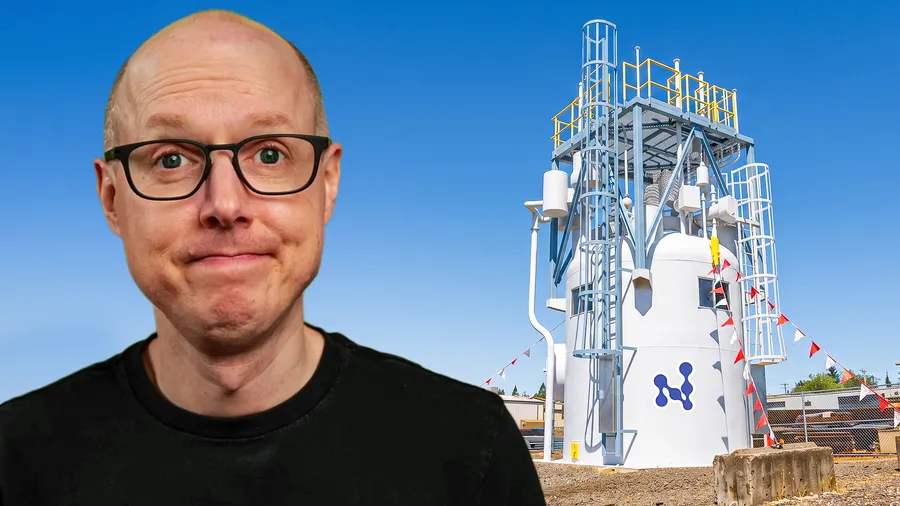
Well, I got to see their full-scale demonstration at a Nabors drilling facility outside Houston, Texas. But hold on — safety first.
“Three points of contact, one hand on the railing, two hands on the stairs at all times or two feet on the stairs. You limit your ability to fall backwards or forwards walking downstairs.” — Cameron Marsh
After the safety briefing (because this is real industrial equipment) I got to see something pretty incredible.
This is a full-scale drilling rig, but instead of a traditional drill bit, they've integrated their millimeter wave system. The key innovation is this articulated waveguide that can move up and down while transmitting power. It does exactly what it sounds like: contains and guides the millimeter waves into that nice, well…death ray.10
“So really three things that Quaise has had to develop as part of our drilling. One is the ability to move and shoot millimeter wave at the same time. In the fusion industry, the gyrotron and waveguide is always stationary. What Quaise had to do is make a dynamic waveguide that allows us to stroke while we're shooting power through it.” — Henry Phan
Next is newly integrated diagnostics, like radar to assess the rock's depth and a pyrometer to determine the rock's temperature. This helps maintain consistent measurements as the drill moves deeper into the earth.
The team has also developed a special bottom hole assembly that shapes the beam.
"We beam the power through the tubulars in a very Gaussian type shape. But when we get to the bottom, we actually want to fan out that beam, such that it burns a very uniform circle. So we actually do a conversion down hole that converts that into a very circular beam." — Henry Phan
By fanning out the beam, they're making it a larger diameter than the assembly drilling the hole. The result? A perfect circular hole through solid granite with room to spare for the waveguide pipe being lowered into the hole.
If you're wondering how you get all that vaporized rock out, it's with air combined with that extra space in the well. Traditional drilling uses high-density drilling mud to counter surrounding pressure and prevent well collapse. But millimeter waves don't require drilling mud because of how they strike the bore walls, causing vitrification. It transforms the surface into that glassy coating. This seals wall cracks and increases internal pressure, balancing the outer forces. The result? Deeper, more stable boreholes without any drilling mud, making the whole process more profitable.
To evacuate the tiny vaporized rock particles, air is blown through the waveguide, carrying the waste up and out of the well. The hot exhaust is then filtered through water to cool it down and collect the waste material. The waste can be easily collected and cleaned out, allowing the water to be reused again and again.
But the most impressive part is what I got to see and hold.
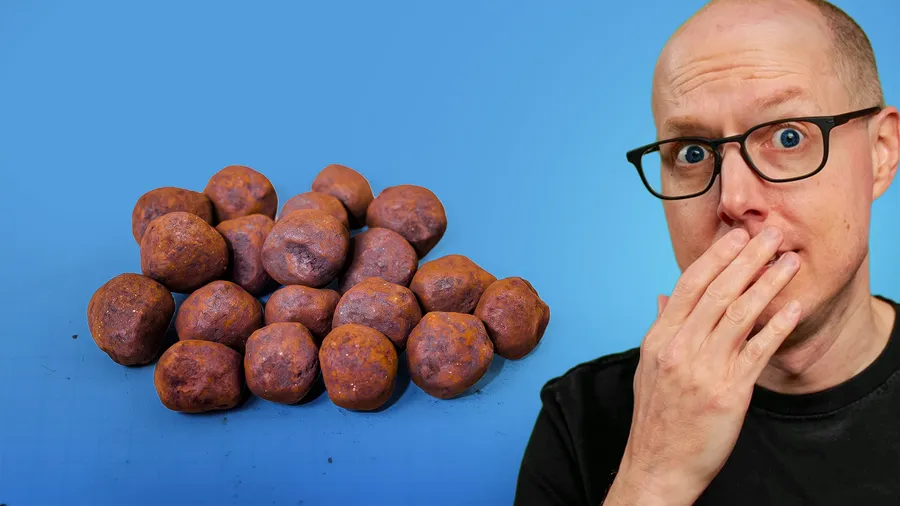
“It never gets old to make lava at work. We've gone through a number of different drilling parameters to perfect this recipe and make sure we can drill this reliably.” — Stephen Jeske
These are rock solid results — actual rock samples they've drilled through. You can see the glassy liner that forms as the rock melts and solidifies, essentially creating its own casing.
But drilling different types of rock presents different challenges. The Quaise team has learned through experience that rock composition significantly affects drilling rates. Granite contains quartz, which reflects millimeter waves more than other minerals, requiring more energy to reach vaporization temperatures. Basalt, being more homogeneous, may allow for faster drilling rates.1112 It's a complicated science that’s still getting figured out.
Getting to the bottom of the geology matters because in real-world conditions, the Quaise team will encounter all sorts of variation in the rock that could affect their drilling efficiency.
Real-World Challenges
There's another problem that could drill down into their success, though, and lab testing can't fully address it. If groundwater continuously seeps into the borehole, it could get Quaise into hot water — literally. It would take enormous amounts of the gyrotron's energy just to boil it away, dramatically increasing drilling time and energy costs. But their test drill sites should help answer that question.
The power requirements are also substantial. The gyrotron pulls incredible energy, requiring a custom-built power supply system that may exceed what the electrical grid can provide at drilling sites.
“This is a 100-kilowatt system. A hundred kilowatts is probably the power of a car. We need to upgrade that to megawatts. A megawatt is like a small jet engine. We have that gyrotron coming next month.” — Carlos Araque
All of this equipment needs to be containerized and transportable to remote drilling sites, adding complexity and cost.
Progress Since 2022
That said, the progress since my last video has been dramatic. They started with a klystron — another vacuum tube that generates microwaves13 — but have since moved up to successfully drilling 10-foot holes with their gyrotron.
“This one here was drilled with a klystron. The power output was about 10 kilowatts. We were able to get a 100-kilowatt output gyrotron. The higher power enabled a bigger hole and the higher frequency really enabled us to go deeper as well.” — Stephen Jeske
And Quaise isn't stopping there. I also got to see where they're setting up their 1 MW system. The scale difference is massive.
“1 MW needs to be immersed in oil. It has to do with keeping it cool, but then also preventing breakdown. You have dielectric oil in there because everything's under such high voltage that you can have arcs in the air.” — Stephen Jeske
The Unexpected Fusion Connection
One of the most fascinating aspects of this story is the relationship between Quaise and the fusion industry. Some of the team came from the fusion world, and what they told me completely changed how I think about technology development.
The fusion industry was initially skeptical that gyrotrons could work for drilling. These are incredibly delicate machines designed for precise laboratory conditions and controlled fusion reactions.
But by adapting them for the harsh, dirty environment of drilling operations, Quaise is pushing this technology far beyond what the fusion industry thought was possible. They're basically improving gyrotron reliability, and this cross-pollination is really heating up both industries. All those improvements will eventually flow back to help the fusion industry when fusion energy finally becomes commercially viable.
This is exactly why I love following cutting-edge technology. Innovation doesn't happen in a straight line. Sometimes the perspective you need comes from a completely different industry tackling a different problem.
Fusion researchers (aside from MIT's Paul Woskov) probably never imagined their plasma heating technology would end up drilling holes in the ground. But here we are, and both industries are better for it.
The Economics Question
But here's the critical question: can this actually compete on cost? Let's dig deeper into the numbers.
According to recent data, onshore wind can produce electricity for as low as $30 per megawatt-hour. Solar is similarly competitive. Nuclear power typically runs around $100-150 per megawatt-hour.
Quaise estimates their technology could achieve costs between $68-115 per megawatt-hour, depending on location and depth required. That puts them potentially competitive with nuclear, but still significantly higher than wind and solar.
However, Carlos explained something crucial about why this approach could actually work at scale.
“In oil and gas, you have to remember oil and gas powers the world today. Those projects command internal rates of return of 15 to 30% annualized. Wind and solar projects? 5 to 10%. When you bring into the world a geothermal project that has those metrics and that scalability potential, you've bent the curve on energy transition.” — Carlos Araque
As Carlos says, offering clean energy isn't enough. You need to show profitability so that the oil and gas industry will want to follow suit. It's all about the internal rate of return (IRR).15
"It's only when you bring the IRRs up to the 15, 20, 25, 30% that it's inevitable. And it's the only way to get there - you have to go hot." — Carlos Araque
And going hot means accessing what they call "super hot rock," or temperatures above 375°C,16 where you get supercritical water that's much more energy-dense. A well plunging into super hot rock could yield up to 10 times more energy than a conventional enhanced geothermal system.17 Research indicates that super hot rock could reduce geothermal's Levelized Cost of Electricity by 50% and have a lower cost than onshore wind or even solar.18
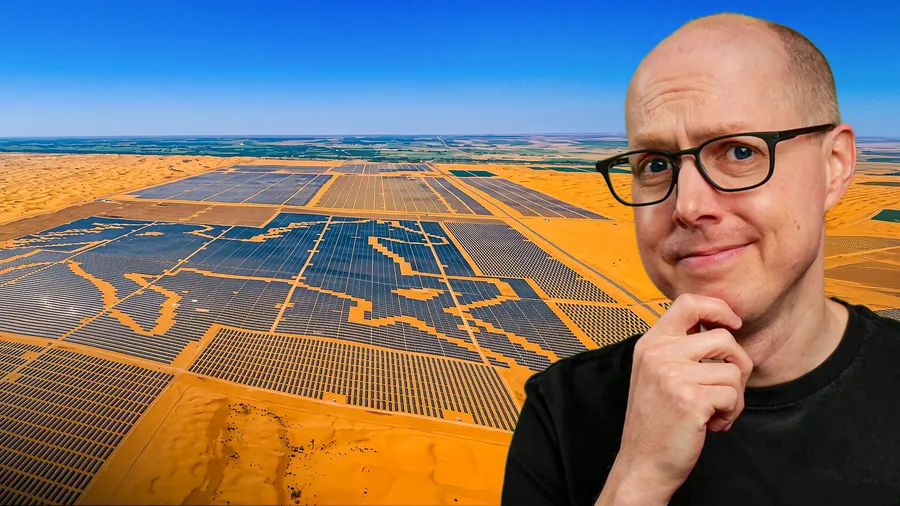
The heat beneath our feet is staggering. Even a tenth of one percent of Earth's stored heat could, in principle, cover humanity's total energy appetite for millions of years.1920 Yet despite that vast resource, geothermal plants generated just 0.3% of global electricity in 2018. Recent IEA modeling shows that, with next-generation drilling and reservoir technology, geothermal could realistically provide up to 6,000 TWh per year by 2050 — roughly 15% of the additional electricity the world will need.2122
The Drilling Reality Check
Now, if you've heard about Quaise before, you might be wondering about those famous "20-kilometer holes" they've talked about. During my trip, Carlos set the record straight on the 12-mile milestone.
“People love this idea that we're gonna drill 20 kilometers. The real target is not depth. The real target is how hot we go. We want to get to 300 degrees Celsius, to 500 degrees Celsius.” — Carlos Araque
They've divided the world into tiers based on how deep you need to go to reach those temperatures.
“Tier one means we get there within the first 5 kilometers. That's 5% of the world population. Tier two, we get there in the first 10 kilometers—40% of the world population. And tier three, within the first 20 kilometers, and that's 90% plus of the world population.” — Carlos Araque
The smart strategy? Start with the easy targets.
“We don't start in the hardest ones. We start in the easiest one, unlock the true value of going hotter, and start expanding the business to go deeper.” — Carlos Araque
Why This Could Actually Work
One thing that impressed me was how much of this technology leverages existing infrastructure and expertise.
“We designed it to be exactly the same, so it'll be compatible with conventional drilling. Operators could very easily be retrained to do this system. There's nothing to it. It's just connecting drill pipe.” — Stephen Jeske
The drilling process itself is remarkably simple compared to conventional drilling. When Woskov estimated the costs, he found that for a hole with a 20-centimeter (or 8-inch) diameter about 10 kilometers deep, it would cost something like half a million dollars of electricity to vaporize granite, compared to around $30 million for a mechanical drill.23 He estimated that the gyrotron system could be maybe 10 times cheaper than a really deep mechanical drill well.24
“10 days is 240 hours, so you spend seven-eighths of the time running the pipe in and out of the hole to replace that drill bit. We talk about drilling a very consistent 5 meters per hour. It just goes because there's nothing to replace.” — Carlos Araque
According to the US Department of Energy's 2019 GeoVision report, leveraging these untapped subterranean heat sources could increase geothermal-based electricity 26-fold by 2050.25
What's Next
Where does this go from here? Carlos laid out a clear timeline.
“We will raise $200 million this year. We'll launch that Series B this year. We'll use the proceeds from that Series B to create that first geothermal project as a commercial project. It's not a demonstration, it's not a proof point. It is electrons for somebody that's paying for them.” — Carlos Araque
The first project will likely be in Oregon, with other sites in development across the western US.
“From today's perspective, it's not definitive that it's gonna be Oregon, but I think it's 90% likely it will be Oregon.” — Carlos Araque
But Carlos's final message was about more than just Quaise.
“Energy transition is solvable. We have to stop being shy about pursuing the real solutions at scale. This is a hard problem. There are solutions. Deep geothermal, super hot geothermal is one of them. I think nuclear could be one of them, and fusion can be one of them. Those are hard. Let's not shy away from that. Let's embrace them fully.” — Carlos Araque
Look, I don't know if Quaise will achieve everything they're promising. But what I do know is that in the two and a half years since my last video, they've gone from melting small rock samples in a lab to operating a full-scale drilling rig and signing commercial agreements.
That's the kind of tangible progress that gives me hope. And if they can make geothermal economically competitive with oil and gas, the future of clean energy could really be heating up. Who knows how much further things could look up? Or should I say, how much deeper things could go?
- "Where geothermal energy is found - EIA." ↩︎
- 2025 Geothermal Drilling Cost Curves Update ↩︎
- "Rock, drill bit, microwave: Paul Woskov explores a new path through ...." ↩︎
- Reaching underground resources ↩︎
- "Fusion tech is set to unlock near-limitless ultra-deep geothermal ...." ↩︎
- How Hot Is Too Hot in Fusion? ↩︎
- "Fusion tech is set to unlock near-limitless ultra-deep geothermal ...." ↩︎
- Geothermal Energy ↩︎
- Geothermal Gradient ↩︎
- Waveguide ↩︎
- “Reaction of different rock types to low-power (3.2 kW) microwave irradiation in a multimode cavity” ↩︎
- “Thermal simulation of millimetre wave ablation of geological materials” ↩︎
- Klystron ↩︎
- ITER In a Few Lines ↩︎
- Internal Rate of Return (IRR): Formula and Examples ↩︎
- "Path to SuperHot Geothermal Energy Development." ↩︎
- "AltaRock Energy Initiates Development of First SuperHot Rock ...." ↩︎
- "The Potential for Superhot Rock Energy in the United States" CATF" ↩︎
- "AltaRock Energy - ARPA-E." ↩︎
- "Renewable capacity highlights - IRENA." ↩︎
- “IEA - Technology breakthroughs are unlocking huge potential for geothermal energy” ↩︎
- “US DOE - GeoVision” ↩︎
- Paul Woskov quote from 2022 video interview ↩︎
- Paul Woskov quote from 2022 video interview ↩︎
- "GeoVision | Department of Energy." ↩︎