If you drove past a gas station recently, you saw it. If you stopped at one, you felt it. Gas prices just had their biggest one-month spike … ever. The war in Iran has already cost the average American household $184 1. That's real money, really gone.
And that's just the start. The International Energy Agency is calling this the most severe oil supply shock in history 2. About one-fifth of the world's oil flows through the Strait of Hormuz. Oil still makes up roughly 80% of global energy 3. You don't need to be an economist to do that math.
But here's the part that stopped me. Even if the strait reopened tomorrow, it would take years for production to get back to prewar levels. Years 4.
I built my home with solar, storage, and an EV, partly so I'd be self-sufficient during winter outages. I wasn't planning for a war in the Middle East, but that's the strange thing about this moment. A climate story just became a security story. And a security story just became a personal one.
Here's the flip side. Last year, solar added more new power generation than any single technology, in a single year, ever. 5 That's the IEA, not me.
So, here's what I wanted to figure out. Is this war actually speeding up the energy transition? Or is it just exposing cracks that were already there? Because the answer isn't simple. And it's not the same everywhere.
Let me say something obvious up front. This war is a human and economic catastrophe first. Everything else flows from that. The US and Israel started it in late February. Iran responded by taking control of the Strait of Hormuz, and ship traffic basically stopped. Both sides have hammered energy infrastructure across the region. And if you've been following the news, you've heard the same loop. The strait opens. It closes. It opens again. But that tit for tat misses the point. Even if traffic resumed tomorrow for good, the damage is already baked in.
Here's what makes this moment different from past oil shocks. Clean energy isn't just the "climate choice" anymore. It's winning on cost 6. In a lot of places, a new solar farm is already cheaper than running an old gas plant. So on paper, a war that pulls 20% of the world's oil offline should be rocket fuel for the transition. Except the oil companies that aren't near the strait are about to have the best quarter of their lives. Both of those things are true at the same time. And the story of how they collide is already playing out, country by country.
The Global Picture
There is another piece of big and obvious news here. The war in Iran IS pushing the energy transition forward in many places. We know this because country after country is responding to this crisis by accelerating their adoption of renewable energy.
I'll admit, when I first heard "the war is accelerating the energy transition," my gut said, "sure, but for who?" I'm sitting in a house in New England with solar and a battery. I'm not in Spain. I'm not in South Korea. But it turns out this isn't just a headline about faraway capitals. It's a pattern, and it's happening at every level. Let me show you what I mean.
In Europe, France is ramping up its electrification plans, and might even fund it with taxes on fossil fuel companies. The UK has a plan to decarbonize housing with heat pumps and solar. Spain is the shining example of using renewables to avoid the worst of the energy shock. The country’s government has touted their massive green energy investments as a reason the country has been shielded by the worst of the price hikes. And there’s something to it. 7 8
We see similar moves in Egypt and India, which are adding gigawatts of renewable storage and production. And we see it in Southeast Asia, the area most reliant on oil from the strait. Then there’s Japan, which is speeding wind, and returning to nuclear, overcoming very reasonable concerns following the Fukushima disaster. South Korean president Lee Jae Myung laid it out clearly, saying “Our future will be at serious risk if we continue to rely on fossil fuels.” 7 9
The writing is on the wall for countries around the world, and in Korean, Hindi, and the Queens English it reads “renewables now.”
The closure of the Strait of Hormuz turns renewable energy from a consumer or climate issue into a security issue. But as we’ll see later, it’s not the guaranteed win for renewable energy and the climate it might seem.
So in both the near and long term, countries are pushing renewables. But that’s not the only evidence we have. We also have some early data.
An analysis by the Centre for Research on Energy and Clean Air found fossil fuels use decreased the first month of the war, and that renewables made up the difference. This is just one month, but it’s surprising and hopeful given the expectation countries would replace their lost gas with whatever they had around, including coal, the dirtiest most carbon packed energy available. 7
So yes, countries are and will be adding renewable energy in response to the crisis. And it’s not a foregone conclusion that they’ll turn to the black brick rather than the renewable stack to make up any immediate energy shortfalls.
But as we all know countries are slow. Utilities are also slow. Policy takes time. Spain needed a half decade of renewable investment to be able to respond well to the crisis.
But what about consumers, the regular people, buying cars and solar panels and heat pumps, the people, like you, watching this video right now? How are you responding?
Electric Vehicles
Let’s start with EVs. The case for buying an electric vehicle right now seems pretty simple. The price of oil is taking off. And not to get too technical here, but you need oil to fuel an internal combustion engine. I’m nearly certain of it. If gas guzzlers are more expensive, demand for EVs should go up. And it definitely has, but just how much, well, that depends on how EV markets are structured.
Let’s look at the US and the EU, the second and third largest car markets on the planet.
In the EU, the new EV sales market jumped up over 50 percent in March! That’s over 240,000 new EVs in a single month. 10
In this same month, the number of new US EVs sold was down from nearly 25 percent from March last year. How is this possible? The weirdness light is flashing on the dashboard, so let’s pull over and check under the hood. 11
While America is a significantly larger over all market, America sold around 87,000 EV’s in March, which is a fraction of what the EU sold. That’s bad!
But there were some reasons for hope. While demand for new EVs was down from the previous year, demand for used EV’s was up, nearly 28 percent year over year 11. Think about that, even the greatest energy shock in history couldn’t get Americans to buy more new electric cars.
I keep thinking about this from the driveway. I drive an EV. Every time gas jumps a dollar, my neighbor with the pickup is hurting and I'm ... well ... not. That's not a brag. It's the whole argument. An EV is a hedge against exactly this kind of week.
So why, in the biggest oil shock of our lives, aren't American's making the switch? Why is America doing such a bad job of turning EV demand into EV sales? It comes down to toxic mix of policy and preference.
First let’s explain those weird sales numbers. The Trump administration removed EV incentives last year, cutting the $7,500 credit for new EVs, and the $4,000 credit for used ones 12. This is a real killer for demand. People who had leased EV’s under these credits also ended up turning these cars in, creating a glut of used, quickly depreciating EVs that are now cost competitive with gas cars.
On top of that, the US auto industry, seeing the way the White House wind was blowing responded by cutting back on EVs, writing off tens of billions of dollars in EV investment 13.
American EVs are more expensive than European ones, and it’s not just tax incentives. America hasn’t allowed the entry of lower cost Chinese competitors like BYD, which would push American makers to build cheaper better EVs or get out of the business. And the American consumer preference for big honking trucks, which require big honking batteries, has also weighed down electric vehicle costs in the US 14.
So even in a massive energy crisis, the potential for EV demand to take off depends on how a domestic market is structured. It’s not just supply and demand. It’s supply and demand and tax rebates, and foreign competition and business investment and consumer preference. It’s complex.
But is this story an EV thing, or does it apply more generally? It turns out even the greatest energy shock in history won’t immediately speed adoption of every green tech.
Solar Panels
The war in Iran makes the case for solar panels stronger than ever. After all, you can maybe block the Strait of Hormuz with a naval blockade, but there’s no armada strong enough to block the sun. Yet.
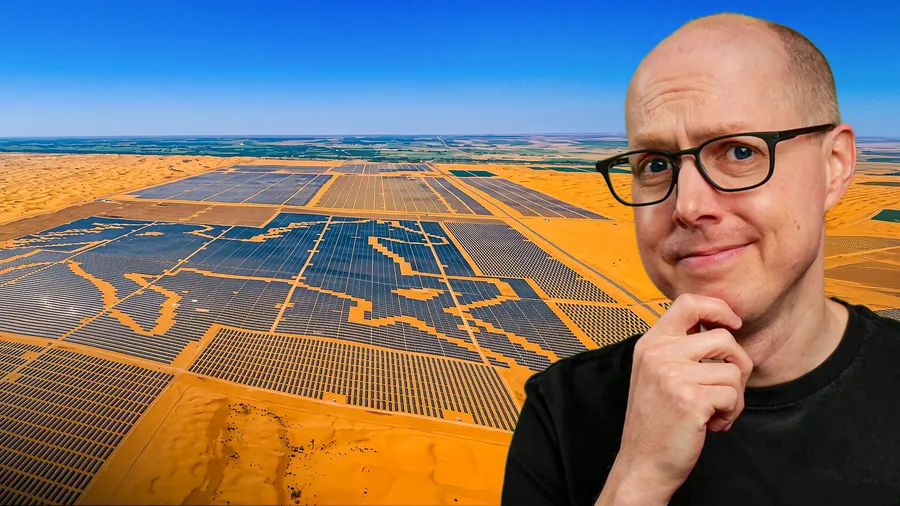
It’s true that American solar manufacturing is ramping up 15, but for now global solar capacity is largely a story about China. The country produces a huge amount of solar, more than twice global demand in 2025 16. And that oversupply is a problem for the industry. Right now, there’s pessimism among Chinese solar executives 16.
Wait … how can overcapacity be a problem? A great Reuters article breaks it down.
First off, with too much capacity a huge amount of these companies are set to go bust. In order to get a handle of things before this economic sun blister bursts, China just removed export tax rebates to solar producers. Chinese solar producers tried to get rid of everything they could before those rebates ended in April. One solar exec says this means the industry is "currently in the off-season." I didn’t know the sun had an off season, besides like,….the night?
This isn’t just about reduced incentives for producers, it’s about the consumer side. The solar demand picture is not as sunny as you’d expect.
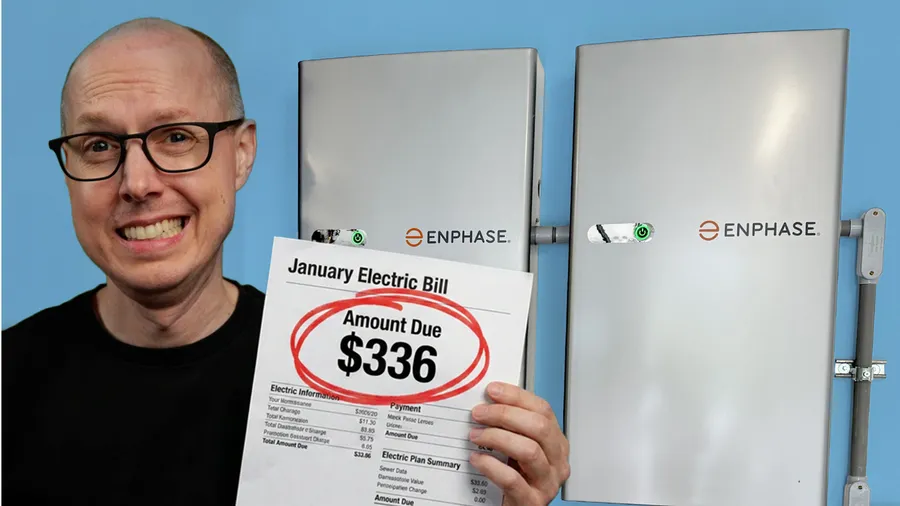
Meanwhile, my solar panels on the roof don't care about export tax rebates or Chinese overcapacity. They just keep making power. But for the millions of people who haven't installed yet (or can't), all this market weirdness does matter. And with energy prices spiking, it can matter a lot. Here's the part that surprised me.
Around 70 percent of all solar installation in 2025 went to three markets: the US, China, and the EU. But none of these markets are primed to add much this year.
The US market is largely off limits due to tariffs and other restrictions. In China, demand is down after the removal of domestic subsidies. And in the EU, natural gas prices aren’t rising high enough, like they did during the opening of the Ukraine war in 2022, in order to push people to make the solar switch.
According to one analyst "The Iran war will have only a marginally positive impact on global solar demand." For a sunny industry that’s a dark forecast. Or at least a cloudy one.
So clean tech demand doesn’t guarantee clean tech adoption with EVs. And in the case of solar panels, there might not be all that much new demand, at least in the near term.
It’s worth returning to the big picture here. Because beyond government plans, or consumer markets, the war in Iran has cemented a whole new paradigm that should, in theory, promote the energy transition. But does it?
The Perils of the Energy Security Paradigm
All these country wide plans to speed clean energy adoption are based around the same idea: security 17. But energy security is not the same as climate policy. It’s about shielding from immediate impacts, not protecting against long term repercussions.
Energy security might require a country to return to coal in the short term, rather than have their population go without power. And just because coal use hasn’t gone up yet this year, doesn’t mean it can’t. Especially if the war drags on and the strait remains closed, which it very well could. 18
Temporary price ceilings or tax holidays for fossil fuels will help consumers during this crisis, but they also contribute to emissions, and keep people from switching to EVs.
Or think about energy security in the context of America, the biggest producer and exporter of fossil fuels on the planet, which does so in the name of energy independence, and security. US oil companies right now are making record profits, and that’s helping them spend billions more to find even more oil, and keep us trapped in our fossil fuel economy 19 20.
People argue that this focus on fossil fuel supremacy will somehow protect us from the rising oil price. But it doesn’t! Even if the US market is much less exposed to the energy shock than a county like the Philipines it doesn’t matter much, because the price of oil is set on the international market. Our prices are still going up!
This is the part that frustrates me the most as a homeowner who went through the trouble of doing the right thing. The fossil fuel industry gets to keep cashing in. Drivers get short-term relief at the pump. And the long-term project, the one that would actually protect people from the next shock, slows down. Energy security and climate policy sound like the same thing. They are not.
War is horrific. There’s something disappointing and sad about a war, with all the death and destruction it entails, being a catalyst for the energy transition. It would just be great to see more of this transition come from the proactive work of companies and states, and not just as a reaction to a conflict.
But here's what gives me hope. I'm not planning for an energy crisis. I've been quietly building for one for years, and so have millions of other regular people. From this vantage point, the crisis doesn't just push policy. It pushes neighbors. A friend asks about your panels. A coworker asks why your gas bill didn't move. That's how a transition actually spreads.
The crisis shows that change at the highest levels IS possible, and change at the human level is guaranteed. Energy systems and government policy will take months and years to respond to this crisis. In the mean time, regular people can lead the way.
- Brown University: Iran War Energy Cost Tracker ↩
- IEA: Oil Market Report - April 2026 ↩
- Statista: Global fossil fuel dependency - statistics & facts ↩
- NYT: The Forces of Scarcity Hitting Asia May Soon Spread Across the World ↩
- IEA: Global Energy Review 2026 ↩
- Electrek: IEA: Solar overtakes all energy sources in a major global first ↩
- CREA: Global fossil power generation fell after the Hormuz closure due to solar and wind growth ↩
- NYT: Spain Says the Sun Shields It From Rising Gas Costs. Is That True? ↩
- Asia News Network: South Korean President Lee calls for fast renewable pivot, says energy crisis keeps him up at night ↩
- Reuters: EV sales soar in main European markets as drivers shun expensive petrol ↩
- Cox Automotive: EV Market Monitor March 2026 ↩
- Kiplinger: How the EV Tax Credit Works for 2025 ↩
- CNBC: EV demand is getting a boost from the Iran war, just as auto giants pivot back to combustion engines ↩
- Business Insider: Americans love to buy more car than they need. It's making electric cars more expensive. ↩
- Solar Energy Industries Association: Domestic Solar Manufacturing Booms During Trump Administration with Entire Solar Supply Chain Reshored ↩
- Reuters: China solar makers say war-induced renewables demand won't fix overcapacity ↩
- Reuters: Iran war seen boosting renewable energy investment with focus on security, not climate ↩
- Washington Post: Clearing Strait of Hormuz of mines could take 6 months, Pentagon tells Congress ↩
- Wall Street Journal: Big Oil Plows Billions Into Far-Flung Drilling Sites to Escape Iran Turmoil ↩
- Financial Times: US oil refiners reap windfall from Iran war ↩