Every year, some company claims they've cracked long-duration energy storage. And every year, we're still leaning on lithium-ion batteries that tap out after a few hours. You've heard the promises. You've seen the press releases. And you're probably as tired of the hype as I am.
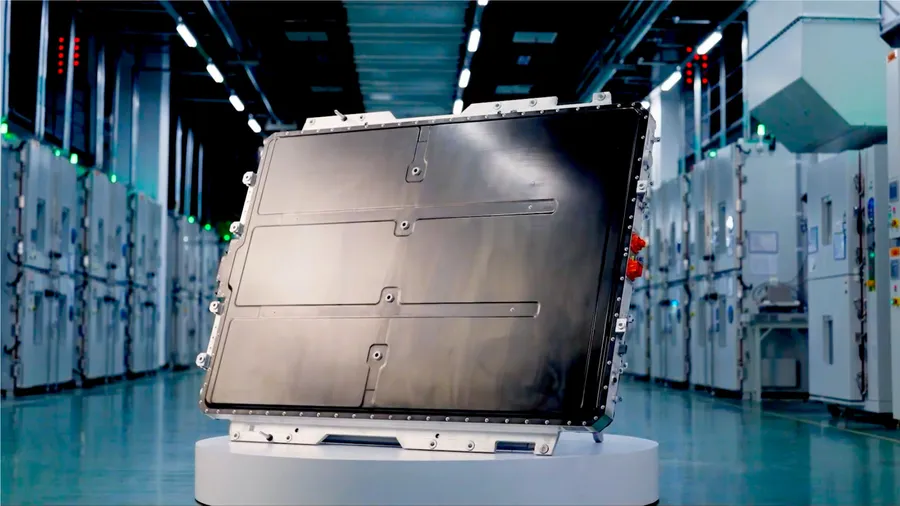
But in January 2026, a small California startup called Noon Energy did something that caught my attention. They demonstrated over 100 hours of stored energy … from a single system the size of a shipping container. Not in a lab. Not in a simulation. A real, working system.
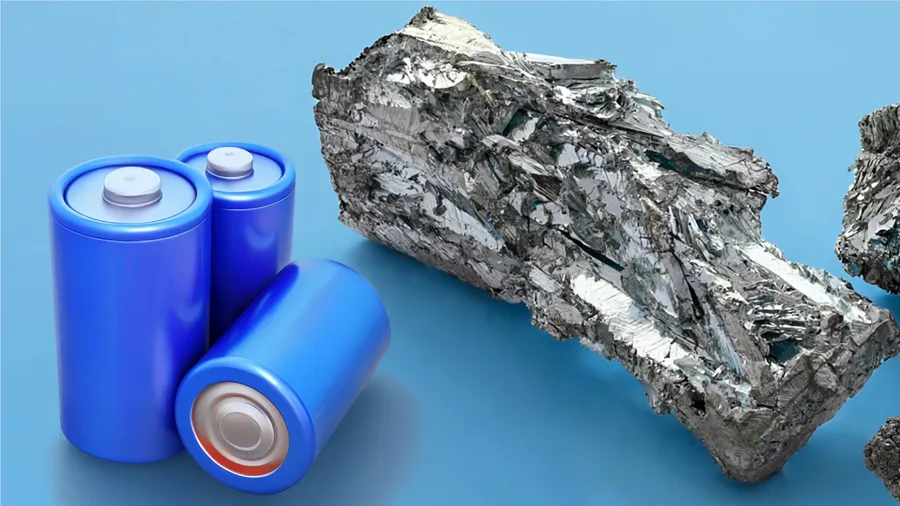
Now, 100 hours is a big deal. Most lithium-ion batteries give you somewhere between 2 and 10. That gap is a big reason why it’s so hard to quit fossil fuels. We generate plenty of renewable energy. We just can't hold onto it long enough.
Energy storage is one of Earth's biggest challenges. But ironically, Noon started on another planet entirely. The core technology behind their system … was originally designed to make oxygen on Mars. Yes, that Mars. The dusty red guy up there with the wonky moons.
Noon's co-founder and CEO, Chris Graves, is a former NASA engineer. He helped develop the tech to split CO2 into carbon and oxygen on another planet. His company started when he realized he could use that same process to store energy here on Earth.
100 hours of energy storage? That's a big claim... and I've been burned by big claims before. So let's dig into what Noon is actually doing, its Mars connection, and whether this thing has a real shot at changing the energy storage game.
Oddly enough, this whole story might be best explained by something I absolutely did not pay enough attention to in high school biology.
Okay, so we know the problem. Typical grid-scale lithium-ion energy storage tops out at around a few hours. Renewables generate more than enough power. We just lose it. But here's the part that doesn't get talked about enough.
It's not just an inconvenience. It's a failure point. It's THE failure point for making renewables a bigger part of the grid. Because when the sun goes down or the wind dies for a few days, people don't stop demanding energy. And this leaves grid operators with exactly one option: to fire up natural gas peaker plants and crank out that dirty, expensive energy like it's 1899.
The bottleneck isn't generation. It's duration. We need storage that can ride out days, not hours. And that's a fundamentally different engineering problem than making a better lithium-ion cell.
This is why Noon's 100-hour demo matters. It's not just a bigger battery. It's a completely different approach to the problem. This is the part where high school Matt would have checked out.
The Mars Connection
Before we get to the part where teenage Matt wasn't listening, let's look at the Mars tech. Because Noon's blueprint for grid-scale renewable storage started with a NASA project to keep astronauts alive …
That project is called MOXIE, which stands for “Mars Oxygen In Situ Resource Utilization Experiment.” Say that 3 times fast, and you'll be reminded just how important oxygen is.
Simply put, MOXIE makes oxygen from an atmosphere that doesn't have any. In 2020, the tech was sent to Mars on the Perseverance Rover and it was the first of its kind to make it to another planet … which is pretty cool!
See, NASA would love to send manned missions to Mars, but they want to make sure that they can offer astronauts more than a one-way ticket. Getting spacecraft and astronauts back from Mars safely is a gigantic challenge.
That challenge starts with fuel, fuel which requires oxygen. You need a lot of it to get off the big red rock … more than you can bring with you. It would take roughly 500 tons of oxygen from Earth to propel a manned craft off of Mars. You’re definitely not getting free 2-day shipping on that, not even on Prime Day.1
You can't bring oxygen to Mars, and you also can't find it there. The atmosphere is, inconveniently, 95% carbon dioxide. This is a tough situation if you're sitting at mission control. You can't just let Matt Damon die.
So then, the question to ask is, "what if there was a way to make oxygen on Mars, maybe using all that CO2 in the atmosphere?" … I think I’m having flashbacks to freshman biology again. Some piece of knowledge imPLANTed, deep within me.2
That's right, MOXIE did something similar to photosynthesis. Just like the tree in your backyard, it gobbled up CO2 in the atmosphere and split it into carbon and oxygen. It then released the leftover carbon back into the atmosphere, and analyzed the purity of the oxygen it created, which was then released as well. Now if MOXIE could only make sugar, too, I could plant it in my backyard…132
MOXIE effectively produced oxygen 7 times between April and November of 2021. If scaled, this technology could produce enough oxygen to launch a manned vehicle in around 26 months. Definitely not a fast solution, but oxygen on Mars is still oxygen on Mars.1
How Does the MOXIE System Actually Work?
Unlike plants, MOXIE doesn’t rely on chlorophyll 2, so how does this system actually convert the CO2 into oxygen?
The first step is to retrieve the CO2 from the Martian atmosphere. The MOXIE system pulls in this Martian atmosphere and runs it through a HEPA filter to eliminate all that red dust Mars is so famous for. Once filtered, MOXIE runs the atmosphere through a pump to compress it, then heats it to 800 degrees Celsius. Buckle up, because that was just the prep-work.1
Now the dust-free CO2 can be split using a solid oxide electrolysis assembly. CO2 flows over a nickel-based catalyzed cathode, decomposing into oxygen ions and carbon monoxide.1
A solid, scandia-stabilized zirconia ceramic electrolyte then passes the oxygen ions to the anode, where they combine to make O2 gas. The oxygen product is measured for quality and purity before it’s released to the Martian atmosphere.1
Meanwhile, the byproduct gasses of carbon monoxide, carbon dioxide, and inert gasses like argon and nitrogen are exhausted back into the atmosphere directly from the cathode. 1
Essentially, this process uses the charge of the oxygen ions to separate them from the carbon, gets the carbon out of the way, then allows the oxygen ions to combine into oxygen gas.1
Keeping the carbon monoxide byproduct away from the oxygen ions is critical to the performance of this system. If the carbon monoxide leaked into the anode (that part where the oxygen is made), the oxygen ions and carbon monoxide would turn right back into CO2, and Matt Damon would certainly die. 1
The Energy Solution
Chris Graves realized that this Martian technology could be a game changer on Earth too. That’s why he co-founded Noon Energy in 2018 and serves as its CEO. 45 Graves knows that storage “…is critical for achieving 100% reliable renewable energy systems.” 6 And I agree. Until we get reliable storage, we're stuck with fossil fuels.
Let's bring this all down to earth, so to speak. How does this actually work? As you might have guessed, NOON uses a process a lot like photosynthesis. The system captures CO2 from the atmosphere and splits it into carbon and oxygen. Here is where this process is more like that half-dead philodendron in your dining room and less like MOXIE: the carbon is used in solid form to actually store the energy within the battery, while the oxygen is released back into the atmosphere. Yep, just like photosynthesis, the carbon is used to store energy (though not in sugar form), while the oxygen is released as a by-product. 52
However, unlike a plant the carbon is then oxidized, releasing chemical energy. Oxygen is first ionized at the cathode side, and then recombined with the carbon on the anode side of a solid oxide fuel cell (SOFC). Electrons that are released have to flow through wires in a return path to the oxygen side of the fuel cell (in other words … electricity).
Using carbon as the energy storage medium for these batteries means that there are no production constraints from the materials. This is a big difference from lithium-ion batteries. In fact, Noon Energy’s ultra long duration energy storage (ULDES) uses less than 1% of the critical materials needed for lithium-ion batteries.5 1%!
Noon's systems don't cost much after installation. And the company hopes they can be easily scaled. They have three main components: The power block that converts between electricity and stored energy, the charge tank that converts excess energy into carbon-based media storage, and the discharge tank that converts the stored energy back into electricity to be used. 6 What sets Noon apart is the separation of the power blocks from the charge tanks. This means sizing for more storage doesn’t require the duplication of the other components, making scaling more affordable. 56 It’s a similar scaling benefit as redox flow batteries that I’ve covered before on the channel.
When I say affordable, are we talking “A Bentley is affordable compared to a Rolls-Royce,” or is it actually affordable affordable? Well, if their initial data tells us anything, I mean actually affordable. The levelized cost of storage (LCOS) for 100MW for lithium-ion (or 100 hour storage) is around $1.20 per kWh. LCOS for Noon’s ULDES is around 5 cents per kWh. 789
Noon’s claims that their system could enable grid-scale solar power for less than fossil fuel generation.4 If true, that’s huge. Even better, Graves says they can do it with a smaller footprint than other battery systems, with one-third the volume and mass than lithium-ion batteries, and 50 times less than flow batteries.6
Skepticisms
If you’re asking yourself, “Wait … you’re telling me this battery lasts up to 10 times longer than the best conventional lithium-ion batteries, takes up less space, is cheaper, pulls carbon dioxide out of the atmosphere, AND releases oxygen back into the atmosphere?” 456
Well, sort of. Noon is, in the end, more of a battery plant than a plant plant. In photosynthesis, a plant takes in water, sunlight, and CO2, which it splits up, releasing the oxygen and using that carbon to make sugar (i.e. the plant's fuel). The carbon Noon takes in is released back into the atmosphere when the energy in the battery is used. But there is no NET release of carbon. It only releases what it took in to begin with.5 That’s a step up from burning fossil fuels, even if it doesn’t reduce the total amount of CO2 in the atmosphere.
There are also other factors to consider. While Noon has done some large-scale testing with positive results,4 this is still a relatively new technology that will need time to prove if it has the capacity to revolutionize the renewable energy game. In fact, Noon doesn’t advocate for the complete replacement of lithium-ion batteries. They believe that their ULDES could best serve as long-term storage that feeds into current lithium-ion batteries for immediate use. 4
There’s also the question around how efficient the system is compared to lithium ion’s round trip efficiency. There are various reports showing this system is somewhere between 60-80% efficient,10 11 which is much lower than the 85-95% efficiency of lithium ion batteries. But I’d argue that high efficiency is not as important for ultra long energy storage. This is much more comparable to something like pumped hydro energy storage (at around ~70%-80%). If the installation and operational costs of Noon’s system are as low as promised, the efficiency question becomes less of an issue because of just how cheap it is.
So is Noon’s tech the breakthrough we need to finally break up with fossil fuels, or just more hype that can’t live up to scrutiny and long-term use?
Noon’s system is capturing more than just carbon: they have multiple partners and funding sources, including NASA, the NSF, and The California Energy Commission. In other words, this technology is gaining the attention and support of some pretty big names. 5
Here’s my take. Noon’s new ULDES system could help pave the way for a fossil-fuel independent future … if it can live up to the promises and truly scale at a low cost. Considering this tech was developed by a NASA engineer turned green-energy guru, I am hopeful. Graves told Latitude Media in a January 2026 interview they’ve “gotten to a technology readiness level…that is high enough to start producing units on a production line, so that’s our next big goal.” 12 I’ll definitely be keeping a close eye on them to see what happens next. My last thought?…Somewhere out there a biology teacher is feeling very vindicated right now.
- Science Advances: Mars Oxygen ISRU Experiment (MOXIE)—Preparing for human Mars exploration ↩
- Smithsonian: What is Photosynthesis ↩
- NASA: MOXIE ↩
- Cleantechnia: US Startup Brings Diesel-Killing Energy Storage Down To Earth, From Mars ↩
- Noon Energy ↩
- Renewables Now: INTERVIEW - Noon Energy targets 100-plus hours of storage in full-scale demos ↩
- Energize Innovation: Scale-up of Ultra Low Cost Long-Duration Battery for Fully Reliable Renewable Power ↩
- Pacific Northwest National Labs: LCOS Estimates ↩
- Cyclotron Road: Cyclotron Road Alumnus Contributes to Major Mars Achievement ↩
- 100-hour LDES battery technologies from Form, Noon and Ore: how do they compare? ↩
- US Startup Brings Diesel-Killing Energy Storage Down To Earth, From Mars ↩
- Latitude Media: Noon Energy successfully demos its 100-hour carbon-oxygen battery ↩