NOTE: An earlier version of this story incorrectly associated the failure of Northvolt to their sodium ion battery production issues, but their challenges weren't chemistry specific. That section has been removed.
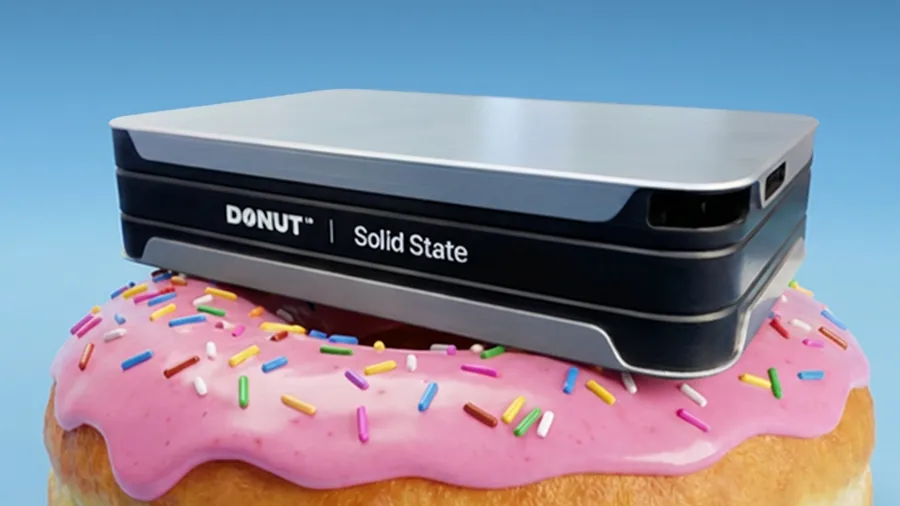
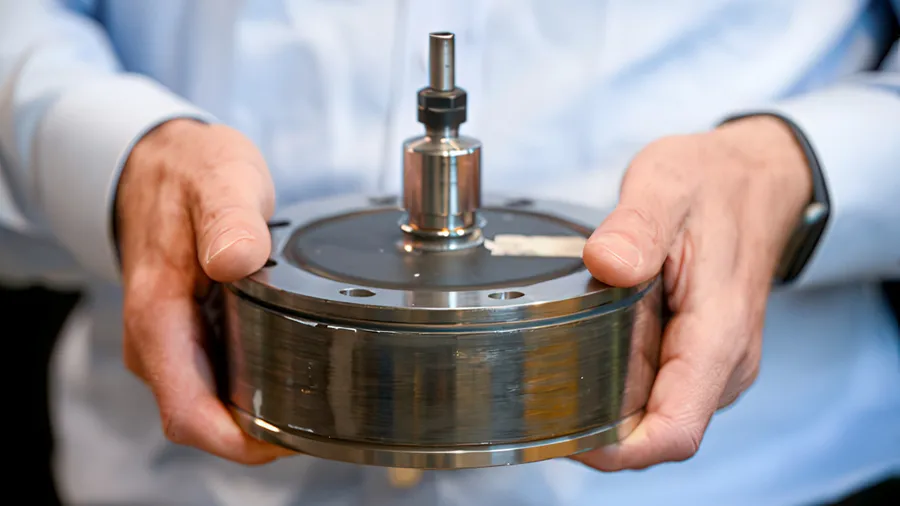
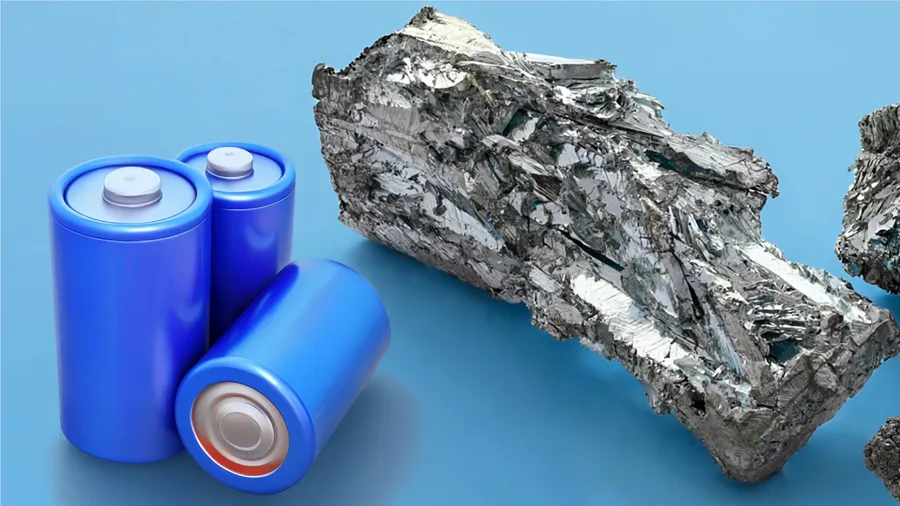
I’ve got sodium batteries right here in my hands, but three sodium battery companies went bankrupt in the last year. Another shut down voluntarily and returned $9 million to investors … even though their technology worked. And one had $25 million worth of orders sitting in their warehouse that they couldn't legally ship.
What's killing these companies isn't bad technology. It's bad timing.
See, while sodium batteries were busy getting better, lithium prices crashed by 90%. The one advantage sodium was supposed to have, which is being cheaper, just evaporated. And now we're left with a technology that works, products you can actually buy, but an industry that seems to be collapsing around it.
So what does this mean for you? Should you avoid sodium batteries? Are they a dead-end technology? Or is this just growing pains before sodium takes over?
This is a sodium battery you can get today. They're real. They're in homes. And I want to figure out if they have a future, or if we're watching an entire industry become obsolete before it ever really got started.
We've talked about sodium-ion batteries before, so here's the quick version: they work almost exactly like the lithium batteries in your phone. Ions shuttle between two electrodes when you charge and discharge. Simple enough.
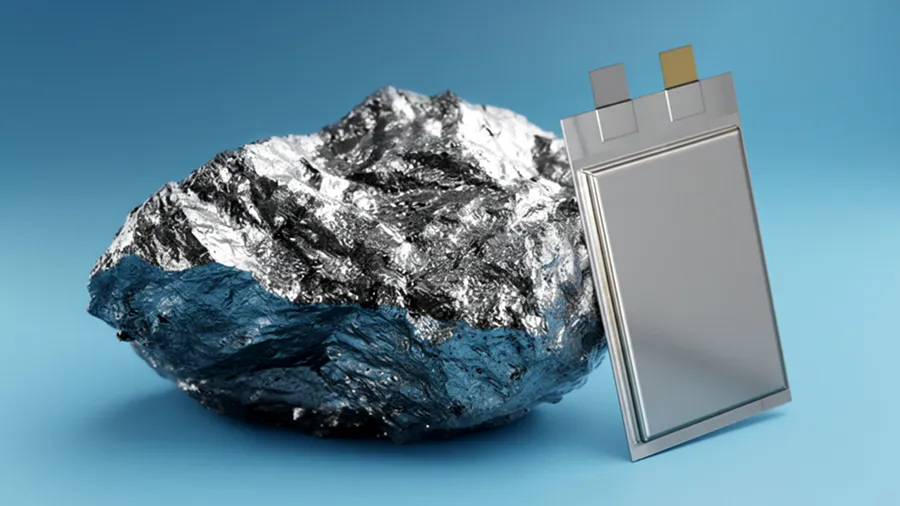
The big difference? Sodium is everywhere. It's the sixth most common element on Earth and we can literally pull it from seawater. Lithium has to be mined from a handful of deposits worldwide, which makes it expensive and creates supply chain headaches.1
But there's a catch. Sodium is less energy-dense than lithium, which means bigger, heavier batteries for the same amount of power.1 For stationary storage, that's fine. For EVs where every ounce affects range? That's a problem.
Sodium does have one advantage: it handles cold weather better and can safely discharge to zero volts.23 That makes it appealing for specific applications. The question is whether those niches are big enough to sustain an industry.
Batteries You Can Get Now
Before we dive into what went wrong and all the bankruptcies, let me show you what's actually working. And they're all targeting the same niche: applications where weight doesn't matter and cold resistance does.
Take Bluetti's Pioneer Na. It's a 900 Wh portable charging station that weighs 35 pounds—about 20% heavier than a comparable lithium version.4 But here's what makes it work: it can charge at temperatures as low as -15°C (5°F) and discharge down to -25°C (-13°F). Your typical lithium battery won't even charge below freezing.5
For camping in winter or keeping your lights on during a cold-weather blackout, that extra weight doesn't matter much. The cold resistance does. Bluetti also claims it can recharge to 80% in 45 minutes, which is genuinely useful in an emergency.4
Then there's Eleven Energy in the UK, making home battery storage systems. Eleven takes its name from sodium’s atomic number, and I gotta say … I’ve seen Stranger Things. Their 4.5 kWh unit operates comfortably between -20°C and 55°C.6 It's about 10-15% bulkier than a comparable lithium system, but since it's sitting in your garage (or even outside in a weatherproof case), who cares?7
Notice the pattern? Both companies are succeeding in stationary applications where sodium's weight disadvantage disappears and its cold resistance becomes a selling point. That's a viable business... but it's also a pretty narrow lane.
The Sodium Cemetery
So if sodium has found its niche in cold-weather stationary storage, why are companies going bankrupt? The answer comes down to two brutal economic realities that hit at exactly the wrong time.
First, lithium batteries didn't stand still. While sodium was busy improving, lithium kept getting better too, making it harder for sodium to expand beyond its narrow lane. But that's not the killer blow.
The real problem? Lithium prices crashed. Thanks to a global lithium surplus, prices have deflated by as much as 90% over the past few years, according to Benchmark Mineral Intelligence.8 Remember, sodium's whole selling point was supposed to be that it's cheaper than lithium. When lithium prices drop 90%, that advantage evaporates overnight.
If lithium is both more powerful AND cheaper than sodium, the business case collapses. And that's exactly what happened to several companies that were betting big on sodium's future.
Despite the successes some companies are seeing with sodium, there have been some serious losses too. California-based Natron Energy was a sodium battery company that touted impressive stats...even if they did leave me with a few questions. Their big claim to fame was that they had the first working sodium battery factory in Holland … no, not that Holland … Holland, Michigan.9 In August of 2024, their Michigan plant was well on its way toward full-scale commercial production, and Natron announced plans for an additional 24 GWh sodium-ion giga-factory in Edgecombe County, North Carolina.10 Things seemed promising, but Natron was facing a serious problem.
Natron had $25 million worth of orders waiting at just their Michigan factory, but they couldn’t actually hand over their batteries until they passed their Underwriter Laboratories (UL) certification.11 This is a boilerplate 3rd party safety test. No big deal. However, earning your UL certification can be a very time-consuming process, often spanning several months. This waiting period left the company in a cash-crunch, and allegedly Natron investors weren’t stoked about handing over even more cash to keep the company afloat. Things got worse when Natron’s top shareholder, Sherwood Partners, tried to sell its stake but no one was interested. This led directly to Sherwood and co. liquidating the company on September 3rd of 2025.12 13
Natron isn’t alone. In April of 2025 Stanford-spin out, Bedrock Materials, shuttered its production of sodium batteries and returned $9 million in funding to its investors. This was unusual as Bedrock wasn’t facing a cash crunch, or some kind of materials or engineering struggle. 13 According to their CEO, Spencer Gore, sodium just stopped making economic sense.
Our modeling pointed to a clear outcome: in a world where lithium remains abundant, today’s sodium-ion batteries can’t compete on cost—even at commercial scale. Independent researchers at Stanford reached the same conclusion, noting that for sodium-ion to succeed, it would need either a breakthrough in energy density or to carve out niche applications based on unique performance traits.14
Gore also added that the performance benefits of sodium-ion batteries could be achieved by making modest adjustments to current-gen Lithium-ion chemistries.15
And this isn’t just a USA-based issue. Swedish sodium battery manufacturer, Northvolt, whom we’ve also talked about before, ran into similar issues. Like Natron, Northvolt’s niche was manufacturing sodium-batteries in its home region. They too had their challenges. By January of 2024, they were originally spending around $100 million per month, and were in debt, though they did secure a $5 billion dollar debt deal.16 Major European car manufacturers, like Volvo and Volkswagen, were lining up to buy European-made sodium batteries for their EVS, so Northvolt seemed to have a clear path out debt and into commercial success. However, by June of 2024, BMW grew tired of waiting for Northvolt to deliver and canceled a $2 billion contract.17 Northvolt never recovered. On March 12, 2025, Northvolt filed for bankruptcy citing:
“rising capital costs, geopolitical instability, subsequent supply chain disruptions, and shifts in market demand.” 18
There’s also Japan’s NGK, which is a sodium-battery adjacent manufacturer. NGK wasn’t making pure sodium batteries, but sodium-sulfur hybrids. These were large stationary storage devices, and they seem to have much more in common with molten-sodium batteries than the lithium-like sodium batteries we’ve been talking about thus far.19 NGK had a deal with a material supplier BASF since 2019, and they were in discussions with BASF to “to expand supply capacity and achieve cost reductions in response to anticipated growth in energy storage demand. “ Discussions ended in September of 2025, and I’m guessing they didn’t end well because by the very next month NGK announced that they were shuttering their sodium-sulfur battery division.20
Looking back at all this, sodium feels much less like ‘the next big thing’ and like a pretty risky business. As Andrew Thomas, president and cofounder of sodium-battery manufacturer Acculon Energy, told IEEE:
“The battery business is very difficult. There are a lot of tombstones.”13
But the Giants Are Still Betting Big
While startups are folding, the world's biggest battery makers are doubling down. CATL and BYD together control over 55% of the global EV battery market.21 And they're not backing away from sodium … they're going all in.
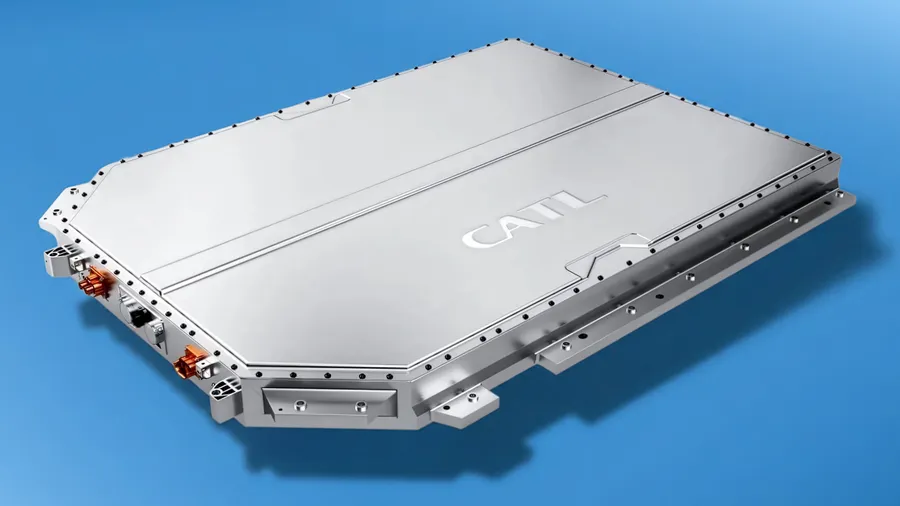
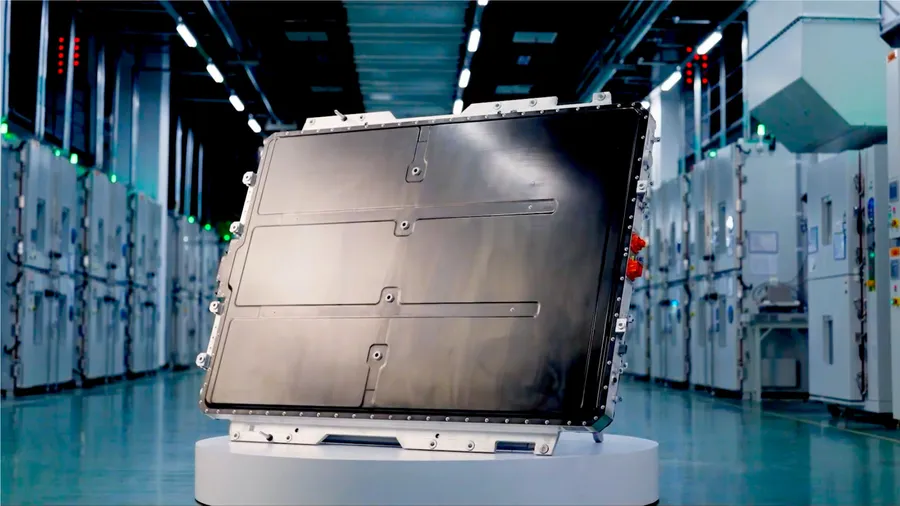
When we checked in on CATL last August, the company claimed that it was on track to make its sodium batteries 90% cheaper, and has two versions of its sodium EV battery ready. There's Naxtra, the pure-sodium edition for commercial vehicles and heavy duty trucks. Then there's the Freevoy, which is something more interesting. It’s a combo pack that mixes two battery chemistries in the same housing, so you can swap between modes on the fly.22 Start your car on a cold day in sodium mode, then switch to high-performance NMC mode once the weather warms up.
In September 2025, CATL announced its sodium battery achieved 175 Wh/kg energy density with a 310-mile range.23 That’s not too far off from LFP batteries. For context, the Tesla Model S Long Range, using NMC batteries, gets around 400 miles from batteries with roughly 250+ Wh/kg. Sodium is closing the gap with LFP, but it's still not there for long-range EVs using NMC chemistries. The company says mass production starts in 2026, though they hedge with "dependent on customer project timelines." CATL estimates sodium could capture over 40% of China's passenger vehicle market.23 If CATL gets its sodium EV batteries to market first, CATL can reap that sweet first-mover-advantage.23 Or should I say salty first-mover?
BYD has been quieter but equally aggressive. In January 2024, they started construction on a 30 GWh sodium plant in Xuzhou, with trial production slated for March 2024.24 I haven't found updates since, which could be a language barrier issue or genuine radio silence. Either way, China's Suining Economic Development Zone is positioning itself as a sodium manufacturing hub, with multiple companies building major factories there.24
So what do these giants see that the startups missed? Three things: deep pockets, vertical integration, and patience. They can afford losses while scaling. They control their supply chains from raw materials to finished batteries. And they're not trying to beat lithium on price today. They're betting lithium prices won't stay low forever and that sodium will drop dramatically over time.
When lithium was scarce, sodium looked inevitable. Now it's a longer-term hedge. The question is whether these companies can outlast the downturn better than the startups could.
Patreon: Sodium-Lignin Batteries
On the more abstract side of things, Fraunhofer-Gesellschaft researchers over in Germany are trying to make sodium batteries even greener by building them with plant fibers. We’ve covered lignin batteries before, and it’s a pretty nifty piece of technology. Lignin itself is a biopolymer and a paper manufacturing byproduct. We’ve got a lot of it lying around, so why not find a use for it? Because lignin is mostly just hydrocarbon building blocks, it works fairly well as battery electrode, especially a negative electrode.25 As team member Cornelius Dirksen explains:
"The structure of this hard carbon is very suitable for the reversible storage of sodium ions. Hard carbon boasts high electrochemical performance, good cycle stability and low acquisition costs, especially if obtained from sustainable raw materials.”26
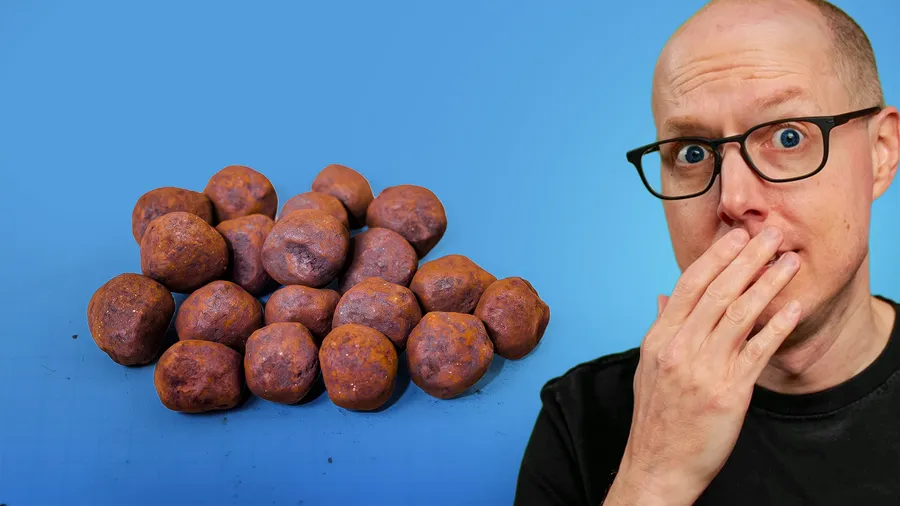
There’s an effort toward sustainably producing the positive anode too. Researchers are using Prussian blue analogs (PBAs) here. Believe it or not, we’ve been making Prussian blue for a couple hundred years. Its rigid chemical structure made it a resilient and fashionable pigment long before it was a battery component.1 PBAs take that structure and incorporate some redox-active metal ions. The result is a family of tunable, porous compounds that are non-toxic and pretty easy to synthetize in a lab from commonly occurring metal-salts.27 Synthesizing it in a lab let’s researchers avoid more common but environmentally un-friendly anode components like cobalt or nickel. However, the Fraunhofer team stressed that focus of this project was really the lignin and not PBAs.27
It's still noteworthy, though, that in addition to their other benefits, PBAs are also pretty good at sodium-ion storage. So, naturally, a combination of lignin, PBAs, and sodium offers a promising package deal. Fraunhofer’s admittedly miniscule 1-Ah cell has already showcased almost no degradation after 100 charge cycles. The current plan is to get the battery working at at least 200 charge cycles before the end of the current project.26
While the current battery is still puny, and any possible consumer product is many rounds of R&D away, researchers stressed that once fully developed, this kind of battery could be great for stationary or mobile energy storage solutions. Basically anything that doesn’t need fast charging or lots of power. They highlighted applications like microcars, small vehicles with speed limits under 45 km/h (about 28 m/h) for cramped city driving. Another possible application are warehouse logistics vehicles.26 So, like many of us, this battery dreams of one-day being forklift certified.
Conclusion
So what's the verdict on sodium batteries? Here's what we know: sodium has found its niche in cold-weather stationary storage. Products like Bluetti's Pioneer Na and Eleven's home batteries aren't vaporware. They're real, they work, and they solve specific problems that lithium struggles with.
But the window for sodium to become the dominant battery technology has changed, at least for now. The 90% crash in lithium prices have slowed that dream. Startups betting everything on sodium being cheaper went bankrupt. The technology works, but the economics don't (not yet).
However, lithium prices won't stay this low forever. And when they inevitably rise again, sodium will be waiting with lower raw material costs and none of the supply chain headaches. The question is whether the industry can survive long enough to see that day.
This is where the giants come in. CATL and BYD have deep enough pockets to weather years of losses while building out sodium production. They're not trying to beat lithium today … they're positioning for the long game. And in batteries, betting against the world's biggest manufacturers is usually a mistake.
For you as a consumer? If you need backup power for cold climates or stationary storage where weight doesn't matter, sodium batteries are a legitimate option right now. For EVs? Stick with lithium for the foreseeable future. Sodium's day may come, but it's not here just yet.
- Wikipedia, Sodium-ion battery ↩︎
- Research progress on sodium ion batteries under extreme temperature conditions Qikai Lei, Mengkai Yang, Youwei Wen, Zhen Dong, Yongli Zhou, Hao Wang, Yongqi Li, Peng Peng, Man Chen, Yuxuan Li, DeCarbon, Volume 10, 2025, ↩︎
- Zero volt storage of Na-ion batteries: Performance dependence on cell chemistry, Parth Desai, Jiaqiang Huang, Dominique Foix, Jean-Marie Tarascon, Sathiya Mariyappan, Journal of Power Sources, Volume 551, 2022, ↩︎
- PV Magazine, Bluetti debuts world’s first sodium-ion portable power station ↩︎
- Bluetti, BLUETTI Pioneer Na Portable Power Station (Sodium-ion) | 1,500W 900Wh ↩︎
- Eleven Energy, Sodium Battery Datasheet ↩︎
- Everything Electric TECH, Sodium Home Batteries Are Here! Is Salt The Key To Cleaner, Cheaper Energy? ↩︎
- Reuters, Lithium industry bemoans 'paradox' of low prices, rising demand ↩︎
- New Atlas, Lithium-free sodium batteries exit the lab and enter US production ↩︎
- Utility Dive, Natron Energy to build $1.4B sodium-ion battery plant in North Carolina ↩︎
- UL Solutions, Certification ↩︎
- Tech Crunch, Natron’s liquidation shows why the US isn’t ready to make its own batteries ↩︎
- IEEE Spectrum, Natron’s Failure May Not Spell Doom for Sodium-Ion Batteries ↩︎
- LinkedIn, Spencer Gore, Sodium Stopped Making Sense ↩︎
- Sodium Battery Hub, US Sodium-Ion Battery Start-Up Bedrock Materials Shuts Down ↩︎
- Tech Crunch, Battery manufacturer Northvolt nears the end as it files for bankruptcy in Sweden ↩︎
- Wikipedia, Northvolt ↩︎
- Northvolt, Northvolt files for bankruptcy in Sweden ↩︎
- Wikipedia, Sodium–sulfur battery ↩︎
- PV Magazine, Japan’s NGK discontinues manufacturing of sodium-sulfur batteries ↩︎
- CNEV Post, Global EV battery market share in 2024: CATL 37.9%, BYD 17.2% ↩︎
- CATL, Naxtra Battery Breakthrough & Dual-Power Architecture: CATL Pioneers the Multi-Power Era ↩︎
- Car News China, CATL says next-gen sodium-ion battery supports 500 km range, readies for 2026 mass production ↩︎
- PV Magazine, Massive 20 GWh sodium-ion battery manufacturing plant announced in China ↩︎
- Wikipedia, Lignin ↩︎
- Tech Xplore, Building sustainable sodium-ion batteries from wood industry by-products ↩︎
- Prussian Blue and Its Analogues for Commercializing Fast-Charging Sodium/Potassium-Ion Batteries, Ping Hong, Changfan Xu, Chengzhan Yan, Yulian Dong, Huaping Zhao, and Yong Lei ACS Energy Letters 2025 10 (2), 750-778 ↩︎