Your lights just flickered. Not for long. Just a split second. You probably didn't think much about it, but somewhere a battery may have just saved your city from a blackout.
I’m not talking about keeping your phone charged or your EV running. These kinds of batteries are for preventing the entire electrical grid from collapsing. No pressure or anything. They’re for when a power plant suddenly goes offline or when a cloud passes over a solar farm. And it turns out, the batteries doing this job need to be fundamentally different from the ones we've been talking about for years.
A German research institute has built a battery that responds faster than you can blink. It's made from cheap, abundant aluminum instead of lithium, and it doesn't use a flammable electrolyte. In real-world grid tests, it reacted instantaneously to smooth out power fluctuations that would have caused widespread blackouts.
But here's the question: can a battery designed for speed and power instead of range actually scale into the grid-stabilizing role we desperately need?
For most of the electrical grid’s history, traditional fossil fuel and nuclear power plants automatically kept the grid stable and prevented blackouts.1 Fast forward to today, and as more and more solar and wind come online, that job is increasingly shifting to batteries.
Doing this takes more than energy. They key is that energy must be delivered quickly, which means power. And power is energy over time. Think of it like a smart phone charger. The high-power charger that came with your phone charges it quickly, while the no-name knock off charger you got on Amazon takes forever to charge.
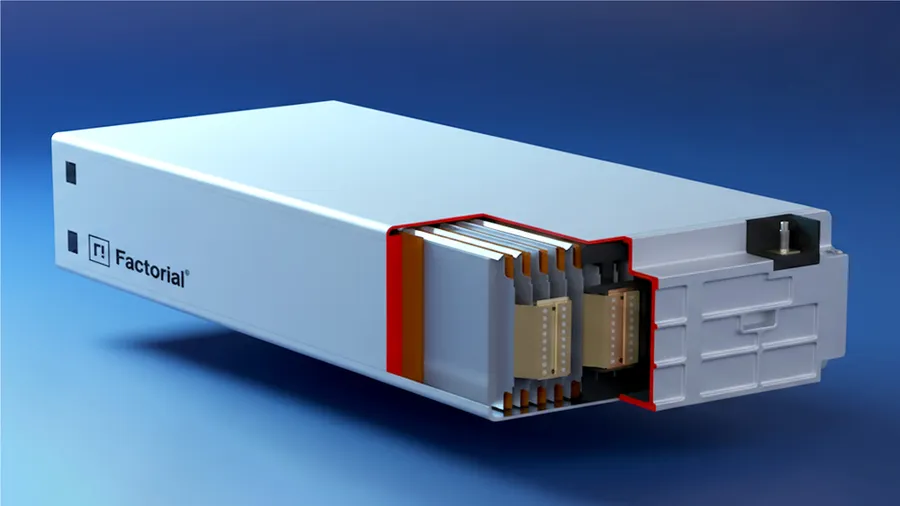
That's why the battery developed by Germany's Fraunhofer Institute for Integrated Systems and Device Technology stands out. It's an aluminum–graphite dual-ion battery (or AGDIB) built to react fast enough to keep the grid in check.
But before we get into its performance and green-energy credentials, let’s talk about what a renewable-heavy grid actually needs to keep the lights on when supply fluctuates or a power plant suddenly drops offline.
Depending on where you live, electricity is delivered at a frequency of either 50 or 60 Hz (cycles per second). but only as long as demand and supply stay balanced.2 If supply exceeds demand, the frequency rises. If there isn’t enough supply, frequency drops.
Keeping frequency balanced is becoming trickier as renewables supply a larger share of power. Their output can change with wind gusts and shifting cloud cover.2 At the same time, more renewables means less coal and natural gas plants on the grid and therefore less inertia.
Yep, inertia … the resistance to a change in motion. Also known as my default state of being. What’s stopped wants to stay stopped. What’s going wants to keep going. Inertia is why a stalled car takes real effort to push, and why a car on the freeway keeps rolling even after you let your foot off the gas. So how does an aluminum battery fit into all of this? That's where things get interesting … because of inertia and moving parts.
Those moving parts would be the massive rotors inside the generators of traditional coal, natural gas, or nuclear power plants. The power plant generates heat that turns water into steam. That steam turns the turbine in a generator to generate electricity. Their constant spinning helps smooth out sudden changes in grid frequency. When demand exceeds supply, these rotors slow down slightly. They release their stored kinetic energy as additional electrical power. And when demand falls, these rotors speed up, absorbing surplus power so the grid frequency stays stable.3 You could think of it a little like a flywheel … releasing and storing kinetic energy.
But wind turbines and solar panels link into the grid through power electronics, like inverters, not big spinning machines. That means they don’t provide inertia.3 Without the inertia, grid "droop" (drops in frequency) or "inverse droop" (rises in frequency) become more common.
And if you’re like me, you may be thinking, "who cares about a little change in frequency?" The entire electrical infrastructure is built around a set frequency 50 Hz or 60 Hz, depending on the country. AC motors that run everything from assembly lines to water pumps will turn at a slightly different speed. Many devices filter out signals outside of a narrow band of frequencies. That means higher electrical losses and lower efficiency. Sensitive electronics can be damaged by signals other than sine waves at the specified frequency, so it’s essential to reproduce as "clean" of a signal as possible.
This is where batteries can step in. They can provide virtual or synthetic inertia by instantly injecting or absorbing electricity on command to maintain grid stability.4 Synthetic inertia doesn't just measure how far grid frequency has drifted from baseline. It tracks how fast the frequency is changing. This lets the system push or pull power early enough to stop a small disturbance from snowballing into a larger frequency dip or spike.345
An early form of synthetic inertia is what saved the grid in South Australia in 2017. A coal plant suddenly tripped offline, cutting 560 megawatts of power as its generators slowed to a stop in 30 seconds. Batteries at the Hornsdale Power Reserve injected 7.3 megawatts in milliseconds, preventing a frequency collapse and system blackout before slower generators could come online.67
That near-instant response time is what you want: milliseconds, not minutes. Because once frequency starts dropping, you have a very narrow window to stop it. Not all batteries excel at this kind of power injection. For this kind of grid stabilization, response speed and power throughput matter more than total stored energy. And this is where the aluminum battery's superpower comes in.
Why Aluminum?
Normally, we’d be worrying about squeezing the most energy into the lightest, smallest battery possible. That’s going help us address things like range anxiety in EVs.8 That’s what lithium-ion batteries are for with energy densities above 240 Wh/kg. Sodium ion batteries are starting to push into this as well with commercialized cells hitting 175 Wh/kg.910 However, Fraunhofer says that while its aluminum ion cells reached 160 Wh/kg in the lab,11 full battery systems are closer to lead-acid, at around 35-40 Wh/kg.1213
Now, before your eyes glaze over at these numbers, here's why this matters to you. Compared to lithium, that’s obviously not great. But this isn’t about how long you can keep the lights on. It’s about how fast you can stop them from flickering. That’s why Fraunhofer’s aluminum based battery prioritizes power density, or W/kg. This means it can move large amounts of power quickly.148
In the laboratory, Fraunhofer’s AGDIB cells have shown power densities greater than 9 kW/kg.11 That’s far above the 1-3 kW/kg of lithium-ion batteries, and it’s also in the range of commercial supercapacitors.15 In other words, it stores energy like a battery, but can respond at the speeds you normally only see from much faster devices … like capacitors.
AGDIBs are also known for their durability, with lifetimes over 20,000 charge cycles reported in laboratory cells.12 For a battery tied into the grid and microcycling to manage daily fluctuations, that kind of lifespan matters, because it drives costs down over the long run.16 Durability is also essential for competing with lithium-ion phosphate batteries. Those are already today’s standard grid battery because they last many thousands of cycles.17
Here's the clever bit. Most batteries rely on one type of ion shuttling back and forth between the anode and cathode doing all the work. This battery uses two different ions, each paired with the electrode it works best with. Aluminum ions (Al3+) stick to the aluminum anode. A different ion, aluminum tetrachloride (AlCl4−), moves in and out of the graphite cathode. By letting each ion do what it's naturally good at, the battery can charge and discharge much faster.1618 I guess you could say they have great chemistry together.
Like a buddy cop movie, but with ions. One handles the anode, one handles the cathode, and together they solve crimes against grid stability. It's faster, more efficient, and it lasts longer. And that brings us to another major advantage.
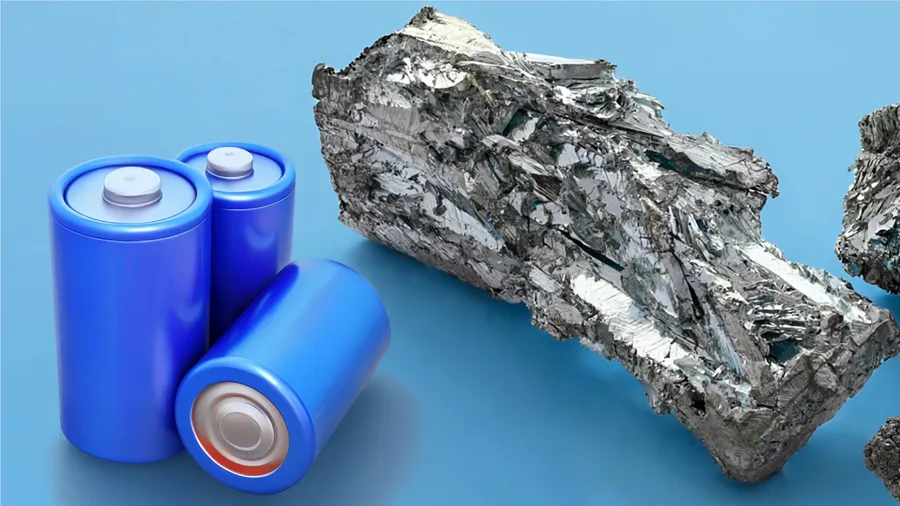
Fraunhofer’s AGDIB does this without expensive, critical materials like lithium, nickel or cobalt. Aluminum is the third most abundant mineral on Earth.19 So unlike my dating life in college, supply isn't the problem. The graphite in this battery's cathode is mined globally. Unlike the graphite in lithium batteries, it doesn't need intensive processing that creates supply bottlenecks.122021 Even better, this battery’s electrolyte is non-flammable, which reduces one of the major fire risks in large grid-scale battery installations.22 Basically, all of the components are inexpensive and relatively easy to extract.
But materials are only part of the story. The real breakthrough here is system design.
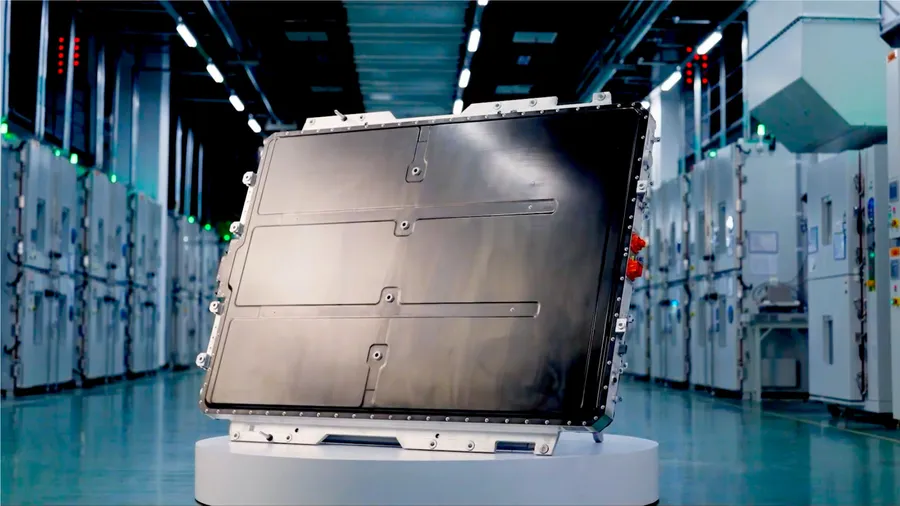
So many promising battery chemistries fail to scale from lab cells to larger systems. Fraunhofer has taken its AGDIB to a full system demonstrator, integrating eight pouch cells, wireless battery electronics, and a diamond-based quantum sensor.16
That sensor is a big deal for grid stabilization. It can measure current with extreme precision across five orders of magnitude. It catches everything from the tiny corrections that fix frequency drift to the powerful surges when a power source trips offline. That wide range matters. It lets the battery track its charge state and health much more precisely than standard sensors that only handle the big swings.1614
When the team at Fraunhofer tested the AGDIB system using real grid frequency data, it demonstrated the kind of fast, two-way response needed for virtual inertia. The battery pack injected and absorbed power at rates up to 10C. A battery rated at 1C would take an hour to charge, so 10C means roughly ten times normal charge or discharge speed … or in other words, a full cycle in about 6 minutes.232416 That's faster than I can microwave a burrito and regret my life choices. Those high power rates weren’t just momentary, either. The pouch cells maintained stable performance over extended operation.1612
That said, there are still some open questions. Fraunhofer hasn’t yet published confirmed energy or power density figures for the complete battery pack, like the ones reported for individual lab cells. Those lab cells have demonstrated lifespans around 10,000 cycles, but the initial pouch-cell configuration is currently closer to 1,200 cycles.1211 That’s not unusual at this stage of development, but it does mean long-term durability at the system level is something to watch as this technology moves toward production.
Under the project name INNOBATT, Fraunhofer and its partners brought this aluminum–graphite dual-ion battery to technology readiness level (TRL) 4, meaning the core technology has been validated in the lab.12 From here, the baton passes to project BALU. This university-industry collaboration is working with industry-compatible production techniques to push it to a TRL of 6.25
That means moving into pilot manufacturing using industry-standard roll-to-roll electrode production, and testing the system under real-world conditions.26 It also means developing current collectors and packaging that tolerate the battery’s corrosive electrolyte.26 It may involve a shift to a less corrosive, urea-based electrolyte. That costs less than a third as much, but may not support quite the same extreme C-rates.
If AGDIBs make it to market, the Fraunhofer Institute expects they'll be deployed first on electrical grids. They could also slot into uninterruptible power supply systems, where rapid response often matters more than long-duration storage.27
Their potential use extends beyond the grid. These batteries aren’t a fit for long-range sedans, but they could work well for hybrid vehicles and trams that repeatedly absorb energy from regenerative braking and then deliver it again moments later.1227 The same logic applies to cranes, industrial equipment, and city buses. Their constant stopping and starting demands high power over and over again.27 Those extreme C-rates also make AGDIBs a good fit for fast-charging infrastructure, where on-site batteries buffer the grid and deliver short, high-power bursts to charging vehicles.2728
Before they can make it beyond the grid, AGDIBs have to make it to commercialization. Fraunhofer says these batteries could end up costing 10-20% less than conventional lithium-ion batteries… and far less than today’s most power-oriented lithium battery chemistry: lithium titanate oxide. But that battery can cost about twice as much per kWh.29
If AGDIBs do reach scale, they may not have to compete on cost per kWh at all. Grid operators aren’t just paying for energy anymore; they’re also increasingly paying for grid stability services like virtual inertia. The UK and Australia already have paid inertia services online, and Germany is set to launch its market in 2026.3031323334 That opens the door to lithium alternatives that win on power, durability, and safety, even if their energy density is lower.
Being developed in the EU could give AGDIBs some additional market leverage … and I dig into the regulatory angle over on Patreon’s extended edit.
The Fraunhofer Institute is located in Germany. According to the UK-based research organization, New AutoMotive, Europe is on track to become the world’s second-largest battery producer by 2030.
Why is Europe bothering to build batteries locally when imports are so cheap? One word: regulation. (Pardon my French.)
New EU rules require batteries to be taken back and recycled, and set minimums for both recycling efficiency and recycled content.35 Another policy sets targets to reduce reliance on imported critical raw materials like lithium and cobalt. Meeting those requirements is easier when the entire value chain can happen inside the EU. That means aluminum mining, battery manufacturing, and end-of-life recycling all stay local.27
Fraunhofer is explicitly designing its AGDIB for easy disassembly, relying on physical material separation instead of toxic chemicals. It’s a design-for-recycling approach the institute says already exceeds current EU requirements.16
I’ll be watching to see whether aluminum–graphite dual-ion batteries can carve out a real niche in grid applications.
- National Renewable Energy Laboratory – Inertia and the Power Grid: A Guide Without the Spin ↩︎
- Modo Energy – Frequency response: how are battery cycling requirements changing? ↩︎
- Sustainability Directory – What Factors Influence Grid Inertia? ↩︎
- Wärtsilä – Synthetic inertia: The seatbelt our energy grid can't live without ↩︎
- Watt Clarity – Do you know the difference between Virtual Inertia and Fast Frequency Response? ↩︎
- Wikipedia – Hornsdale Power Reserve ↩︎
- National Renewable Energy Laboratory – Grid-scale Battery Storage ↩︎
- Energy Education – Energy density vs power density ↩︎
- Sodium Battery Hub – CATL’s Naxtra Sodium-Ion Batteries Return to Cost Advantage Over Lithium ↩︎
- Bonnen Battery – Sodium-ion Battery vs Lithium-ion Battery: A Friendly Comparison (2025 Update) ↩︎
- Fraunhofer Institute – Battery Materials ↩︎
- Fraunhofer Institute – Aluminium Ion Batteries at Fraunhofer IISB: Progress and Challenges towards Application ↩︎
- Wikipedia – Lead Acid Battery ↩︎
- Vogon Today – Finally, a lithium-free battery that actually works: the Aluminum-Graphite system arrives. ↩︎
- EEPower – Supercapacitors ↩︎
- Fraunhofer Institute – Project INNOBATT: Worldwide First Battery System Employing High-Power Aluminum Ion Technology for Energy Storage ↩︎
- Wikipedia – Lithium ion phosphate battery ↩︎
- Green Chemistry – Aluminum–graphite dual-ion batteries: recent advances and challenges ↩︎
- IEEE Spectrum – A Pinch of Salt Boosts Aluminum Batteries: This sustainable, solid-state electrolyte design outlives lithium-ion batteries ↩︎
- International Energy Agency – Global Critical Minerals Outlook 2024 ↩︎
- Motor Finance Online – Why EV battery makers are grappling with graphite ↩︎
- Fraunhofer Institute – Rethinking batteries: The INNOBATT project is developing innovative, high-performance, and resource-efficient electrical battery storage systems ↩︎
- Wikipedia – Battery Charger ↩︎
- Interesting Engineering – New aluminum-graphite battery system proves fast, stable performance for grids ↩︎
- Technische Universität Braunschweig – BALU: Manufacturing technology for battery cell concepts based on aluminum-ion cell chemistry ↩︎
- Fraunhofer Institute – BALU consortia project develops production technologies for low-cost and safe aluminum-ion batteries ↩︎
- Fraunhofer ISI – Alternative Battery Technologies Roadmap 2030+ ↩︎
- Battery Technology – The Critical Role of Fast Charging Infrastructure in EV Adoption ↩︎
- Lithium Power Inc. – Battery System Strength and Longevity: The Role of Lithium Titanate Oxide (LTO) Batteries in Solar and ESS Applications ↩︎
- ARENA – Lessons Learnt and Future Directions from ARENA’s Grid-forming Battery Portfolio ↩︎
- Smart Commercial Energy – FCAS Explained: How to Get Paid to Help the Grid ↩︎
- Modo Energy – Stability Pathfinders: what they mean for battery energy storage ↩︎
- Herbert Smith Freehills Kramer – Germany to Launch Inertia Service Market in 2026 – New Revenue Stream for Grid-Forming BESS ↩︎
- Watt Utilities – AEMC Rejects New Inertia Market: What It Means for Your Energy Costs ↩︎
- Flash Battery – From production to recycling: a comprehensive guide to the new European Battery Regulation 2023/1542 ↩︎