BEST Things I Saw in Vegas at CES 2026
CES can be a mixed bag. But between the robot invasions…and AI takeovers…I encountered tech that really stopped me in my tracks. First, a solid-state battery claim so bold that even battery skeptics are doing a double take. We're talking performance numbers that sound impossible: 400 watt hours per kilogram, five-minute charging, and a 100,000 cycle life. And even though it wasn’t officially part of CES, transit unlike anything else I’ve ever experienced: no steering wheel, no pedals, no driver. Just me speeding down the Las Vegas strip in a vehicle that was no demo.
That said, most of what really caught my attention wasn’t spectacle, but optimization. We're talking wireless power systems that charge your smart door lock with invisible light beams, windows that become noise-canceling headphones for your house, and a simple switch that could save you thousands on an electrical upgrade.
Trade shows are always full of vaporware and empty promises, but if you dig past the hype, there are real innovations that could change how we live. So what were the highlights worth your attention?
Wireless Power Solutions
I’ll get to the big battery announcement later, but I’m going to kick things off on a different topic. This is a little bit of a cheat because the first thing I want to call out isn’t really one device or company, but a category or series of things that can all be bundled together. I’m talking about wireless power solutions for the things that are in our everyday lives.
Lockin
First is … a door lock? Yep, a smart door lock is on my list. I've been using smart door locks for years and love them, but the one thing I hate is having to change or recharge the batteries. It's something my wife always worries about (and to be honest, so do I). What if the door lock loses power and you can't get inside?
Some smart door locks have solar cells built in. Lockin has made those models, but solar is intermittent. To sidestep this, Lockin developed AuraCharge, an infrared (IR) base station you can place anywhere inside your home with line of sight to the lock within 4 meters, like on a side table in your entry hallway. This 24/7 coverage means no more intermittency, and the lock still has an internal battery if the IR gets blocked for a bit.
And if you're like me, you might be wondering, "is this safe?" The company says the IR frequency and power is eye-safe, with dual safety certifications from TÜV Rheinland and SGS.
The new V7 Max will have AuraCharge, and the upcoming Veno Pro will be updated with it, too. The latter is currently available for preorder, and I might just be doing that myself.
Lockin wasn't alone on the wireless charging theme I saw at the show. Tech suppliers like the Powercast Corporation, ONiO, and LV Energy are building the underlying tech that companies like Logitech could use in their products. Powercast has magnetic resonance and radio frequencies (RF) harvesting that can wirelessly power keyboards, mice, and smart locks. ONiO built an ultra efficient microcontroller that pulls power from ambient sources like indoor light, RF, and WiFi so devices never need battery swaps. And LV Energy's WaveHarvester converts ambient noise and vibration into electricity for sensors in loud environments. It’s wild stuff and could probably be its own video.
Overall, there was definitely a theme of finding ways to keep our devices charged up and working without needing wires involved (or in some cases … even batteries).
simpleSwitch
What if you only have 100 amp service to your home, but your EV needs a higher powered charger? You'd most likely need a very expensive panel and service upgrade to 200 amp service. But you don't actually need that. Your amp service is just the cap for how much you can run at once. If you turned on your oven, microwave, HVAC, robot butler, and tried charging your EV all at the same time, you'd run into problems.
That’s where simpleSwitch steps in to offer a clever solution to a big problem. You can install this to have two high-powered devices share a circuit and choose which device to prioritize. For example, if you’re in the middle of charging your car as you’re putting in a roast, the simpleSwitch will automatically flip from charging your car to powering your oven. It all happens seamlessly without you having to do anything … and costs far, far less than getting that panel and service upgrade.
DeNoize
Living in a noisy neighborhood can sometimes feel like being held hostage by your own environment. Are you surrounded by traffic or constantly bracing yourself for the next passing train?You’ll probably love this.
Walls do a pretty decent job at blocking sound, but windows? Not so much. Windows are the weakest link in your home's sound barrier, especially for low frequency noise, which is the exact kind notoriously produced by planes, trains, and automobiles. These frequencies usually slip right through glass, but DeNoize has basically built the same kind of noise cancellation that's in your headphones…for your windows.
For a dual-paned window, which is pretty common here in the U.S., there are two connection points. Sensors attach to the outer pane and another piece of tech attaches to the inner pane. As sound waves make the outer pane vibrate, the system reads that signal and makes the inner pane vibrate to cancel out the sound. Noise cancellation is basically just inverting the sound wave and playing it back against itself. In this case, the pane of glass is the speaker…yeah, you heard me right. The representative I spoke to even said you could play music from the window, although it would mainly just be higher frequencies of the music.
I did get to experience a demo of the technology applied to a small piece of ductwork. It was pretty impressive to hear how much it actually reduced the sound. The demo device dropped the noise level by about 20 db.
This tech is still in development, so it’s not available yet. However, it feels like the kind of solution that could actually make city living a lot less overwhelming. If you're in an apartment or house facing the street, this could genuinely improve your quality of life.
Hopefully, they can make some good progress on bringing it to the market soon.
Donut Labs
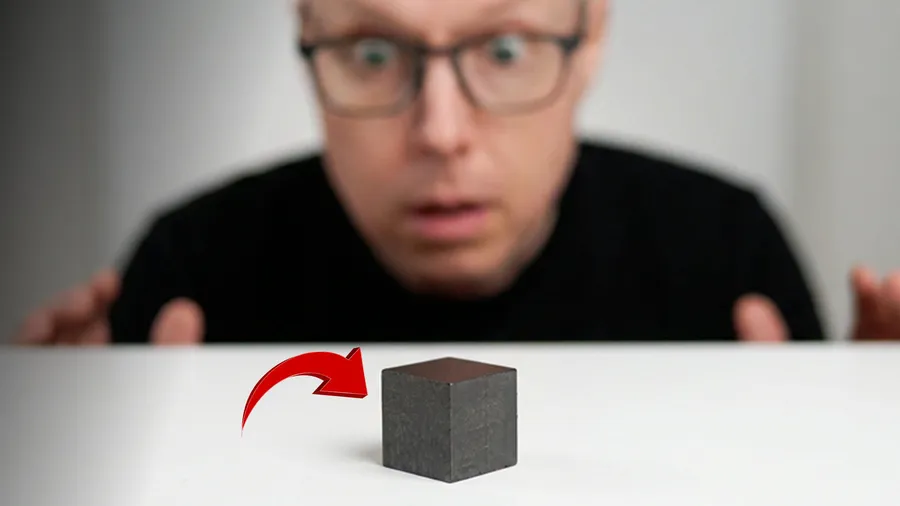
Donut Labs’ solid state battery announcement caught everyone by surprise. I got messaged by A LOT of you. Many of you were understandably excited but dubious. Skepticism is definitely warranted for anyone claiming an all-solid-state battery with these performance metrics:
- 400 Wh/kg (250-300 Wh/kg is what you’d typically see in lithium ion)
- Full charge in 5 minutes
- 100,000 cycle life (typical lithium ion chemistries would be between 1,000-5,000)
- Operating temperature range from -30C to 100C (most struggle below freezing)
- Lower cost than traditional lithium ion (this claim is unclear, but I’m assuming they’re referring to NMC lithium ion here)
- Sourced from abundant materials that are available everywhere
I chatted with a few people at the Donut Labs booth about the battery and the company’s partner, Watt, who developed an EV skateboard platform that EV manufacturers could build on.
Donut Labs has been developing motors for years, but the team also started developing their own all-solid-state battery in secret. When I spoke to the chief technology officer, he said they kept it secret until they had something they could actually manufacture: not an idea of a solid state battery, but one that is real, working, and can be produced. It’s going to be shipping in the Verge TS Pro motorcycle in the coming months.
The company is claiming to have a factory capable of producing on gigawatt scale when spun up to full speed. This is very different from what we’ve seen from other solid state companies developing their systems in public, often to much frustration and impatience on our part.
What makes me hold off on popping the champagne is that there are no details about the battery itself. They wouldn't comment on the exact chemistry or method of production … full stop. The reason is that it's proprietary information they're not willing to disclose just yet, which I get. When I asked if they had any third party validation that they could share (even if it obfuscated proprietary details), they said they’re working on pulling that together to share with the public in the not too distant future. They didn’t put a hard date on it, but it sounded like it would be a few months out at the earliest.
My friend, Ryan from the channel Ziroth, beat me to the punch and has a fantastic breakdown on what he thinks it actually is. Ricky from Two Bit DaVinci, Ryan, and I had a pretty spirited discussion about this at dinner during CES. Be sure to check out Ryan’s video, but I’m planning on doing a deeper dive on this down the road as I can get more information.
I’m keenly interested in what they’re doing here, but for now, I’m keeping my skeptic hat firmly in place.
Honorable Mentions
Pila Energy
Before I get to my wild ride, there’s one last honorable mention. Full disclosure … I have a relationship with Pila Energy, but this isn’t a sponsored segment.
Pila Energy has developed an energy storage system I've been wanting to see for a long time. If you want energy backup and independence, getting a whole home battery installed is expensive. If you rent, you're just out of luck. What if you could add batteries inside your home to back up and power specific things, no electrician needed?
Well, Pila’s modular system meshes together and works in unison to shift your energy usage to take advantage of things like time of use electricity rates. You can even pair it with your home’s solar if you have that installed, so it can synchronize when it charges and discharges based on when you’re producing excess solar energy.
When I got my Enphase battery system installed, I couldn’t get as much energy storage as I wanted because of local regulations. I’m excited to be able to drop a couple of Pila batteries into my home to increase how much of my solar I can store and use each day. It can grow with me as needed … and I could take it with me if I ever moved.
It also doesn’t hurt that it looks fantastic and will fit right in with your home. But the best part is that it's going to get smarter over time with new features and capabilities. And for Home Assistant smart home fans, you’re gonna be able to link into this too. There’s a lot more to cover with this, but that’s for another time.
Updates
Here’s a few companies that I've covered in previous CES videos that are worth revisiting.
Flint Paper Battery
I covered Flint in last year's CES video and did a separate deep dive on them. Its team developed a fully compostable battery … made from paper. The company has made a lot of progress in the last year because these batteries are now in production, with multiple cell formats for different use cases. Speaking of partners, Flint is now working with companies like Logitech.
The small paper pouch cell blew me away. It's fully compostable and can power IoT sensors and other low-power devices. It was cool seeing them on display and handling one. They also make single-use AA replacements. The aluminum case is fully recyclable. The cell contents are compostable and biodegradable.
You’ll be able to get your hands on a product made with their battery very soon. Nimble is coming out with a line a trackable travel accessories powered by Flint.
Amprius
Another company making progress: Amprius. It now offers a cell that capable of a 520 Wh/kg energy density, which is currently marketed towards the drone and aviation industry. These are cells being sold to customers today, so this isn’t a future tech … it’s here now. While Amprius’ solution has a premium cost, for the sectors the company is catering to, it’s worth it. Weight is a key consideration, so paying extra for an energy-dense battery makes sense.
Lutron
I’m a big fan of Lutron and have its brand of smart shades all around my house, so when the company announced its new series of wood blinds, my ears perked up. Smart shades let you manage both light and heat. I built a Home Assistant automation that factors in the time of year, window direction, and outdoor brightness to control when shades go up or down. It’s been taking a lot of trial and error to get it dialed in.
Well, Lutron built a simplified version of this programming directly into the blinds. When you set up the blinds in the app, you tell it which direction the blinds face and then activate a special feature and the blinds will auto adjust to filter or block the light.
The company also showed off a bathroom fan switch with a built-in humidistat. It turns on the bathroom fan automatically if the humidity level ramps up to a certain level, then turn the fan off when it’s back down. This isn’t a “smart switch” like you might be thinking. There’s no app. Just swap out the switch and you’re good to go. Nifty.
Before I wrap up CES 2026 and put it in the rear view, we need to talk about Zoox.
Zoox
I'm not new to autonomous vehicles. Back in 2019, I put out a video about my brother and I experiencing a Waymo ride. For years, I owned a Tesla with Full Self-Driving…parenthesis supervised…and was super impressed with how good it's become. Granted, it wasn't true full self-driving, hence the parenthetical. So when I kept seeing Zoox driverless cabs zooming around while walking from venue to venue at CES, I had to try them.
When I think of the future of self-driving cars, I don't imagine cars as we know them today. Why would you need everyone facing forward? You don't need a steering wheel or pedals. The design could be completely rethought, and that's exactly what Zoox did.
You hail the car from an app, similar to Uber or Lyft. The cab pulled up and waited for me. To open the doors I tapped an “Open Doors” button in the app and got inside. I was greeted by a voice telling me to hit the close door button, then to hit start when I was ready. After that, music started playing and we were off (side note: you can select different music or just turn it off).
The inside is basically like a giant box on wheels. There’s two benches facing each other, so if you were out with friends or family (or this guy) you’d be facing each other to chat and not even pay attention to the fact that you’re hurtling down busy roads in Las Vegas.
The best thing I can say about the experience was that it was completely uneventful, almost mundane. I think that’s actually high praise for what this should be. Although…there was one point when we were really booking it down a major roadway, and I thought: “If we crashed right now, this would be the last thing the world would see of me.”

This video is only scratching the surface of what it was like to explore CES 2026. I met an extensive cast of robots, some that looked barely functional. Despite this, it seems like we’re heading for the normalization of household robots, probably on a faster timescale than we think. But they don’t seem to be there quite yet
And of course, the mystical acronym of “AI” was slapped onto everything to the point of losing all meaning. Overall though, I thought it was a really interesting show this year.