There's $67 billion in critical minerals sitting in your trash can. Not metaphorically. Literally. Old laptops, dead drills, that printer you're keeping for sentimental reasons.
The gadget graveyard in your junk closet is just the start. The tailings, the waste piled up outside old mines, might hold even more. By some estimates, between the two, we already have nearly all the rare earths America needs … without digging a single new hole.
Lithium for batteries. Rare earths for wind turbines. The magnets in electric motors. All of it sitting in piles of waste from things we already dug up. Sounds too good to be true, right? Every few years someone promises us a clean, easy fix to the critical minerals problem. And every few years we're still buying them from China, so is this actually different?
One startup in New Hampshire thinks they can. Their secret involves a furnace as hot as lava and a recipe they cooked up in a guy’s backyard. But there’s a catch buried in those tailing pods … one that could undo the whole thing.
So the big question: can we actually solve the critical mineral crisis without opening a new mine?
A GARBAGE PROBLEM AND A GARBAGE SOLUTION
As you know if you watch this channel, critical minerals are the essential components for all modern tech. We can’t have battery storage, solar panels, or satellites without them. And I’m not just talking about the usual suspects like Lithium, but rare earth elements like Lanthanum and Praseodymium. It turns out we’re living in Ytterbium’s world, we just don’t say it, because well…it’s very hard to pronounce.
The International Energy Agency expects demand for critical minerals to quadruple by 2040 if we’re going to meet net-zero goals.1 The energy transition and modern life absolutely depend on this stuff.
But getting these minerals is neither easy nor without drawbacks. First, our supply is not secure. The market for critical minerals is super concentrated and intensely politicized. China controls 80 percent of the global critical minerals market2, and critical minerals are a bargaining chip in the ongoing trade wars.
And second, getting these minerals out of the ground is bad for the environment, they're clean energy's dirty little secret. The mining industry dumps 180 million tons of toxic waste annually.3 New mines mean more waste, and on top of that, they can take decades to set up, even though we need these minerals now.4
Remining promises to solve the problem of supply AND reduce mining’s environmental impact.
The potential is huge. A study in 2025 found that by recovering 90% of the critical minerals in existing mine waste, America would have nearly all that it needs, and even recovering 1% would seriously reduce reliance on foreign imports.5 That’s just mine waste!
TAILINGS
So where do you start? In a sludge pond? A junk drawer? Or somewhere weirder? If you’re elbow deep in banana peels and credit card mailers searching for lithium in your kitchen right now, you should stop, and you should wash your hands. Turns out one company is doing it in a former Raytheon factory, with a furnace as hot as lava. And it all started at a bible study.
Let’s start with tailings. When ore from a mine is dug up, it heads to a processing facility. It gets crushed up and a variety of chemical and physical processes are used to separate out the part that can be sold from well…everything else. Tailings are these leftovers, and they contain a potentially toxic mix of chemicals, ground rock, sand, or clay.6 As many as 8 billion tons of tailings are produced each year.7
Tons of potentially toxic silt, sand or sludge? That doesn’t sound promising, but it is. You see, ore doesn’t contain just one kind of mineral, there’s a variety of different stuff in there at different concentrations, including critical minerals.
You just need specific processes to get specific minerals out, and you need to do it cost effectively. It turns out rare earth elements aren’t even rare, they’re just sort of…annoying. They’re in the ground, but at such low concentrations it doesn’t make sense to dig them out.
Imagine a loaf of raisin bread. If you want the raisins, you can pay for someone to pick them out, or just do it yourself. But imagine instead of needing to get the raisins out, you needed to extract each and every grain of salt in that loaf. That would be a lot more difficult. I mean, I’ve never tried it, but I’m pretty sure. Remining for critical minerals is more like asking someone to dig through the bread for the salt than to rip out the raisins.
So how does this work in practice? A company called Phoenix Tailings in the northeast is leading the charge to turn tailings into something useful.
The company was founded by it's CEO Nick Meyers after he met the company's Chief Technology Officer Tomás Villalón Jr. at a bible study retreat outside Boston in 2019. With three other founders, they built a prototype in Villalon's backyard in Cambridge, Massachusetts. Myers says "I don’t know how legal it was.”8
Legality aside, they made it from the back yard to the big leagues. Their new factory in Exeter, New Hampshire is one of the largest of its kind in the western world.9
So how do you turn a pile of toxic dirt into the magnet inside a wind turbine? It's part chemistry, part heavy industry, and part something that would make your high school science teacher nervous.
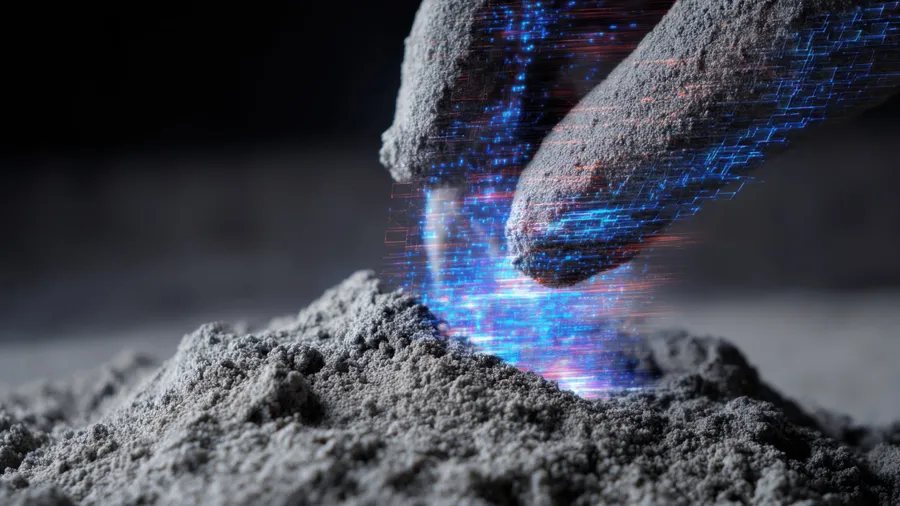
They start with metric tons of powdered tailings from mines in the US, South America, and Australia. They separate the rare earths from the tailings, and then the rare earths from each other. Then, the specific element they’re looking to mine gets bonded with oxygen, and finally, they use a molten-salt electrolysis process to take that rare earth oxide, and turn into a pure metal.10 11 Their process, which takes an oxide and turns it into a pure metal, is a form of metallisation. It’s like making iron from rust.12 That’s really cool! But it’s also really hot. Along the way this powder ends up in a furnace that heats it to the temperature of lava.8
Phoenix Tailings says they’ll start producing 200 tons of rare earths a year, and plan to ramp up to 1,000 tons a year: enough to supply the entire US defense industry.13 Even better, their process scrubs toxic gas from the metallization process, seriously reducing emissions. The waste they do produce – and let's not forget, there can be radioactive material like Thorium in tailings– they plan to recycle at their site. 8
It blows my mind that what starts as weird powder, ends up as wind power. The neodymium-praesodium, and dysprosium-iron alloy which Phoenix Tailings produces13 are essential for the magnets we need to make wind turbines or in my EV’s motor.
We can see how this works, and it's clearly working! But it's a big jump from Phoenix Tailings' plans to supply one major industry, to actually supplying every major tech sector on the planet.
But when it comes to re-mining it turns out that powdered tailings might just be an appetizer for the liquid lunch that follows.
WASTE WATER
Mining doesn't just leave behind tailings. It leaves behind water. A lot of it. It could be just as much, if not more of an opportunity than tailings
Think about it like this. Waste water isn’t just a byproduct of mining metal, but from gas and oil fracking, and from desalination plants. A study from the University of Oregon found there were $2.2 trillion dollars worth of metals in desalination brine alone. That’s a salty sea of cash.
Peter S. Fiske, who directs the National Alliance for Water Innovation at the Department of Energy’s Lawrence Berkeley National Lab California put it like this “Water is the ore body of the 21st century.”14
ORE is it? Some of that water from mining is in really bad shape. Take acid mine drainage, which is about as bad as it sounds. Remember, when mining for a specific ore, there’s always other stuff in the ground. And often, when you’re mining for copper, or coal, there are sulfides in the ground, and when they’re exposed to water or air they oxidize, and turn into sulfuric acid. Acid mine drainage is one of America’s most serious environmental problems, and the runoff from thousands of abandoned mines has contaminated 12,000 miles of streams.14 In 2016 this acid water killed thousands of migrating snow geese in Montana15 … which was a big honking tragedy. I apologize, one of my writers made me say that.
But if you look beyond the destroyed ecosystems, there’s a surprising potential. That same acid which sometimes kills birds 16, also leaches rare earth metals from the rocks, and leaves them in a higher concentration than many commercial deposits.17
How do you get it out though? It turns out there is no one way to squeeze neodymium from acid drainage. One company called L3 Process Development takes huge woven bags of this acid drainage sludge, lets water percolate out, and then refines what’s left.14 Researchers at UC Berkeley have even engineered viruses to act like a “smart sponge.” They get them to cling to rare earth elements in acid mine drainage, and with some temperature and chemical prompting, get them to clump together and sink to the bottom before releasing metal ions for harvesting. 18
These approaches are experimental, or just getting commercialized, but the promise is obvious.
Re-mining helps solve a couple huge problems: it provides a way to get all the critical minerals we need, now, and it helps us avoid or undo the environmental damage we’ve done from mining. Exactly how much damage it can undo … we’ll get to that in a bit.
Okay, mine waste, acid drainage, viruses that eat neodymium. We've gone full mad scientist. But the weirdest part is what's sitting three feet from where you're watching this. You've probably been ignoring it for years. I know I have.
E-TRASH
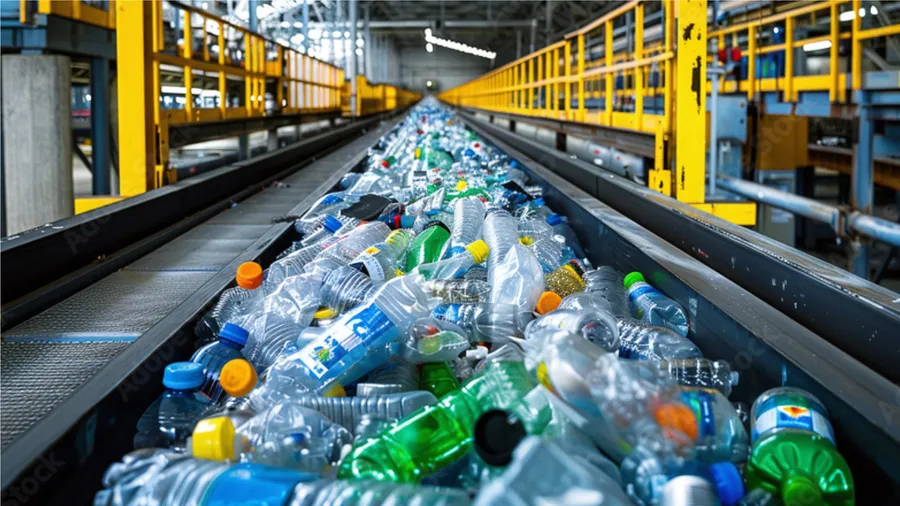
I don’t know about you, but I hate figuring out what to do with my old electronics. And I’m not alone. Humans generated 62 million tons of E-waste in 2022, that’s set to rise to 80 million tons by 2030.19
I’ll often let it build up in my garage, until I’ve got a homemade gadget graveyard to manage. But that ghost of that Acer laptop isn’t going to come to me in a dream and tell me where to safely dump it, or remind me to change my passwords. Instead, my options for disposal –whether it’s going to a Staples for E-recycling, or a dump for a small fee– don’t leave me feeling great. Is all this stuff getting properly recycled?
Right now the US only recycles a small portion of its e-waste. That number is improving. The most recent and most optimistic study shows 22.3% of e-waste is actually recycled.20 About half that is sent overseas where people use dangerous processes like burning or leaching to get at the goodies inside.21
Thankfully, that looks like it is going to change. With the pressure to source more critical minerals at home, e-waste is looking more like an e-resource. Think about it like this. If the run-off from mines has enough of this stuff to extract, you better believe the end of life products it’s used in are going to have the goods as well.
Take the Texas company Noveon, they make powerful magnets out of…wait for it…leftover magnets. They’ve recycled lithium-ion batteries from electric scooters, hard disk drives from data centers, and rotors from a Toyota plant.22 Their approach is able to avoid the chemical separation of an ore into an oxide, and then the conversion of that oxide into a metal, which naturally takes up more energy along the way. As it turns out, it works better on certain types of magnets.23
I love tech, and since electronics can go out of date, or just break (I’m looking at you ink jet printers), I’ve ended up with a pile of this stuff. And I’m not alone. I know some of you out there are tending your own gadget graveyards in a box in your garage, or in one sad cabinet shelf. But our relationship to this junk changes when we realize there’s $67 billion in critical minerals jangling around in our e-waste.20 That’s huge!
So far, this all sounds great. Recycle the waste, save the planet, stick it to China. But before we declare victory, I want to take a hard look at what’s … not so great. Because remining isn't actually green. Some of it is still radioactive. Some of it can literally collapse. And in the wrong hands, it can be just as bad as opening a new mine.
ENVIRONMENTAL COST VS. BENEFIT
We need to get minerals out of the earth to build our world, and there’s a cost. Remining reduces that environmental cost. Significantly. There’s less emissions taking from material that has already been partially mined, whether it’s runoff in an acid drainage pit, or the battery in your old laptop.
But there are no free lunches on this Earth, and there is no free lithium either. Remining is still mining. If you don’t handle tailings carefully, or smelt minerals appropriately, you can end up repeating the environmental damage of typical mining.3
The law matters too. If you’re remining in a place with lax environmental regulations (I’m looking at you red, white, and blue), there’s no guarantee the impacts will be any better for the environment.24
We should remember, some of this material is literally radioactive, and requires extreme caution. Dewatering tailings dams to get at that sweet critical mineral muck below, but it can also trigger dam collapse.24 Tailing dams are already a huge environmental hazard, and when they fail, which they do, they unleash waves of ecologically destructive toxic sludge.
The potential for remining to reduce the environmental damage of mining will depend on the execution. It will also depend on the economics. If companies can’t make a profit, they won’t make that aluminum-cerium alloy you’ve been waiting for.
ECONOMICS
Right now, the economics alone aren’t there. After all, we don’t leave regular trash to the free market, it’s more of a public utility.
China was able to get ahead on critical minerals by spending massive government money and supporting the industry in every conceivable way. For decades! 25 To develop a critical minerals and remining industry here in the US will require similar kinds of support.4 That support is beginning. The Department of Energy is putting hundreds of millions into recovering critical minerals from mining waste, and recycling batteries. 26 This government push, and the trade war, is having an impact on the domestic market. Phoenix Tailings was near bankruptcy at the end of 2024, but customers have flocked to it since China restricted rare earth exports. Now it's worth $189 million.8
If you're expecting immediate impact, take a breath. This work is really difficult! Remember, remining is not like extracting raisins from a loaf of raisin bread, but more like retrieving the grains of salt inside, or isolating specific glutenous proteins.
Remining is in its early stages. There’s a lot of basic work that needs to be done. Like really basic. Right now, we aren’t even sure which critical minerals are in what ore. To return to the baking analogy, we don’t know even know what salt is in which loaf. And Each critical mineral requires its own specific approach.27
So here's my take. Remining isn't going to replace new mines. Not anytime soon, maybe not ever. But it doesn't have to. Even pulling 1% of the critical minerals out of mine waste would seriously cut our reliance on China. Pulling 10% would change the conversation entirely. The treasure in the trash can is real. We just have to be honest that digging it out is still digging. And all that glitters isn't gold. Or even scandium.
- World Economic Forum: What are the critical minerals for the energy transition – and where can they be found? ↩
- Bipartisan Policy Center: The Missing Midstream IDENTIFYING INVESTMENT Challenges for American Critical Mineral Processing Projects ↩
- Earthworks: Remining for the Energy Transition ↩
- Council on Foreign Relations: Leapfrogging China’s Critical Minerals Dominance ↩
- Science: By-product recovery from US metal mines could reduce import reliance for critical minerals ↩
- Toxics: Socio-Environmental Risks Linked with Mine Tailings Chemical Composition… ↩
- Global Tailings Review: Towards Zero Harm report ↩
- New York Times: Meet a U.S. Start-Up Trying to Break China’s Rare-Earth Monopoly ↩
- Phoenix Tailings: Phoenix Tailings Opens Cutting-Edge U.S. Rare Earth Metallization Facility Entirely Independent From China ↩
- Phoenix Tailings: Innovation ↩
- MIT: Startup turns mining waste into critical metals for the U.S. ↩
- NIST: Turning Back Time: Watching Rust Transform into Iron ↩
- International Mining: Phoenix Tailings opens US’ first domestic rare earth metallisation facilities ↩
- New York Times: A Toxic Pit Could Be a Gold Mine for Rare-Earth Elements ↩
- BBC: 'Thousands' of geese die in toxic Montana pit mine ↩
- Smithsonian Magazine: Thousands of Snow Geese Die at Abandoned Pit Mine ↩
- Senate testimony: Recovery of Rare Earth Elements from Acid Mine Drainage ↩
- UC Berkeley: Researchers pioneer greener way to extract rare earth elements ↩
- UNITAR: Global e-Waste Monitor 2024 ↩
- Resource Recycling Inc. :Old electronics seen as key to US minerals supply chain ↩
- The Conversation: Critical minerals don’t belong in landfills… ↩
- Recycling Today: Noveon targets rare earth magnet production with recycled inputs ↩
- Noveon: Circularity, Explained ↩
- Yale Environment 360: In Hunt for Rare Earths, Companies Are Scouring Mining Waste ↩
- East Asia Forum: Policies that enable China’s critical minerals edge ↩
- Department of Energy: Energy Department Announces Actions to Secure American Critical Minerals and Materials Supply Chain ↩
- Washington Post: Here’s a source for critical minerals — hiding in plain sight ↩