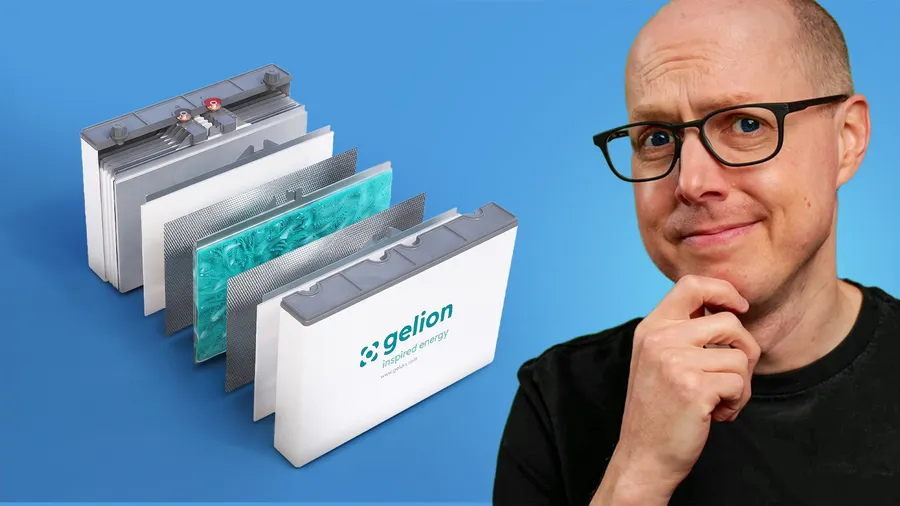
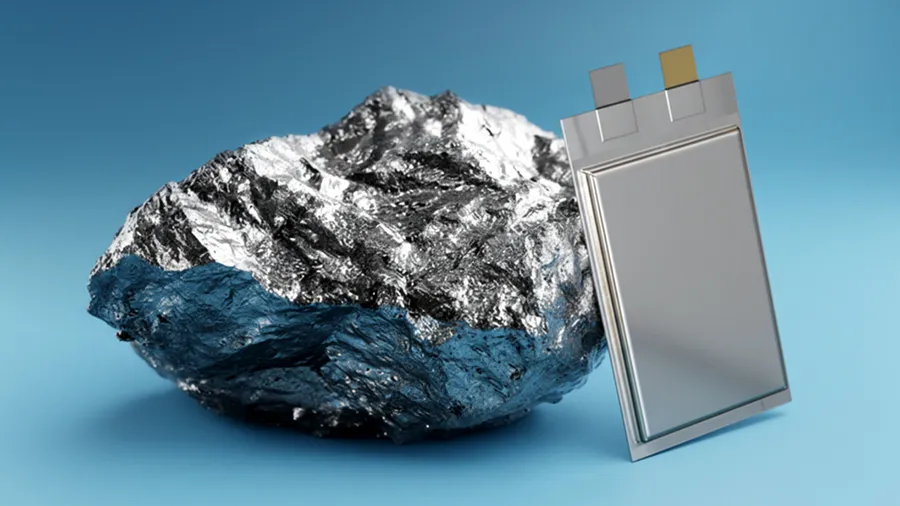
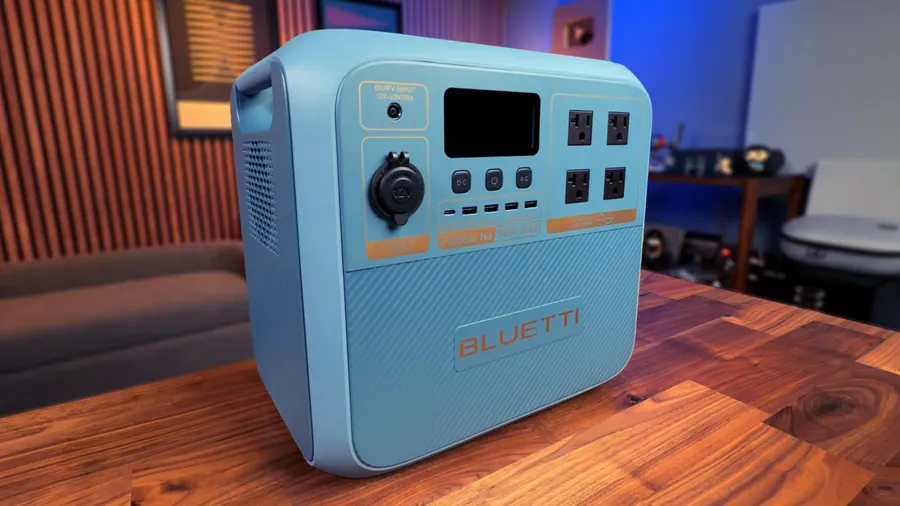
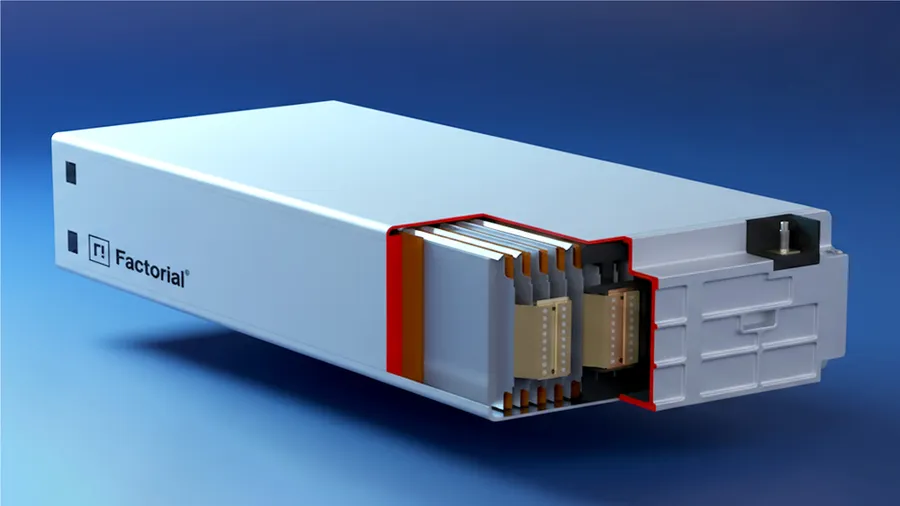
Sodium-ion batteries were billed as the low-cost alternative to lithium-ion. But then lithium prices crashed, wiping out sodium-ion’s biggest advantage. Now here's the real suprise. Instead of retreating from sodium-ion, major battery companies leaned in, and stuck with the salt.
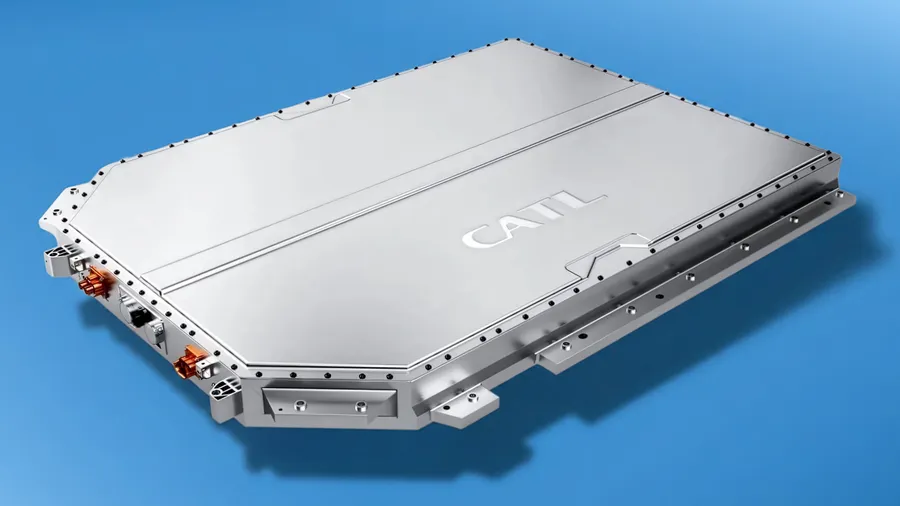
The world’s biggest battery maker, China’s CATL, expects up to 20,000 vehicles to roll off assembly lines with its NAXTRA sodium-ion batteries this year. CATL has secured orders for more than 60 GWh of its new sodium-ion grid-storage battery system, and says it can deliver the first gigawatt-hour by year’s end.
In the US, General Motors is moving to produce sodium-ion batteries domestically for grid energy storage systems assembled by startup Peak Energy. General Motors is even backing Peak as it builds a $71 million, 4 GWh factory for storage systems it says will operate for decades without maintenance.
That’s GWh of demand for a more expensive technology. A few videos back, I predicted why the big players would double down on sodium-ion. I only got half of it right.
So is purchase price the metric that actually matters today? When will sodium-ion batteries finally become cheaper than lithium-ion? And what looming supply-chain shortfall could keep the cost gap from closing?
Detroit-based General Motors is betting on sodium-ion batteries for the grid. For a car company, that sounds odd. By the end of this video, I think it'll make sense.
First, let’s catch everyone up on this battery super fast.
In sodium-ion batteries, it’s sodium ions rather than lithium ions that ping-pong between the battery’s electrodes. Pound for pound, these batteries don’t hold as much energy as the top lithium-ion cells. That could make them less attractive in applications where weight matters, like EVs and phones. But their resistance to thermal runaway makes them a safer choice, whether in your garage or on the grid. No one wants a battery that catches fire. 1
And because sodium is 1000x as abundant as lithium and easily sourced,2 sodium-ion batteries were supposed to be cheaper.
A lot cheaper.
But lithium has gotten cheaper, too. A massive oversupply sent lithium carbonate prices plunging 90% from their post-pandemic peak. A number of promising sodium-ion startups went bust.34
Sodium-ion could never compete on energy density. And now it couldn’t even compete on price.
And yet it’s still in the game with thousands of sodium-ion-powered EVs due this year and GWh of batteries for grid storage on order.56
Even without a price edge, I predicted sodium-ion batteries would gain traction in cold-weather stationary storage. But cold tolerance is only one way sodium-ion outperforms lithium-ion. One other advantage I missed is making me sweat. And new regulations in the US and China are making a novel economic argument for this more expensive technology right now.
Prices are expected to fall as manufacturing scales up. But there might be hiccups ahead, because while sodium is easy to get, another critical material in sodium-ion batteries only grows in the tropics.
Which leaves us with the biggest question of all: when, exactly, are sodium-ion batteries finally gonna get cheap?
For those of you worried I’ve run out of salt jokes three sodium-ion videos in … Na. I’ve still got more puns for you. And they are sodium funny.
Betting Big
Between 2016 and 2025, Chinese battery giant CATL invested around $1.5 billion in sodium-ion battery research and development.67 They’ve kept their sodium-ion the prize and it’s starting to pay off.
You can check out the details of CATL’s all-sodium NAXTRA EV battery and its hybrid sodium-lithium Freevoy in that earlier video.
CATL expects 10,000–20,000 cars to ship with its NAXTRA sodium-ion batteries by end of year.5 That’s not a lot. It’s 0.1% of the 19 million new EVs and plug-in hybrids China expects to sell in 2026.8
But these EVs might defrost an entirely new market. They can operate normally in extreme cold, down to -30°C, or -22°F.5 That means an EV better suited to regions with below freezing winter temperatures. Which is great news for all my viewers in the Siberian city of Yakutsk.
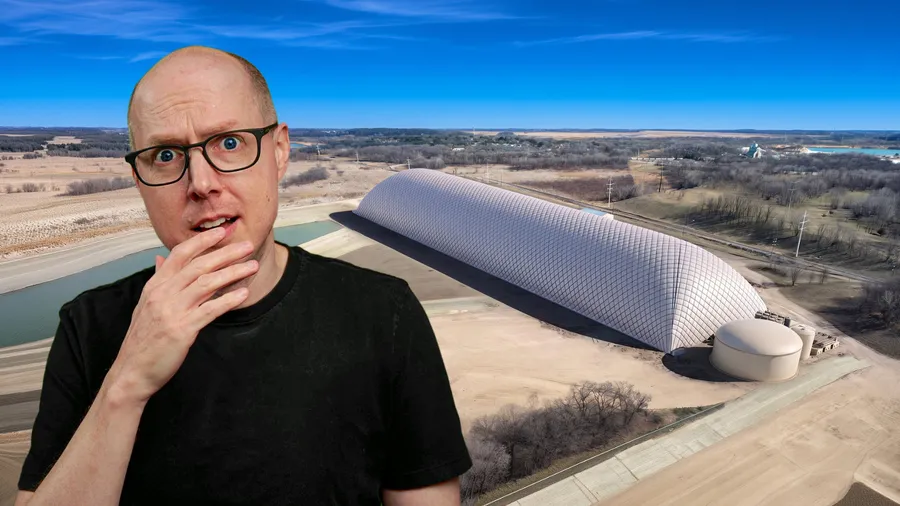
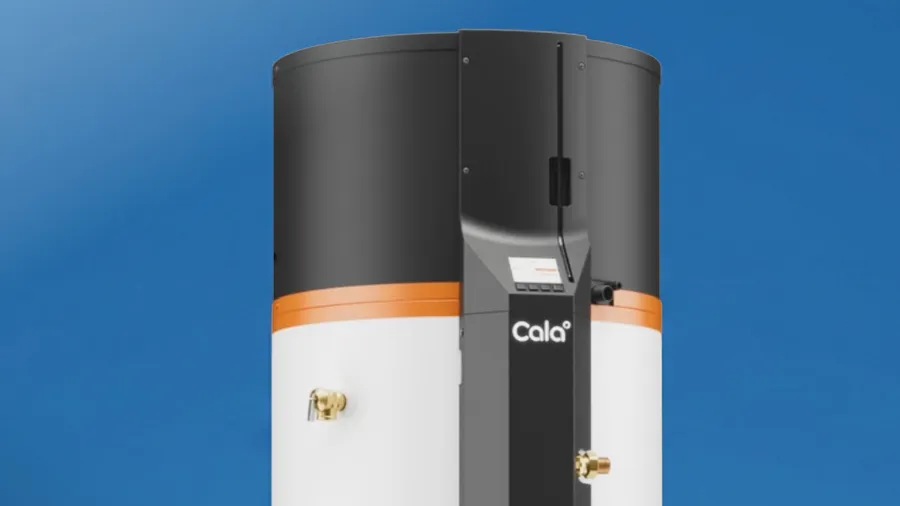
The biggest, fastest gains for salt batteries seem to be happening in battery energy storage systems, or BESS. CATL announced the sodium-ion version of its grid-scale energy storage system, TENER Sodium, just this past June.
The TENER Sodium storage system operates at temperatures down to -40°C (which just happens to be -40°F) and up to 70°C (or a sweltering 158°F).9 Part of that temperature tolerance comes from its sodium-ion chemistry. The rest comes from ventilation and a liquid cooling system that reportedly halves the amount of energy it needs to run.10 That drives down operating costs, giving even more bang for your buck, or yuan. But the American sodium-ion BESS company backed by General Motors claims even greater energy savings. More on that in a minute.
In the US, government policies aren’t taking aim at any specific battery chemistry. So why is a car company like General Motors venturing into sodium-ion stationary energy storage?
In the US, demand for EVs plummeted after EV subsidies and environmental standards were rolled back.11 Meanwhile, the One Big Beautiful Bill Act retained tax incentives for BESS deployments made with non-Chinese components, and bonuses up to 10% of project costs for American-made BESS.1112
The US doesn’t produce much lithium carbonate. But Wyoming has the world’s largest deposit of trona, which is refined into the soda ash used in sodium-ion batteries.1314
So we’ve got falling interest in EVs, more battery storage on the grid, and subsidies for American-made batteries, for which sodium is easy to supply. It’s no wonder General Motors began developing its own grid scale sodium-ion battery at its Michigan battery R&D center.1516
Kurt Kelty, GM vice president of battery and sustainability, told CNBC,17
You’ve got the resources [in the U.S.] that you can keep it totally domestic.
It’s going to take some time to build this industry up, but the potential for sodium-ion is just much greater than [lithium iron phosphate].
Kelty expects a domestic supply chain in place 2-3 years from now.17 By 2029, he says, General Motors intends to produce sodium-ion cells for a Denver-based startup whose battery storage system doesn’t need any active cooling at all.17 None.
BESS in class
CATL may have a ‘tenner’, but the hundred-dollar question is how Peak Energy keeps its BESS cool without any active cooling. No fans, chillers, or fluid loops that siphon off electricity and need maintenance.18
Peak Energy says it’s built a passively cooled system that’s efficient enough to keep sodium-ion batteries within their safe temperature range in air temperatures up to 55°C, or 130°F.18 That’s below the 70°C (or 158°F) that CATL claims its TENER Sodium system can handle, but CATL’s system requires active cooling.910
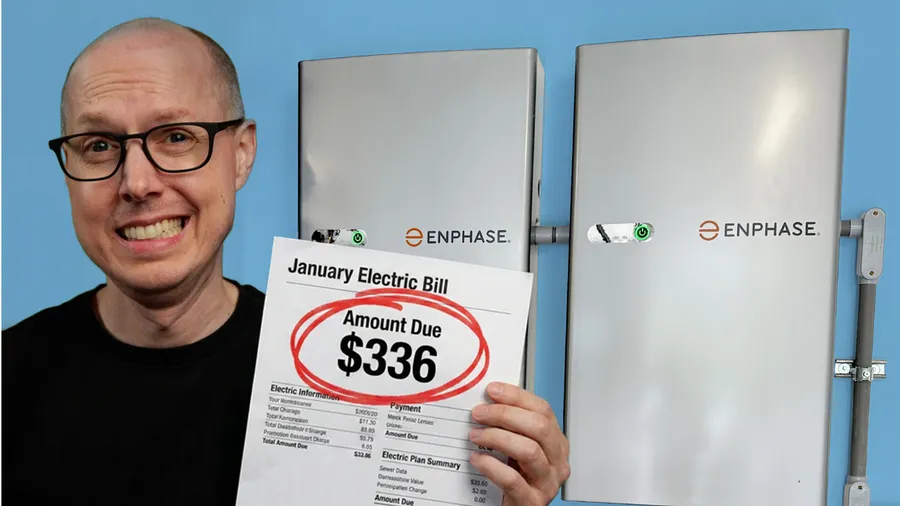
This is the part my prediction didn’t capture: sodium-ion has an advantage in cold climates … and in hot ones. The battery’s heat tolerance enables less aggressive cooling. That saves serious energy, and serious money. In performance tests, Peak says passive cooling cut the system’s auxiliary power use by up to 90% compared to conventional lithium-ion systems.19 That could save up to $1 million each year per GWh of BESS.19
Cameron Dales, Peak Energy’s cofounder and chief commercial officer, puts it this way:16
“You don’t have to power a refrigerator in the desert for 20 years to keep the system operating properly.”
But on the coldest days, you still might need to power a toaster. Peak’s BESS uses resistive heating … the kind that toasts your bread … to keep the batteries from getting too cold in air temperatures down to -40°C (or -40°F).18 That’s the same lower temperature cutoff as TENER Sodium.
Both grid battery systems claim lifespans roughly double today’s typical lithium-ion, which loses 30% of its capacity after only about 8,000 cycles.162021 Peak Energy expects its system to operate for 20 years with no scheduled maintenance, reaching 20,000 cycles while retaining 80% of its original capacity.1618 CATL says its TENER Sodium can last 25–30 years, or about 15,000 cycles, before reaching 70% capacity.22 By the time sodium-ion BESS gets retired, it’ll be well-seasoned.
Peak Energy admits it can’t yet compete with lithium-ion on upfront battery costs. But when lifespan and energy savings are factored in, it says its sodium-ion BESS is 20% cheaper than lithium-ion BESS.16
Of course, these are marketing claims for brand new systems. I haven’t seen the data to back them up.And by then, the battery cells in Peak Energy’s BESS may be entirely different , asGeneral Motors’ sodium-ion cells replace the Chinese cells they currently use. Those cells could help the system qualify for that bonus for American-made BESS, potentially reducing cost further.
Whatever the eventual savings, the sales are underway. According to the LA Times, Peak Energy already has $1.1 billion in preorders, including up to 4.75 GWh for Jupiter Power, and another 1.5 GWh for Energy Vault.231611
With backing from General Motors, Peak Energy is building a $71 million 4 GWh factory near Sacramento, CA.16 It expects to begin delivering its shipping container-sized BESS units in early 2027.23
General Motors and CATL are already masters of sodium-ion’s cousin chemistry, lithium iron phosphate, or LFP. This is the lower-energy-density, cheap, long-lasting workhorse of lithium-ion batteries. The longer-lived sodium-ion version is called NFPP, or sodium iron phosphate … pyrophosphate.1624
There’s an extra kind of phosphate added in, kind of like replacing some of the white sugar in your favorite cookie recipe with brown sugar. The recipe is similar enough that NFPP is close to drop-in compatible with LFP manufacturing lines.25 That could help low-cost sodium-ion batteries roll out at scale sooner.
I’m really excited for the holidays.
But it's not all smooth sailing on the salty battery sea.
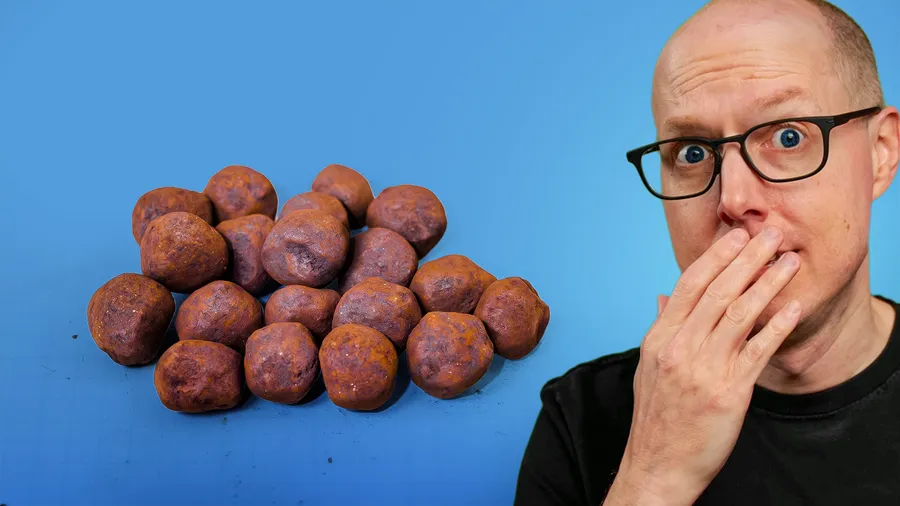
There’s a hitch: supply chains for lithium-ion batteries are mature, including for graphite for the anode. But sodium-ion batteries typically use a “hard carbon” anode. Hard carbon is a charcoal-like material that’s historically been made from coconut shells. And it’s a lot fussier than a bag of briquettes. The shells get processed under tightly controlled conditions to maintain consistency and the porosity needed to store sodium.262728 Sodium is pretty easy to get worldwide, but I’m pretty sure coconuts only grow in the tropics.
According to Car News China, the country’s domestic coconut crop is only enough for about 6 GWh, but the demand for sodium-ion batteries is expected to be 100 GWh by next year.26 Chinese material suppliers are already pivoting to produce hard carbon from anthracite coal, a type of coal with the highest carbon content and the fewest impurities.29 Anthracite coal is found in a number of places worldwide, including China where most of the world’s anthracite is mined.29 The largest deposits of anthracite, though, are right here in the US, in northeastern Pennsylvania’s “Coal Region.”29 We can leave the coconuts on the beach in Hawaii and Puerto Rico.
There’s a good reason sodium-ion batteries can’t use graphite like lithium-ion batteries do.
Graphite is made of neatly stacked graphene sheets.30 Tiny lithium ions slide in and out of this framework easily. That makes graphite a high-capacity anode for lithium-ion batteries and supports efficient cycling.
Larger sodium ions are just too big to easily enter and exit the tight gaps between graphite layers. Sodium and graphite also don’t play well together at a chemical level.31
Hard carbon is a better fit for sodium ions … literally. It’s essentially high-quality charcoal with a disordered structure whose nooks and crannies allow the bigger sodium ions to enter and exit more easily.27
They’re still figuring out how sodium interacts with the hard carbon, but the thought is that sodium ions enter the craggy structure and group together in quasi-metallic clusters in tiny pores within the hard carbon.32
Not all hard carbons are created equal. Change the source, from coconut to bamboo, hardwood or coal, and you get a different hard carbon microstructure.27 Change the processing, and the hard carbon’s properties change, too.2728 That means sourcing hard carbon from anything other than coconut shell might require tweaking the battery design.
The upshot is that manufacturers of sodium-ion batteries will need to lock in a source of consistent, high-quality hard carbon before the technology booms.28 Or they might get locked out.
When do sodium-ion batteries get cheap?
So, when do sodium-ion batteries finally become the cheaper option?
Executives at General Motors and Peak Energy think sodium-ion batteries will price match lithium-ion batteries around 2028.16 Chinese company BYD is aiming for 2027.33 Just this past August, a spokesperson for CATL said it expects price parity sooner … by the end of this year.34
Not everyone feels so sweet about the salt. Wu Zuyu is a former senior engineer at CATL and now the chairman of Chinese BESS manufacturer HiTHIUM. He says that manufacturing at scale requires 5 years of supply chain maturation.33 Dario Bertagna, the head of Clean Energy at Capital Dynamics in Switzerland, points out that sodium-ion batteries still cost $59 per kWh last year, whereas lithium-ion batteries cost just $52 per kWh. That 13% difference matters at the utility scale.352 With the current pace of investment, Bertagna can’t imagine cost parity before 2031.35
CATL expects sodium-ion batteries to eventually cost 30–40% less than lithium iron phosphate batteries.6 In late 2025, the International Renewable Energy Agency (IRENA) reported that sodium-ion cells could cost as little as $40 per kWh when manufactured at scale.36
Here’s my take... Even though sodium-ion can use much of the same manufacturing equipment as lithium-ion, it will still need its own learning-by-doing and economies of scale. And its own supply chain. It may take longer for sodium-ion to come down to lithium-ion prices than those sunny corporate forecasts claim.
More EVs are beginning to roll off assembly lines in China with sodium-ion batteries under the hood … or, beneath the floor. And orders for sodium-ion BESS are piling up. Some of it is for places with harsh winters. That’s exactly where I predicted sodium-ion would find its niche . And sodium-ion’s ability to operate in sweltering hot climates with little or no active cooling means it could gain traction even faster than I imagined.
The biggest takeaway, for me, is that sodium-ion can already win on lifetime cost once longevity and energy savings are factored in. And, bonus, it’s safer, too.
But those promised low, low prices? They’re still charging.
- PV magazine – Sodium-ion batteries – a viable alternative to lithium? ↩
- Wood Mackenzie – Sodium-ion batteries enter energy storage market ↩
- HSBC – Lithium, no longer stratospheric ↩
- Reuters – In China, battery makers bet big on sodium in move away from critical minerals ↩
- Car News China – CATL expects up to 20,000 EVs to be euipped with sodium-ion batteries in 2026 ↩
- PV magazine – Alfen, CATL to deploy 5 GWh of sodium-ion battery storage in Europe ↩
- Car News China – CATL resolved sodium-ion battery core manufacturing challenge, mass production to start in 2026, company’s Chief Scientist says ↩
- CNEVPOST – CAAM forecasts China NEV sales to grow 15.2% to 19 million units in 2026 ↩
- ESS News – A closer look at CATL’s new sodium-ion battery ↩
- Car News China – CATL unveils Tener Sodium storage system: 15,000-cycle lifespan and 30-year durability ↩
- Energy Storage News – General Motors plots sodium-ion tech leapfrog into grid-scale energy storage market ↩
- Modo Energy – Unpacking the OBBBA and its impact on project development timelines and CapEx ↩
- Quartz – GM is building a domestic battery supply chain as Ford takes heat over China ties ↩
- Wyoming Minin – Trona ↩
- GM News – Why sodium-ion batteries will reshape grid-scale energy storage ↩
- IEEE Spectrum – Sodium-Ion Batteries Get Another Shot at Success in the U.S. ↩
- CNBC – GM plans U.S. battery development as Trump’s DOT attacks Ford for China ties ↩
- Peak Energy – The world's first fully passive grid-scale energy storage ↩
- Renewable Energy World – US automaker implores utilities to explore V2G, makes big bet on the grid battery of the future ↩
- BSL Batt – LFP vs NMC Battery: A Technical Comparison of Cycle Life, Safety, and Cost ↩
- Wikipedia – Lithium iron phosphate battery ↩
- Electrek – CATL’s 30-year sodium-ion battery takes over grid storage ↩
- Los Angeles Times – Not everyone is leaving California. A new commercial battery maker just landed in Sacramento ↩
- Nature – Critically assessing sodium-ion technology roadmaps and scenarios for techno-economic competitiveness against lithium-ion batteries ↩
- ESS News – Sodium-ion battery cells already near lithium-ion cost parity, set to get cheaper ↩
- Car News China – Why China’s next-generation sodium-ion battery is quietly powered by coal ↩
- Frontiers in Materials – Hard carbon anodes for sodium-ion batteries: balancing closed-pore storage, surface reactivity, and sodium inventory ↩
- Future Market Insights – Hard Carbon Anode Materials Market ↩
- Wikipedia – Anthracite ↩
- Wikipedia – Graphite ↩
- RSC Advances – Why is sodium-intercalated graphite unstable? ↩
- TechXplore – Understanding the physics at the anode of sodium-ion batteries ↩
- Car News China – CATL says sodium batteries are ready, top China insider at Davos says wait 5 years ↩
- Renewables Now - CATL expects sodium-ion to reach cost parity with LFP by end-2026 ↩
- ESS News – Sodium-ion vs lithium-ion BESS: Cost parity not before 2031 ↩
- ESS News – Sodium-ion battery cell cost could drop to $40/kWh, says IRENA ↩